
According to the US Bureau of Labor Statistics, the consumer price index (CPI) increased by 0.3% in February, after increasing by 0.2% in January. This increase is consistent with economists' forecasts.
Year-on-year, inflation increased by 2.4%, unchanged compared to the level recorded in January and also in line with market expectations.
Inflation pressure is currently still higher than the Fed's target of 2%. At the same time, many experts believe that inflation may increase sharply in the near future due to the joint military campaign between the US and Israel targeting Iran, a move that is said to be creating bottlenecks in the global supply chain, especially in the oil market.
Mr. Chris Zaccarelli - Investment Director of Northlight Asset Management - said the positive news is that inflation is not higher than forecast in the CPI report released this morning. However, according to him, this is retrospective data, recorded before the conflict with Iran began.
He believes that the market in general is assessing that the Fed will have to maintain its policy for a longer time to monitor whether inflation expectations will increase and become deeper, or whether the situation will return to the state before military operations in the Middle East take place.
Meanwhile, core inflation – an index that does not include volatile factors such as food and energy – also shows no signs of acceleration. Core CPI increased by 0.2% in February, similar to January's increase and in line with economists' forecasts. Year-on-year, core inflation reached 2.5% and remained unchanged for the third consecutive month.
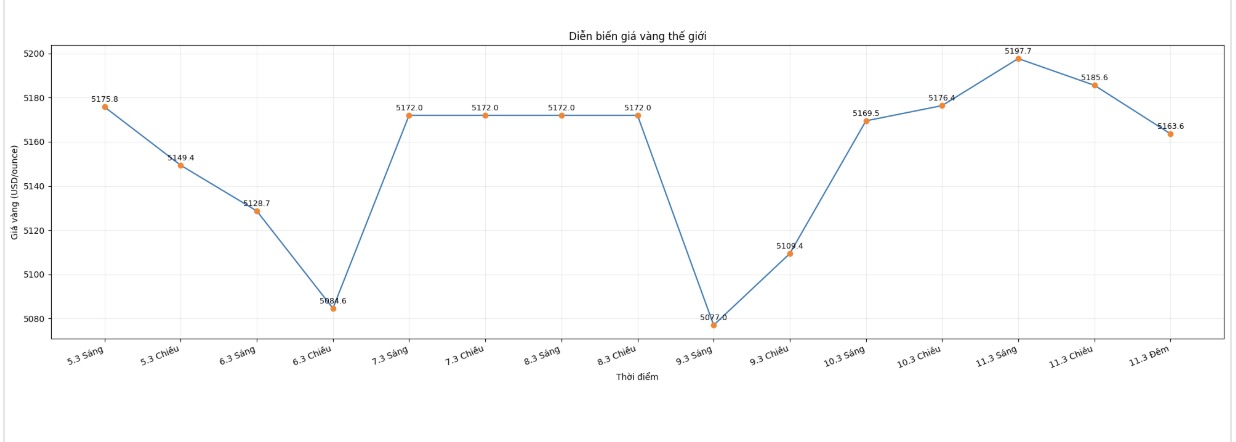
After inflation data was released, the gold market recorded slight selling pressure. Spot gold price recorded at 11:10 PM on March 11 (Vietnam time) listed around the threshold of 5, 163.6 USD/ounce. Compared to the previous day, world gold price decreased by 70.3 USD.
For the second consecutive month, housing costs continued to be the biggest contributor to the increase in inflation when this index increased by 0.2% in February. Meanwhile, the food price index increased by 0.4% and the energy index increased by 0.6%.
The world gold and silver market operates based on two main pricing mechanisms. The first is the spot market, which quotes prices for buying and selling and immediate delivery. The second is the futures market, which determines prices for delivery at a time in the future.
Due to the year-end position adjustment and market liquidity factors, the December gold futures contract is currently the most actively traded contract on the CME exchange.


