
According to Kitco, last night's gold price retreated to around 4,509 USD/ounce, down more than 1% compared to the previous session. This development took place even as consumer confidence in the US continued to weaken due to concerns about inflation and the risk of economic recession increasing.
According to the Conference Board, the US consumer confidence index in May fell to 93.1 points, lower than the 93.8 points of the previous month. However, this figure is still more positive than analysts' forecast of 91.9 points.
Ms. Dana M. Peterson - Chief Economist at the Conference Board - said that inflationary pressure from the Middle East conflict continues to strongly affect US consumer sentiment. People's assessments of business conditions and the current labor market are less positive than last month.
The report also shows that consumers are increasingly concerned about prices, oil and geopolitical risks. Mentions related to war, conflict and energy prices continued to remain high in the May survey.
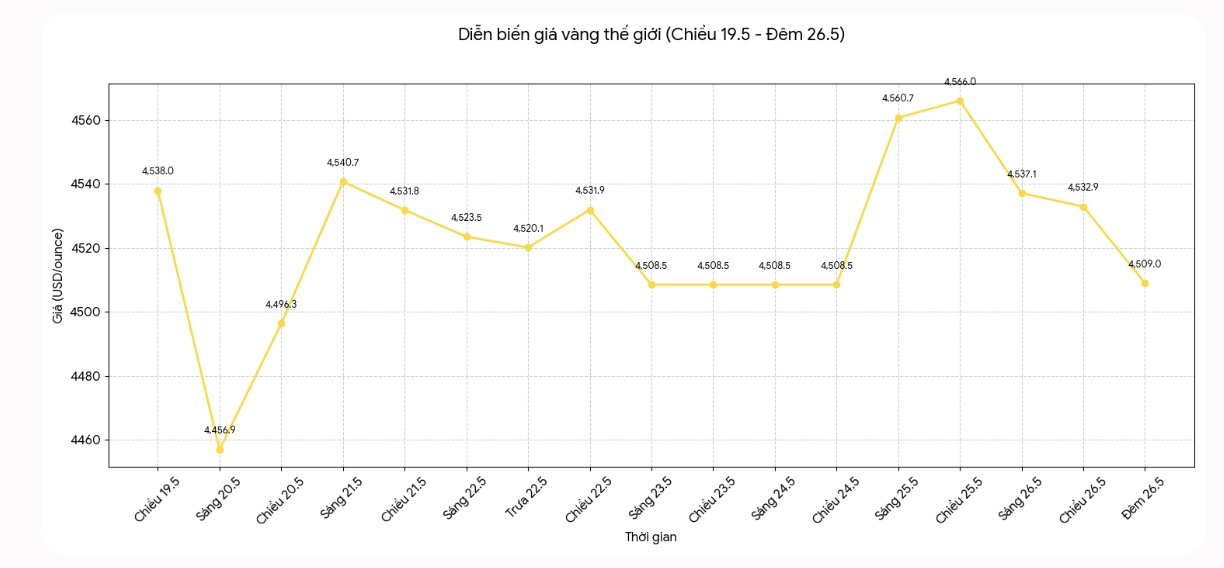
However, investors have not yet stepped up buying safe-haven gold. One of the reasons is that Brent oil prices increased sharply after information that US-Iran tensions escalated, raising concerns that inflation could extend longer than expected.
Mr. Ricardo Evangelista - an analyst at ActivTrades - said that rising oil prices are strengthening expectations that the US Federal Reserve (Fed) will maintain a "hawkish" stance, thereby putting pressure on gold - a non-performing asset.
In my opinion, the most likely trend for gold today is still price reduction. The market is focusing on monitoring US-Iran negotiations as well as the upcoming US PCE inflation data," he said.
US Secretary of State Marco Rubio also said that the negotiation process with Iran could last a few more days, making the prospect of cooling down Middle East tensions uncertain.
Currently, the market is betting that the Fed may raise interest rates by another 25 basis points by the end of this year. According to CME's FedWatch tool, the probability of this scenario happening has risen to about 41%.
Maintaining high interest rates is often disadvantageous for gold because it increases the opportunity cost of holding non-performing assets. The strengthening USD along with high US bond yields are also limiting the recovery momentum of the precious metal.
Meanwhile, UBS has just lowered its year-end gold price forecast from $5,900 to $5,500/ounce due to concerns that bond yields and the USD continue to maintain strength.
However, this bank still believes that the long-term outlook for gold is not completely negative. UBS assesses that the global public debt burden, the large US budget deficit and the trend of foreign exchange reserve diversification of central banks will continue to support the demand for holding hard assets in the coming time.
Mr. Jeffrey Roach - Chief Economist of LPL Financial - said that although consumer confidence is weakening, the US economy is still likely to recover by the end of the year thanks to a fairly stable labor market.
Consumers are temporarily more cautious about spending due to price pressures. However, if geopolitical tensions cool down, US economic growth may recover by the end of the year," he said.


