
SJC gold bar price
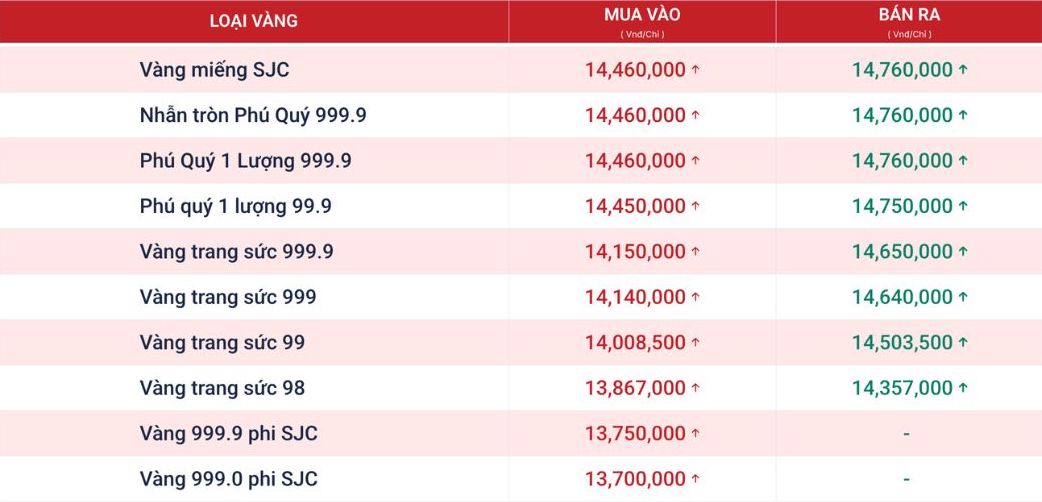
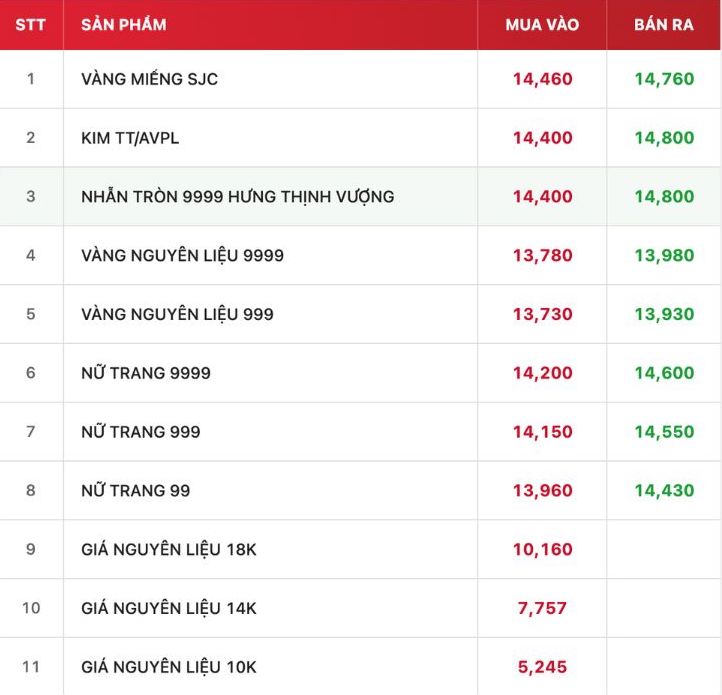
As of 6:30 PM, SJC gold bar prices at most listed brands were at the threshold of 144.6-147.6 million VND/tael (buying - selling). The buying - selling difference was at 3 million VND/tael.
In addition, Bao Tin Minh Chau and Bao Tin Manh Hai adjusted down 500,000 VND/tael in both directions, down to 143.6-147.6 million VND/tael (buying - selling). The buying - selling difference is at 4 million VND/tael.
9999 gold ring price
At the same time, Saigon SJC Jewelry Company listed the price of gold rings at the threshold of 144.1 - 147.1 million VND/tael (buying - selling). The buying - selling difference is at 3 million VND/tael.
DOJI Group listed the price of gold rings at 144-148 million VND/tael (buying - selling). The buying - selling difference is at 4 million VND/tael.
Phu Quy Gold and Gems Group listed the price of gold rings at the threshold of 144.6-147.6 million VND/tael (buying - selling). The buying - selling difference is at 3 million VND/tael.
Jewelry gold price
DOJI listed 9999 jewelry gold at 142-146 million VND/tael (buying - selling), unchanged compared to the previous closing session.
Phu Quy listed 9999 jewelry gold at the threshold of 141.5-146.5 million VND/tael (buying - selling), unchanged in both directions.
World gold price
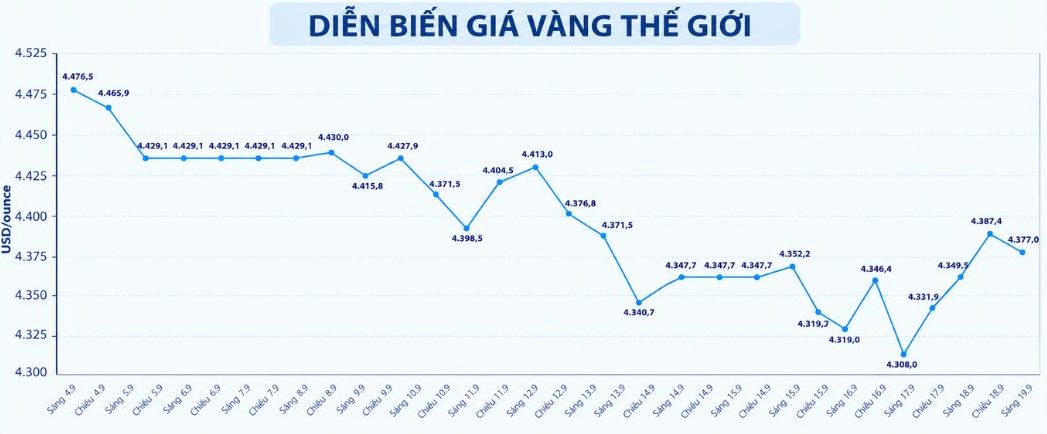
Recorded at 6:30 PM, world gold prices were listed at the threshold of 4,377 USD/ounce.
Gold price forecast
Last week, a precious metals website suggested that gold investors should not focus too much on the limited moves of US monetary policy and start paying attention to the next 1,000 billion USD debt of the US.
The US Federal Reserve (Fed) raised interest rates by 25 basis points on Wednesday and Chairman Kevin Warsh clearly showed that policymakers are still committed to bringing inflation back under control. Despite these tightening-minded statements, the gold market was not broken.
Instead, gold is maintaining an important support zone above 4,300 USD/ounce, while ending a 3-week consecutive decline.
This resilience is important. Investors are beginning to realize that the Fed may raise interest rates, but cannot solve US fiscal problems.
In some aspects, higher interest rates even make these problems more difficult.
High interest rates can help slow down inflation, but at the same time increase interest payment costs for US government debt worth more than $40,000 billion. The US government currently has to spend more than $1,000 billion per year just to pay loan interest. The longer high interest rates remain, the more worrying this problem becomes.
This is why the traditional argument that higher interest rates are naturally disadvantageous for gold is becoming increasingly inadequate.
Central banks seem to understand this better than most investors. Their continued buying of gold reflects an increasingly fragmented global monetary system. Gold brings something that government bonds and currencies cannot: A reserve not subject to partner risk or sovereign credit risk.
This structural demand helps explain why gold can withstand conditions that in history often create much greater selling pressure.
Gold faced a Fed interest rate hike, tightening messages from Mr. Warsh, and 10-year US Treasury bond yields fluctuating around 5%. However, instead of a sharp drop, the market showed buying power and maintained an important support zone.
The information in the article only reflects market developments, not investment recommendations.
See more news related to gold prices HERE...


