
SJC gold bar price
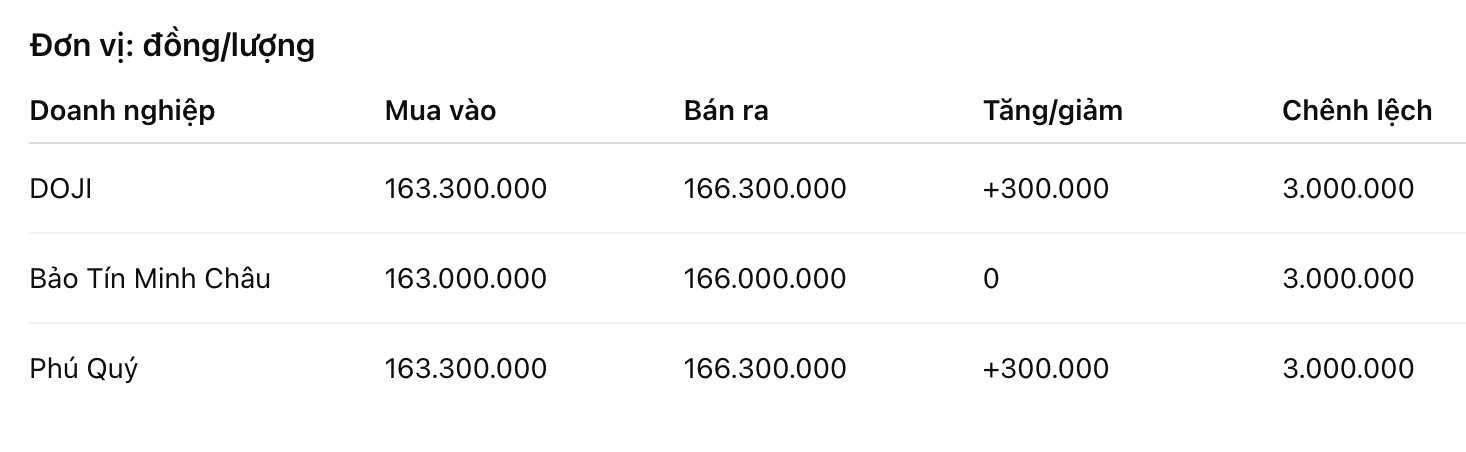
As of 6:00 AM, SJC gold bar prices were listed by DOJI at the threshold of 163.3-166.3 million VND/tael (buying - selling), an increase of 300,000 VND/tael in both buying and selling directions. The difference between buying and selling prices is at the threshold of 3 million VND/tael.
SJC gold bar prices were listed by Bao Tin Minh Chau at the threshold of 163-166 million VND/tael (buying - selling), unchanged in both buying and selling directions. The difference between buying and selling prices is at the threshold of 3 million VND/tael.
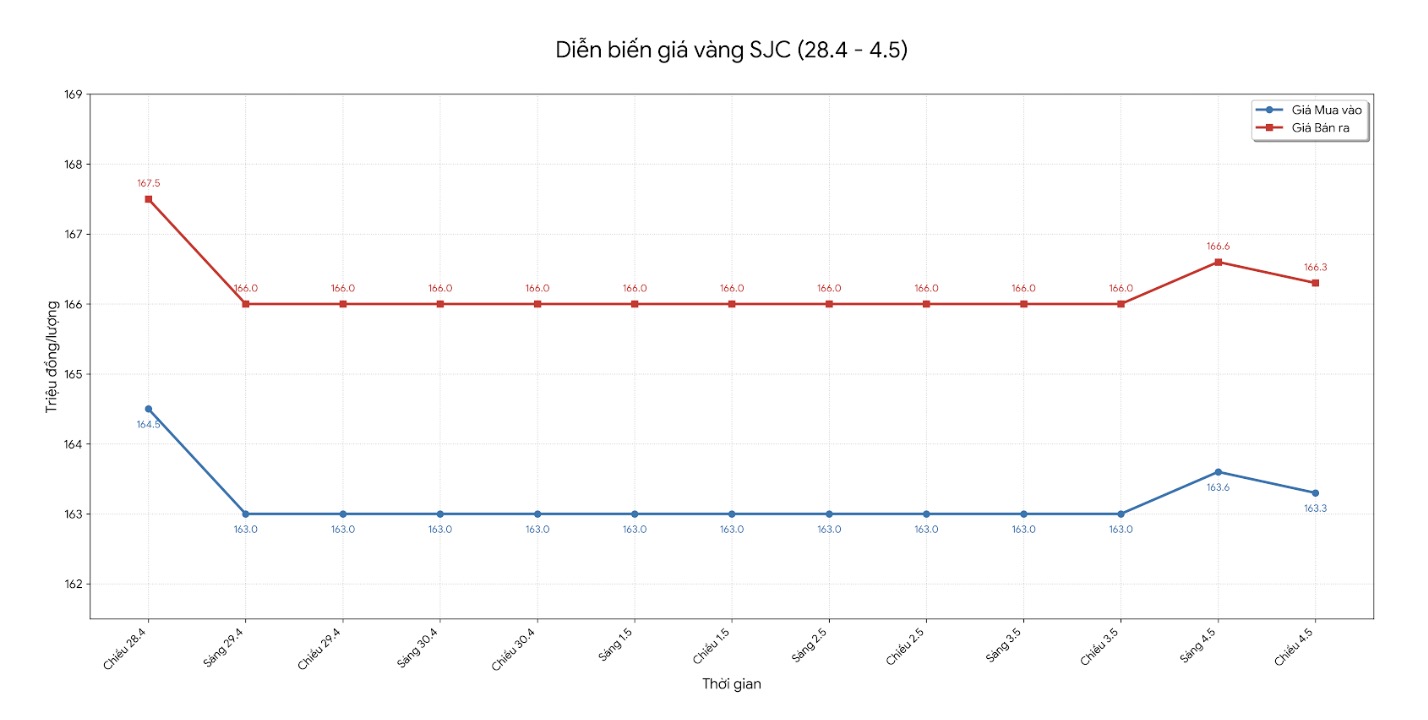
Phu Quy Jewelry Group listed SJC gold bar prices at 163.3-166.3 million VND/tael (buying - selling), an increase of 300,000 VND/tael in both buying and selling directions. The difference between buying and selling prices is at the threshold of 3 million VND/tael.
9999 gold ring price
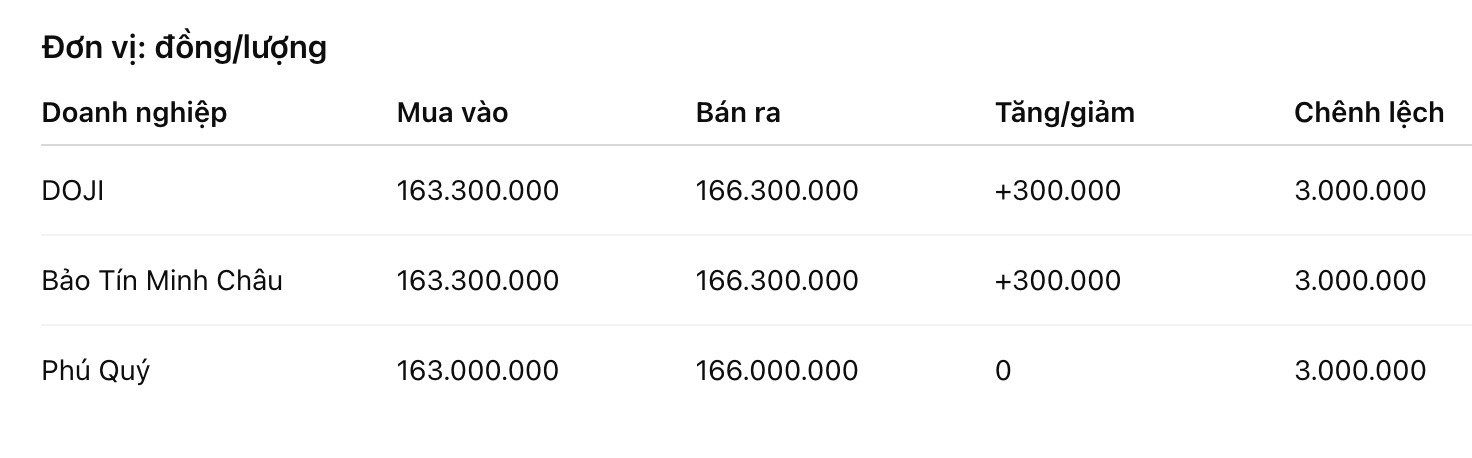
As of 6:00 AM, DOJI listed the price of gold rings at the threshold of 163.3-166.3 million VND/tael (buying - selling), an increase of 300,000 VND/tael in both buying and selling directions. The difference between buying and selling prices is at the threshold of 3 million VND/tael.
Bao Tin Minh Chau listed the price of gold rings at the threshold of 163.3-166.3 million VND/tael (buying - selling), an increase of 300,000 VND/tael in both buying and selling directions. The difference between buying and selling prices is at the threshold of 3 million VND/tael.
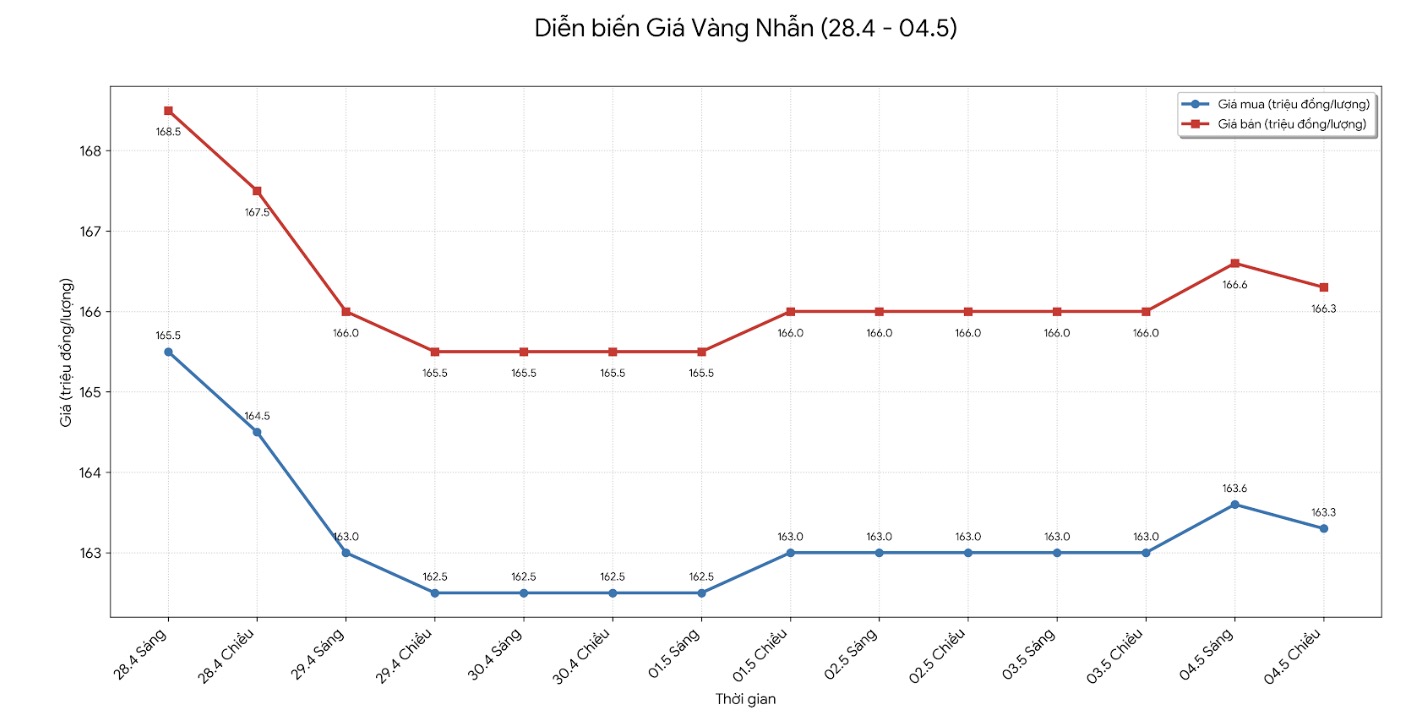
Phu Quy Gold and Gems Group listed the price of gold rings at 163-166 million VND/tael (buying - selling), unchanged in both buying and selling directions. The difference between buying and selling prices is at 3 million VND/tael.
Currently, the buying - selling price difference of gold is at a very high level, around 3 million VND/tael, posing a risk of losses for investors.
World gold price
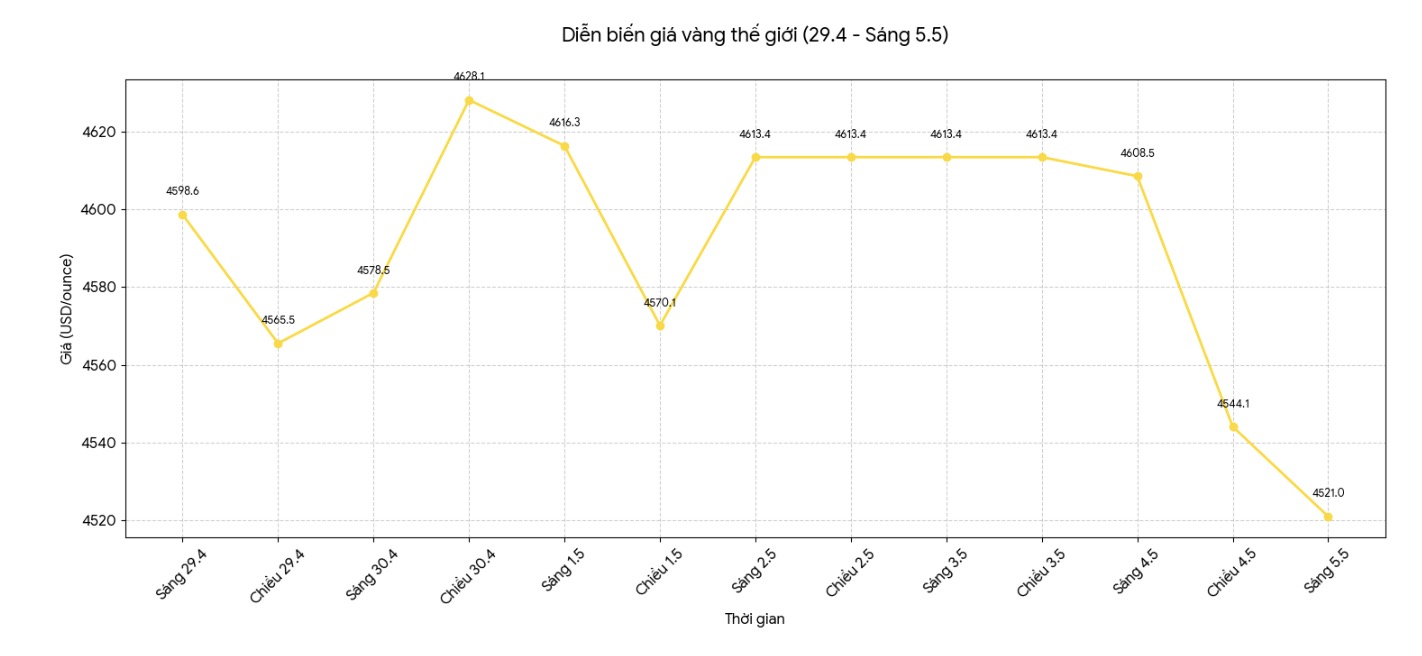
At 0:07 AM, world gold prices were listed around the threshold of 4,521 USD/ounce, a sharp decrease of 92.4 USD/ounce.
Gold price forecast
World gold prices are under short-term adjustment pressure as many unfavorable factors appear at the same time. Escalating tensions between the US and Iran have pushed oil prices up sharply, thereby increasing concerns about inflation and pushing back interest rate cut expectations. The strengthening USD also makes the precious metal less attractive to investors holding other currencies.
According to experts, the combination of rising energy prices and a high interest rate environment is increasing the opportunity cost when holding gold - an unprofitable asset.
Mr. Giovanni Staunovo - an analyst at UBS, said that the rise of the USD along with a slight increase in yields, partly affected by oil prices, is the main factor putting pressure on gold prices.
From a more cautious perspective, Mr. Bart Melek - Global Commodity Strategy Director at TD Securities said that the latest geopolitical developments continue to raise concerns about inflation, while strengthening expectations that interest rates will remain high for a longer time.
This may cause a part of investors to reduce their gold holdings in the short term. According to him, the important support zone for gold prices is currently around the 4,200 USD/ounce mark.
However, the long-term outlook for the precious metal is still positively assessed. Mr. Nitesh Shah - Head of Commodity and Macroeconomic Research at WisdomTree believes that monetary policy risks and the risk of errors from central banks may become factors supporting gold prices in the near future.
As policymakers have to balance between controlling inflation and avoiding recession, an uncertain environment will continue to boost demand for safe assets.
According to the basic scenario, Mr. Shah predicts that gold prices may return to the historical peak, even heading towards about 5,500 USD/ounce at the beginning of 2027. Even in more negative cases, the price level is still considered difficult to fall deeply.
In the current context, many experts believe that gold prices may continue to fluctuate in the mid range around the 4,000 USD/ounce mark in the short term, with limited room for increase if inflationary pressure and high interest rates persist.
Gold price data is compared to the previous day.
The world gold and silver market operates through two main pricing mechanisms. The first is the spot market, where the buying and selling and immediate delivery prices are listed. The second is the futures market, where prices are set for future delivery.
Due to the impact of year-end position restructuring and market liquidity, the December gold futures contract is currently the most actively traded contract on the CME exchange.
See more news related to gold prices HERE...


