
Gold prices enter this trading week in a state of lack of clear direction. Some Wall Street experts lean towards a sideways, cautious and variable scenario.
Mr. Daniel Pavilonis - senior commodity broker at RJO Futures - said that gold prices are moving in a "risk-seeking" but still cautious environment.
According to him, the precious metal formed a V-shaped bottom at the end of last month, then recovered, adjusted and is now continuing to rebound. However, this upward momentum is not strong enough to establish a clear trend.
Mr. Pavilonis emphasized that the diễn biến of gold prices this week will largely depend on fluctuations in oil prices and financial market sentiment. If oil prices remain stable or gradually decrease, gold may continue to be supported. Conversely, energy shocks or strong fluctuations may cause the market to reverse quickly.
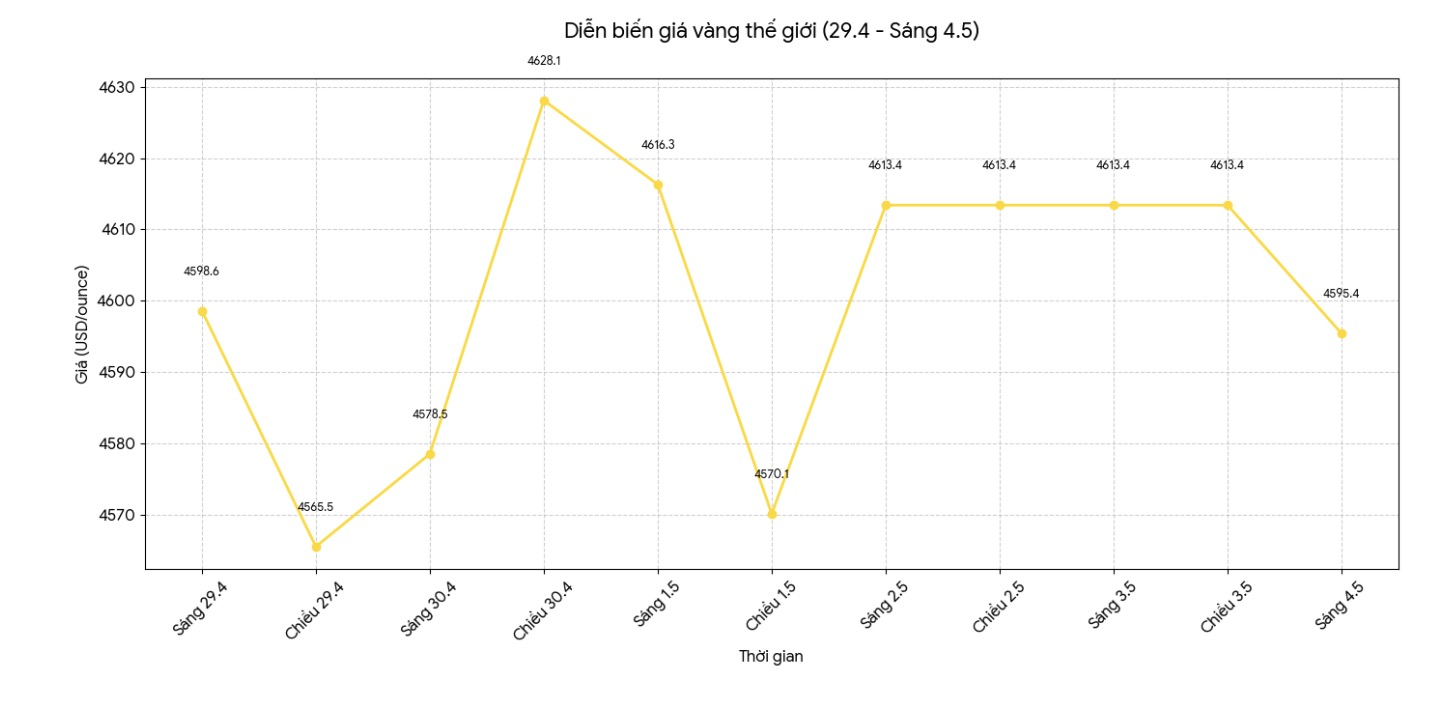
Notably, this expert believes that the market is gradually "getting used to" the state of ceasefire in the Iranian conflict. Although oil prices are still high, investors are no longer reacting as strongly as before. However, geopolitical factors still pose risks, because any unexpected developments, especially during long holidays, can cause the market to fluctuate strongly in both directions.
From a macro perspective, Mr. Adam Button - Currency Strategy Director at Forexlive. com did not make a specific forecast on the direction of gold prices, but emphasized that the current policy environment is becoming more complex. According to him, compared to two months ago, major central banks are more "hawkish", as global interest rates are expected to increase by about 50 basis points.
This change makes market prospects unpredictable. Oil prices fluctuate sharply, prolonged geopolitical conflicts, along with factors such as tariffs and large fiscal spending are creating multi-dimensional inflationary pressure. In that context, central banks are unlikely to ease policies as quickly as previously expected, making gold both have long-term supporting factors and face short-term pressure.

Mr. Button also pointed out that if the conflict in the Middle East is resolved soon, gold prices could increase sharply. Conversely, if the war lasts, emerging economies may be forced to sell gold to cover energy import costs, thereby putting downward pressure on prices. This shows that the market is in a "bipolar" state, with reverse scenarios that may occur at any time.
Some analyst organizations also believe that gold prices are likely to continue to fluctuate widely instead of forming a clear trend.
CPM Group's analysis group believes that although the short-term trend is somewhat downward, gold prices may still fluctuate in the range of 4,400 - 4,950 USD/ounce. This reflects the state of fluctuation of cash flow when investors temporarily stand aside to observe.
In fact, the fact that capital flows show signs of withdrawing from many commodity markets, not only gold, shows that market sentiment is becoming more cautious. Although long-term factors such as high public debt, monetary risk and inflation risk still exist, in the short term, the market lacks a catalyst strong enough to break through.
In general, gold prices are moving in complex structures, with both up and down signals intertwined. This makes short-term trends difficult to predict, forcing investors to closely monitor important support and resistance levels.


