Dữ liệu lạm phát Mỹ tốt hơn dự kiến
Theo Kitco - dữ liệu được Bộ Thương mại Mỹ công bố vào thứ Sáu cho thấy chỉ số giá chi tiêu tiêu dùng cá nhân cốt lõi (PCE) không bao gồm giá thực phẩm và năng lượng biến động, tăng nhẹ 0,1% vào tháng 8, thấp hơn mức tăng dự kiến là 0,2%.
Trong năm, thước đo lạm phát ưa thích của Cục Dự trữ liên bang Mỹ (FED) đã tăng 2,7% vào tháng trước sau ba tháng liên tiếp ở mức 2,6%. Lạm phát PCE cốt lõi hàng năm phù hợp với kỳ vọng, vì các nhà kinh tế dự báo mức tăng 2,7%. Trong năm, lạm phát tăng 2,3%, giảm so với mức 2,5% của tháng 7.
Cùng với lạm phát tương đối thấp, báo cáo kinh tế mới nhất cũng cho thấy thu nhập và mức tăng trưởng tiêu dùng của người tiêu dùng Mỹ đang chậm lại...
Báo cáo chỉ ra rằng thu nhập cá nhân tăng 0,2% vào tháng 8, giảm so với mức 0,3% vào tháng 7. Dữ liệu này thấp hơn dự kiến, vì dự báo chung đã dự đoán mức tăng 0,4%.
Chi tiêu của người tiêu dùng cũng hạn chế hơn khi mức tiêu dùng cá nhân tăng 0,2% vào tháng trước, thấp hơn đáng kể so với mức 0,5% của tháng 7 và cũng thấp hơn mức kỳ vọng 0,3%.
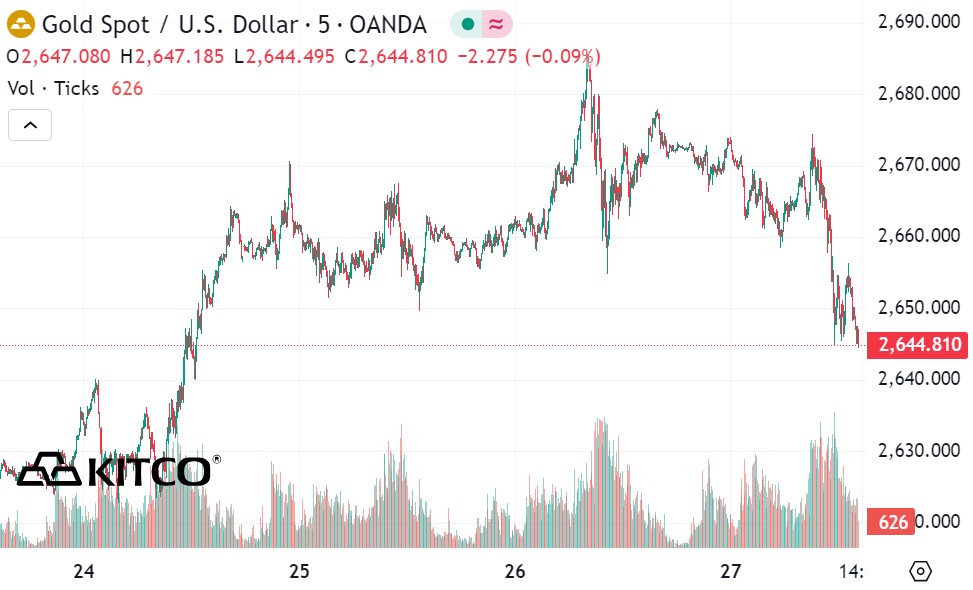
Các thị trường bên ngoài quan trọng ngày nay chứng kiến chỉ số USD Mỹ giảm nhẹ. Ghi nhận lúc 0h35 ngày 28.9 (giờ Việt Nam), chỉ số US Dollar Index đo lường biến động của đồng bạc xanh với 6 đồng tiền chủ chốt ở ngưỡng 100,169 điểm (giảm 0,08%).
Giá dầu thô Nymex gần như ổn định và giao dịch quanh mức 67,75 USD/thùng. Lợi suất trái phiếu kho bạc Mỹ kỳ hạn 10 năm chuẩn đang giảm và hiện đang đạt 3,77%.
Đà giảm của vàng có đáng lo?
Dù vàng thế giới sụt giảm nhưng giới chuyên gia vẫn đang nhận định khá tích cực về triển vọng trong thời gian tới. Bộ phận Nghiên cứu thị trường và kinh tế toàn cầu, Ngân hàng UOB (Singapore) vừa công bố báo cáo mới nhất về triển vọng giá vàng thế giới.
Trong báo cáo, chuyên gia dự báo giá vàng sẽ đạt 2.700 USD/ounce vào quý IV/2024, 2.800 USD/ounce vào quý I/2025, 2.900 USD/ounce vào quý II/2025 và cuối cùng là 3.000 USD/ounce vào quý III/2025.
Theo UOB, động lực chính thúc đẩy đà tăng của giá vàng là quyết định cắt giảm lãi suất của Cục Dự trữ liên bang Mỹ (FED), từ đó sẽ làm suy yếu đồng USD. Nhóm chuyên gia dự báo các chu kỳ hạ lãi suất của FED sẽ kéo dài đến quý I/2026, đưa lãi suất quỹ Fed từ mức 5% hiện tại xuống còn 3,25%.
Trên CBS News, bà Angelica Leicht - biên tập viên cao cấp của trang Managing Your Money, cựu biên tập viên tại The Simple Dollar, Interest, HousingWire và các ấn phẩm tài chính khác - chỉ ra một số lý do tại sao vàng có thể là một sự bổ sung khôn ngoan cho danh mục đầu tư của bạn, ngay cả khi giá tăng cao như hiện nay.
Theo chuyên gia này, một số lý do nên đầu tư vàng có thể kể đến các ngân hàng trung ương đang mua vào; vẫn còn những bất ổn kinh tế; vàng là nguồn tài nguyên hữu hạn và nhu cầu về công nghệ đang tăng lên. Việc sử dụng vàng trong các ứng dụng công nghệ cũng đang tạo ra một nguồn nhu cầu mới.
Đặc biệt, ngành công nghiệp điện tử tiếp tục tìm ra những ứng dụng sáng tạo cho vàng trong sản xuất điện thoại thông minh, máy tính và các thiết bị công nghệ cao khác.
Tuy có rất nhiều động lực hỗ trợ, vẫn tồn tại những rủi ro đối với giá vàng. UOB chỉ ra rủi ro chính là khả năng lạm phát bất ngờ tăng tốc trở lại, buộc FED phải thu hẹp quy mô cắt giảm lãi suất dự kiến.
Điều này có thể dẫn đến sự gia tăng trở lại của đồng USD và lãi suất, gây bất lợi cho giá vàng. Tuy nhiên, kể từ cuối năm 2023, vàng đã chứng minh được khả năng phục hồi trước những đợt tăng giá của USD. Ngoài ra, mặc dù đã tăng mạnh từ đầu năm đến nay, UOB nhận định, vàng vẫn có thể gặp các đợt điều chỉnh giá trong ngắn hạn.