
Gold price adjustments sharply from the peak in January may worry investors, but according to a research expert, this decrease opens up attractive buying opportunities when the foundational factors are still solid.
In an interview with Kitco News, Mr. Nitesh Shah, Head of Commodity and Macro Research at WisdomTree, said that the recent sell-off - which caused gold prices to fall more than 1,000 USD from the peak - largely does not reflect macroeconomic factors, but mainly due to changes in positions and sell-offs.
I think most of the decline since the January peak is just removing the bubble factor from the price," he said.
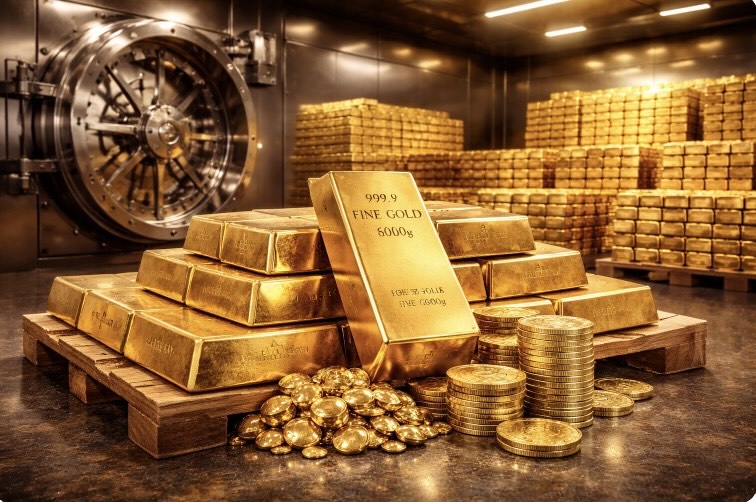
Mr. Shah explained that traditional factors such as bond yields, USD and speculative positions only explain a small part of the decline. His model shows that these factors only account for about 200 USD of the decline - much lower than the total correction.
“That number is almost negligible... while we have lost more than 1,000 USD from the peak," he emphasized, arguing that most of the volatility does not come from fundamental factors.
Instead, he believes that pressure from the general market is the main reason, when investors sell gold to increase liquidity during a volatile period.
He also noted that this is not unusual. Historically, gold usually decreased initially when major geopolitical events occurred, before increasing again. "Each time there is a major geopolitical risk, gold prices usually rise slightly first" - he said.
Despite short-term fluctuations, Mr. Shah affirmed that the current price level is a rare buying opportunity. "Gold is at a bargain price... really a good opportunity to buy," he said.
For investors who have been waiting for points to enter the market, he believes this is the time. "People have asked me for years that "I like gold but wait for points to buy"... then this is probably the time" - he said. "If you don't buy now, you will probably never buy.
Part of the reason for the weakening of gold is the expectation of interest rate changes, but Mr. Shah believes that the market may be overestimating the possibility of a strong tightening.
He expressed skepticism that central banks would significantly raise interest rates to curb inflation due to supply shocks, as this could push the economy into recession.
I am very skeptical that central banks will raise interest rates in this context," he said.
Instead, he predicted that policymakers would maintain their position, allowing inflation to evolve on its own - a scenario beneficial for gold.
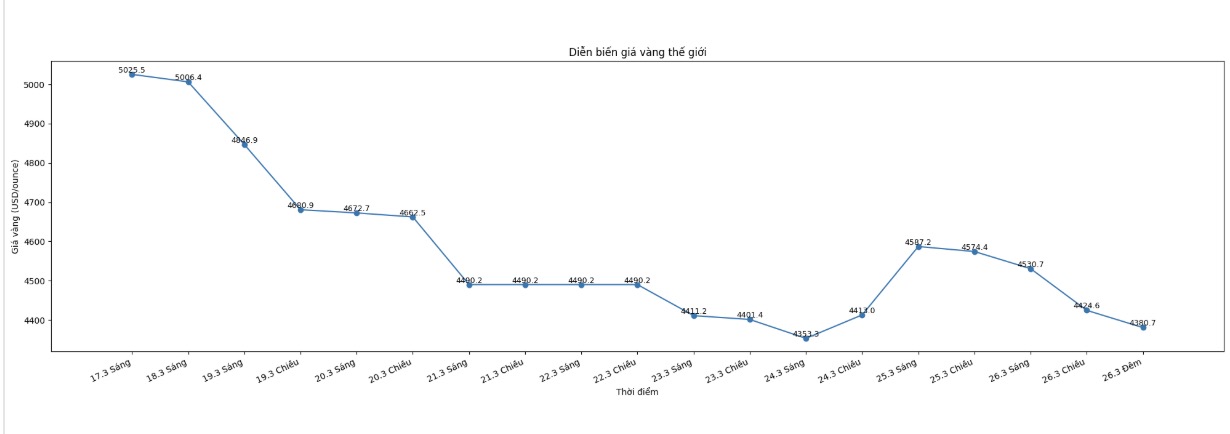
In the coming time, he believes that geopolitical tensions will still be the main supporting factor for gold prices, despite short-term fluctuations.
Geopolitical risks will not disappear, and when investors realize it, gold prices will rise," he said.
According to the basic scenario, he predicts gold prices could reach about $5,020/ounce by the end of the year, and does not rule out the possibility of increasing to $6,000 if geopolitical risks increase.
In addition to gold, Mr. Shah believes that the current environment is also favorable for the entire commodity market, especially when the global economy enters the final stage of the cycle with inflationary pressure and limited supply.
The final stage of the economic cycle is usually beneficial for goods," he said, arguing that energy, agriculture and basic metals are catching up with the upward momentum after precious metals previously led the market.
He also emphasized that geopolitical disruption and lack of investment in supply are creating conditions for a prolonged price increase cycle of goods.
Regarding portfolio allocation, he recommends that investors should allocate 15% - 20% for goods in the traditional portfolio (besides stocks and bonds). Of which, about 20% should be precious metals, including gold.
I will widely distribute it into goods, but about 20% of it should be for precious metals," he said.
He also advised focusing on markets with high liquidity and prioritizing items with strong price increases and tight supply, instead of just monitoring general commodity indices.


