
Prices of precious metals such as gold, silver and platinum have recently recorded a downward trend amid escalating geopolitical tensions.
However, according to Mr. Robin Brooks - senior expert at the Brookings Institution, the main reason is not that gold has lost its "safe haven" role but stems from the strong increase of individual investors in the market.
In a newly published analysis, Mr. Brooks said that the strong increase in precious metals in the period of the end of 2025 and early this year has attracted a large number of small investors to participate.
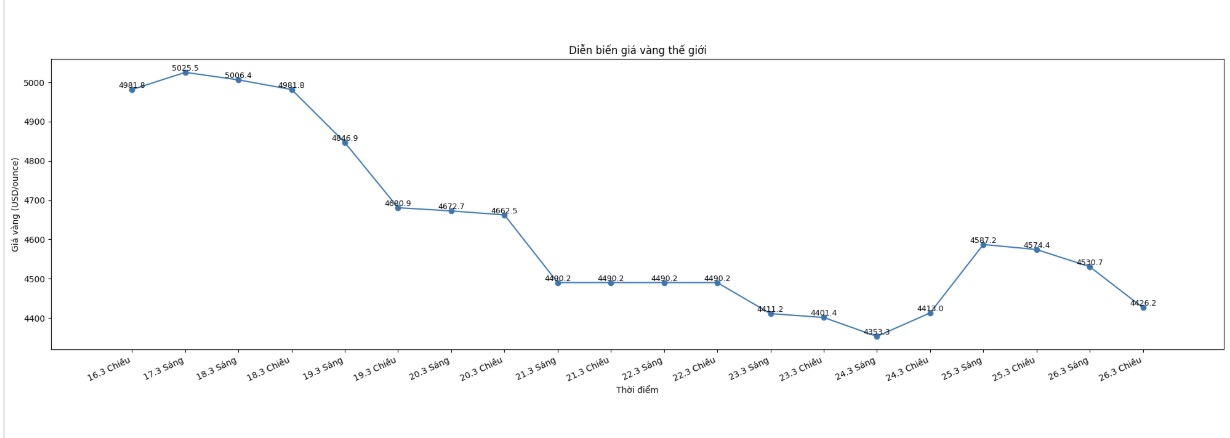
The change in investor structure also changes the way the market moves, as gold tends to react more like risky assets. This is reflected in the fact that gold prices decrease when conflict escalates but recover when signs of cooling appear.
In addition, the market also spread some other explanations for the decline of precious metals. Some opinions suggest that investors take advantage of profit-taking after already achieving large profits beforehand.
Others believe that strong market volatility forces investment funds to sell profitable assets, including gold, to meet margin requirements. However, according to Mr. Brooks, these factors are only short-term and do not change the nature of gold.
Market data shows that since the Iran conflict broke out, gold prices have fallen by about 15%, silver by 25% and platinum by about 20%. Meanwhile, the S&P 500 index only fell by about 5% in the same period.
This decrease shows that the precious metal is showing less positive developments than the stock market, which is not common in periods of instability.
Mr. Brooks believes that the decline in stocks is not large enough to trigger cash flow to safe haven assets such as gold. At the same time, current developments have many similarities with the post-Russia-Ukraine conflict period in 2022, when gold prices did not increase as strongly as expected. This reinforces the view that the market is in a correction process after a hot upward cycle, rather than reflecting a change in the role of the precious metal.
However, in the long term, Mr. Brooks still maintains a positive view of gold. He believes that loose fiscal policy in the US and many major economies is still putting pressure on monetary value, thereby maintaining demand for risk-weighted assets such as gold.
On the international market, spot gold prices at 5:00 PM on March 26 fluctuated around 4,426.2 USD/ounce.
This development shows that the market is in a state of stalemate, as investors continue to closely monitor signals from the geopolitical situation and global economic policy.


