
In an interview with Kitco News, Ms. Nawojka Wachowiak - Senior Portfolio Manager at Ninepoint Partners - said that the price rise of precious metals is still in the early stages for stock investors, although many people in the market believe that they have missed the opportunity.
“One of the most common reactions we hear from advisors is that they think they missed it. They see stocks increase by 100% or 150% and think the opportunity is over. But in fact this is how such cycles start. This cycle may be very large,” she said.
According to Ms. Wachowiak, the current gold price increase is different from previous cycles. Instead of stock investors leading from the beginning, the initial price increase was driven by central banks accumulating physical gold, a trend that started in 2022 and continues to this day.
That change fundamentally changed the market's momentum.
The price increase started from central banks buying physical gold," she said. "Stock investors, whether organizational or individual, have not yet participated in this early stage.
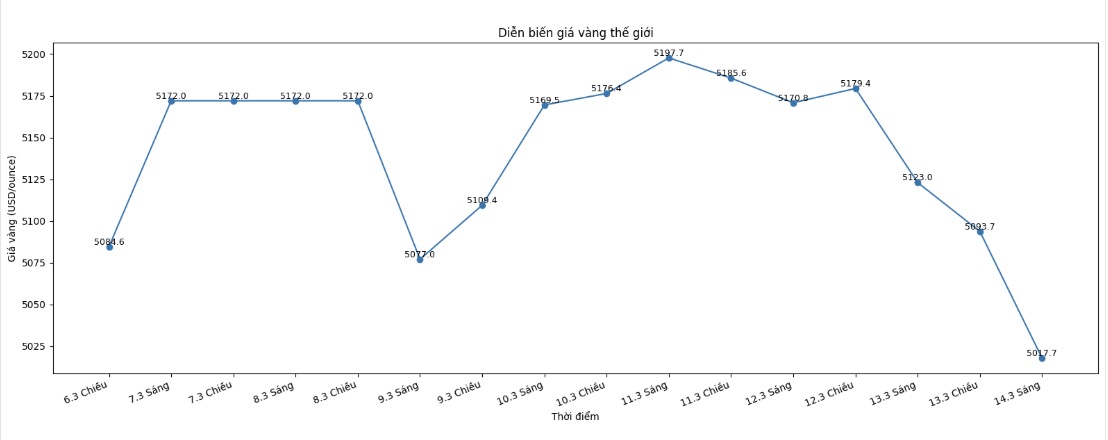
Ms. Wachowiak added that since 2024, most investors have focused on technology stocks and the boom in artificial intelligence. When large technology stocks bring strong profits, gold and gold mining stocks are largely overlooked.
According to her, it will not be until 2025, when geopolitical tensions, trade disputes and economic instability increase, that institutional investors will begin to reconsider gold as a safe haven asset.
Therefore, she believes that the upward momentum of gold mining companies' stocks is still quite new.
From a stock perspective, this increase is less than a year old. Gold prices have been rising for a long time before stocks really broke through" - she said.
That delay has created a significant pricing gap between gold prices and gold producing enterprises. Mining stocks are still historically cheap compared to gold prices as well as the stock market in general, showing that the room for price increase is still large if the pricing returns to the long-term average level.
Another factor supporting this sector is the increasing awareness of the role of gold in diversifying investment portfolios, especially in the context of geopolitical tensions, prolonged budget deficits and discussions about a downward trend in dependence on the USD.
Gold can act as a type of insurance in the portfolio. It helps hedge against monetary risks, geopolitical risks and brings diversification through access to tangible assets," said Ms. Wachowiak.
She also noted that the gold mining industry is relatively small in scale compared to many other sectors, so even small changes in the proportion of capital allocation of investors can have a major impact on prices.
We are not saying that investors will allocate 10% of their portfolio to gold. Even allocating only 5% can make a significant difference because the field itself is very small," she said.
In the field of mining, Ms. Wachowiak believes that capital flows often move in a clear sequence in the rising market.

However, according to her, the next stage of the cycle - when cash flow begins to shift down to smaller-cap companies - has not really taken place yet.
Large-cap manufacturers are receiving attention, but project development and exploration companies have not really increased prices yet," she said. "Usually this is where the strongest increase appears when investors start to feel more comfortable with this field.
Ms. Wachowiak said that Ninepoint is adjusting its investment portfolio in that direction. About half of the fund is still invested in mining companies, while the rest is allocated to project development and exploration enterprises - units that could become the next generation of mines in the future.
According to her, manufacturers currently still have a solid foundation, many businesses generate strong cash flow and return capital to shareholders through stock repurchase programs.


