
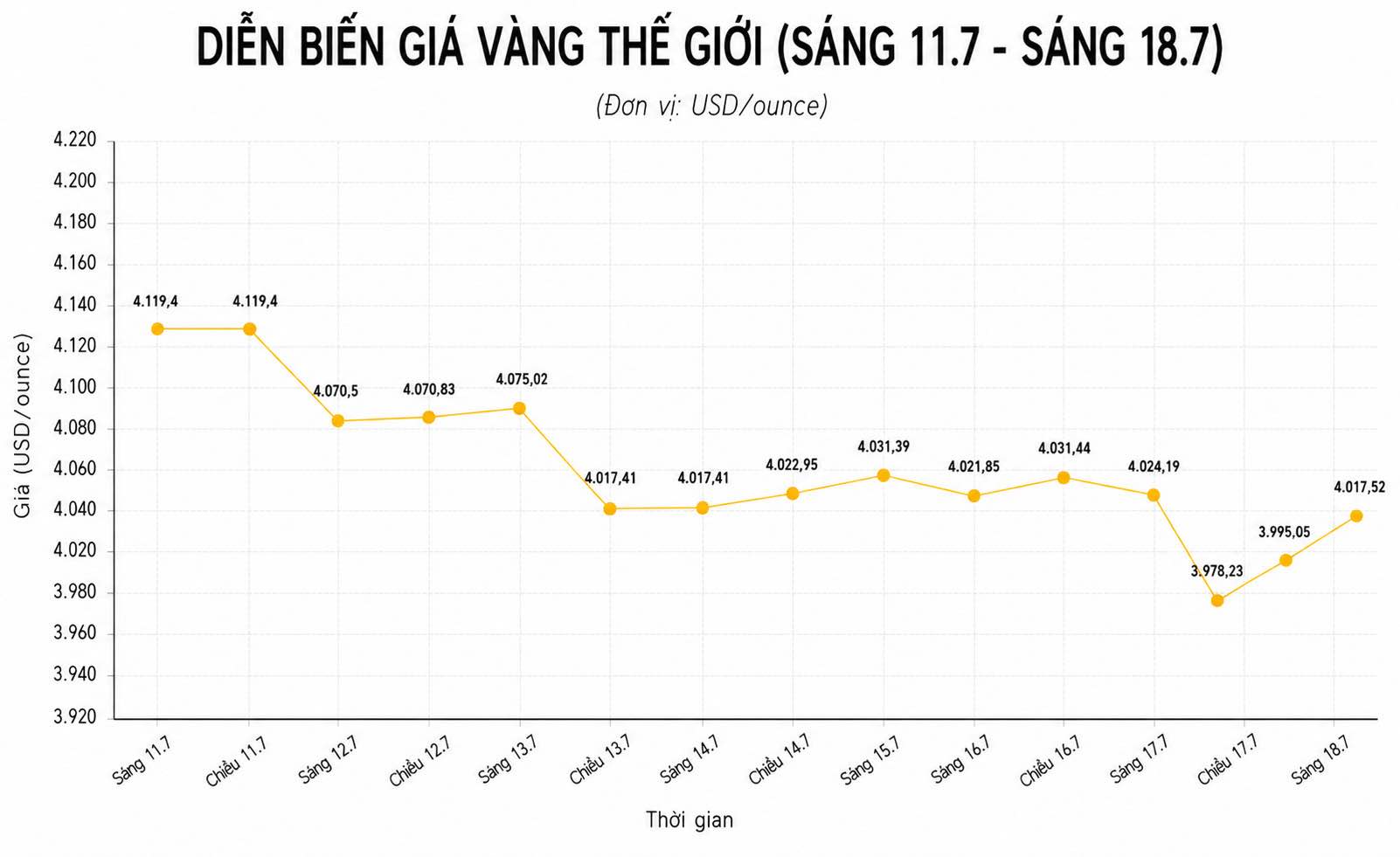
World gold prices closed the week with a less positive development when losing the psychological milestone of 4,000 USD/ounce in the context of oil prices, the USD and US bond yields simultaneously increasing, increasing expectations that the US Federal Reserve (Fed) will continue to raise interest rates to curb inflation.
In the session of July 17, spot gold prices at one point fell below 4,000 USD/ounce, hitting the lowest level since the beginning of July, before recovering around this level at the end of the session.
By the morning of July 18 Vietnam time, gold prices continued to recover above 4,000 USD/ounce.
The developments of the energy market continue to be a factor putting pressure on gold. Brent oil prices rose about 12% in the week, as tensions in the Middle East raised concerns about the risk of supply disruption, thereby increasing inflationary pressure.
Rising oil prices also contribute to strengthening expectations that the Fed may continue to raise interest rates to control inflation. According to the CME FedWatch tool, the market currently assesses about 73% of the possibility of the Fed raising interest rates at the December meeting.
Along with that, the USD and US government bond yields simultaneously increased again, reducing the attractiveness of gold - an asset that does not yield yields.
Previously, gold had fallen by about 14% in the second quarter, recording the strongest quarterly decline since 2013. In recent weeks, gold prices have mainly fluctuated around the 4,000 USD/ounce range after a sharp correction from the historical peak set at the beginning of the year.
On the precious metals market, spot silver prices rose slightly 0.06% to 55.56 USD/ounce, while platinum prices fell 2% to 1,589.72 and palladium fell 1.93% to 1,247.75 in the last trading session of the week.


