
SJC gold bar price
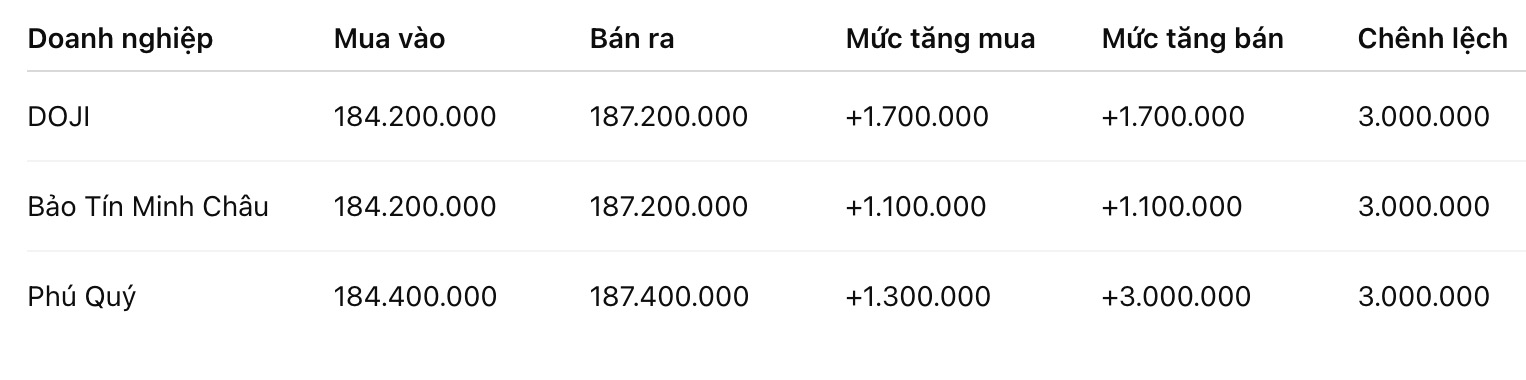
As of 9:15 am, SJC gold bar prices were listed by DOJI Group at the threshold of 184.2-187.2 million VND/tael (buying - selling), an increase of 1.7 million VND/tael in both buying and selling directions. The difference between buying and selling prices is at the threshold of 3 million VND/tael.
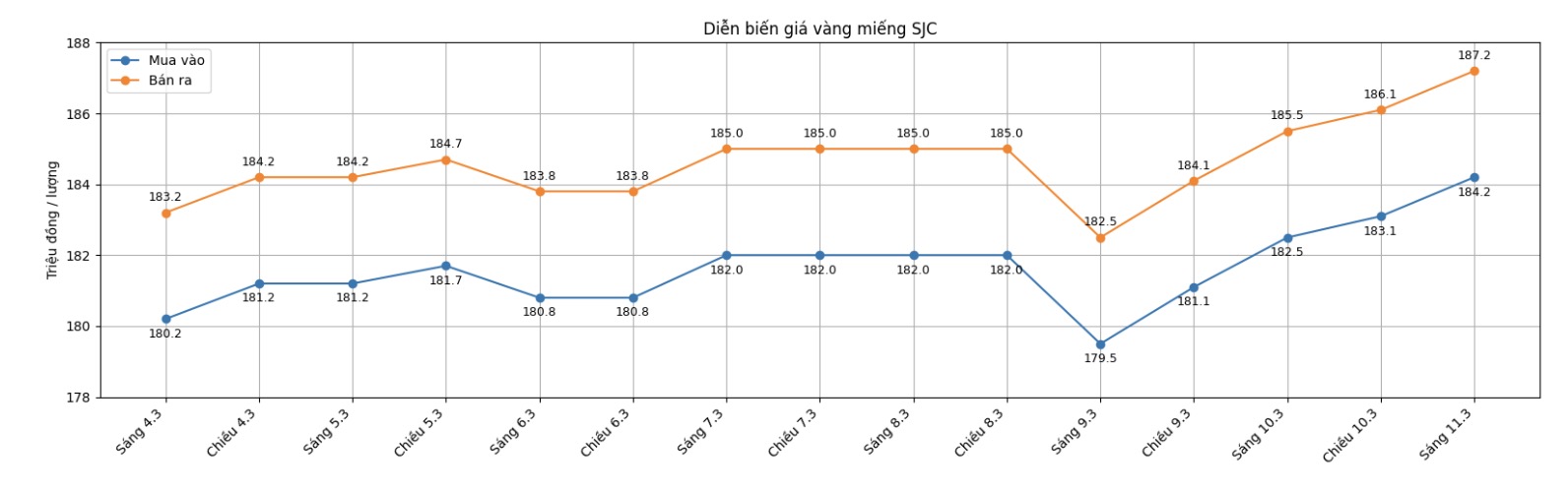
SJC gold bar price was listed by Bao Tin Minh Chau at the threshold of 184.2-187.2 million VND/tael (buying - selling), an increase of 1.1 million VND/tael in both buying and selling directions. The difference between buying and selling prices is at the threshold of 3 million VND/tael.
Phu Quy Jewelry Group listed SJC gold bar prices at 184.4-187.4 million VND/tael (buying - selling), an increase of 1.3 million VND/tael on the buying side and an increase of 3 million VND/tael on the selling side. The difference between buying and selling prices is at the threshold of 3 million VND/tael.
9999 gold ring price
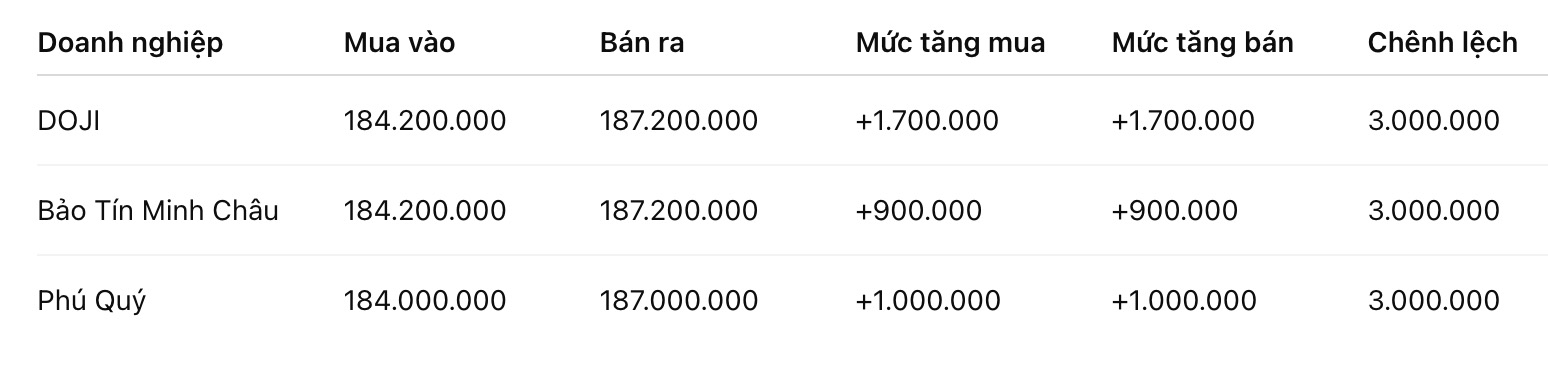
As of 9:15 am, DOJI Group listed the price of gold rings at the threshold of 184.2-187.2 million VND/tael (buying - selling), an increase of 1.7 million VND/tael in both buying and selling directions. The difference between buying and selling prices is at the threshold of 3 million VND/tael.
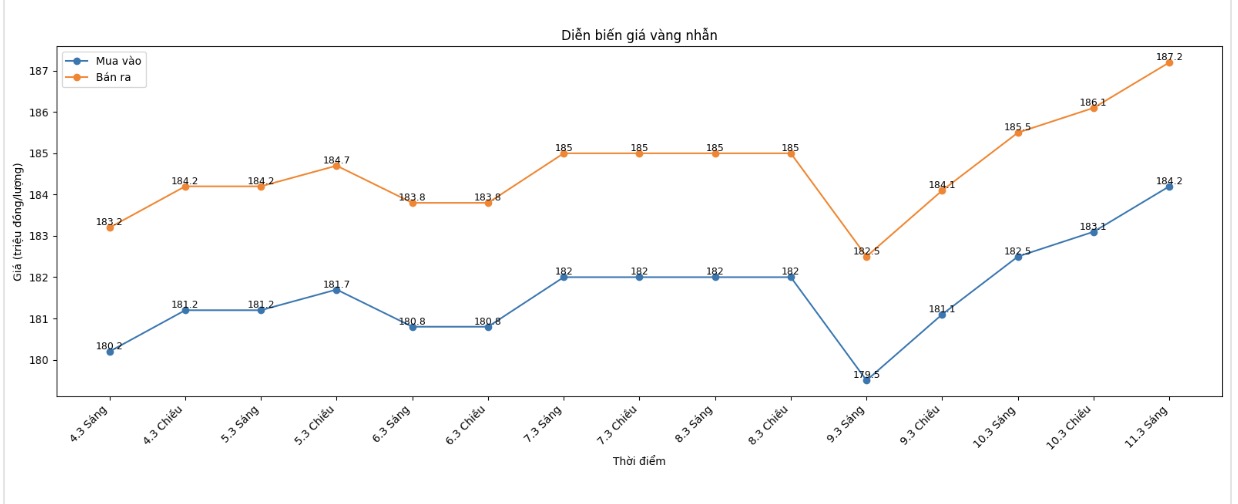
Bao Tin Minh Chau listed the price of gold rings at the threshold of 184.2-187.2 million VND/tael (buying - selling), an increase of 900,000 VND/tael in both buying and selling directions. The difference between buying and selling prices is at the threshold of 3 million VND/tael.
Phu Quy Gold and Gems Group listed the price of gold rings at 184-187 million VND/tael (buying - selling), an increase of 1 million VND/tael in both buying and selling directions. The difference between buying and selling prices is at 3 million VND/tael.
Currently, the buying - selling price difference of gold is at a very high level, around 3 million VND/tael, posing a risk of losses for investors.
World gold price
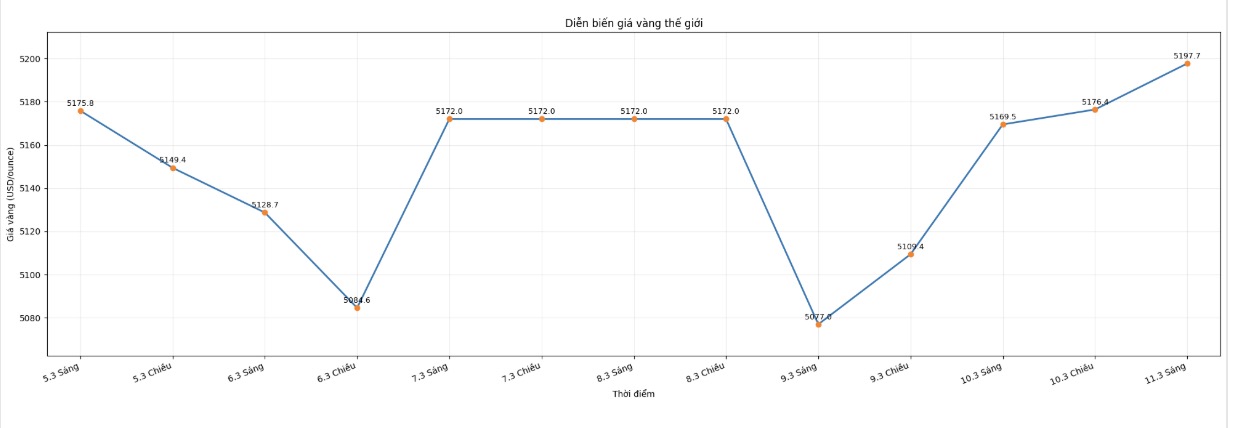
At 9:11 am, world gold prices were listed around the threshold of 5,197.7 USD/ounce, up 28.2 USD compared to the previous day.
Gold price forecast
World gold prices are maintaining an upward trend in the context of increased safe-haven demand due to escalating geopolitical tensions. The latest developments show that conflict in the Middle East continues to be a factor dominating the psychology of the precious metals market.
According to international analysts, instability related to the conflict between the US, Israel and Iran is causing cash flow to tend to gold and silver as safe assets. Although there are signs that the conflict may soon cool down, developments on the ground still show that the situation still has many unpredictable fluctuations.
Observers believe that safe-haven demand is playing a key role in gold's upward momentum. Even when the expectation that the US Federal Reserve (Fed) will soon cut interest rates is not really clear, the precious metals market still receives strong buying power. This shows that the main driving force of the current price increase comes from geopolitical risks and investor sentiment.
In that context, many experts believe that the long-term trend of gold is still quite positive. Ms. Kristy Akullian - Head of Investment Strategy for iShares America at BlackRock - said that although the precious metals market is entering a period of stronger volatility, the gold's upward cycle has not yet ended.
According to Ms. Akullian, gold prices have increased sharply in the past year, reflecting the increasing demand from many groups of investors, including central banks, investment funds and new capital flows in the financial market. In addition, increased global public debt also makes gold more attractive as a channel to store value.
In addition to financial factors, geopolitical instability continues to support demand for precious metals. "Periods of policy shifts or global order restructuring often increase demand for assets considered shelters," Ms. Akullian said.
However, experts also note that the gold market may continue to fluctuate strongly in the short term. Although the long-term outlook is still positive thanks to fundamental factors, technical corrections can still occur when investors take profits or when geopolitical factors change unexpectedly.


