
SJC gold bar price
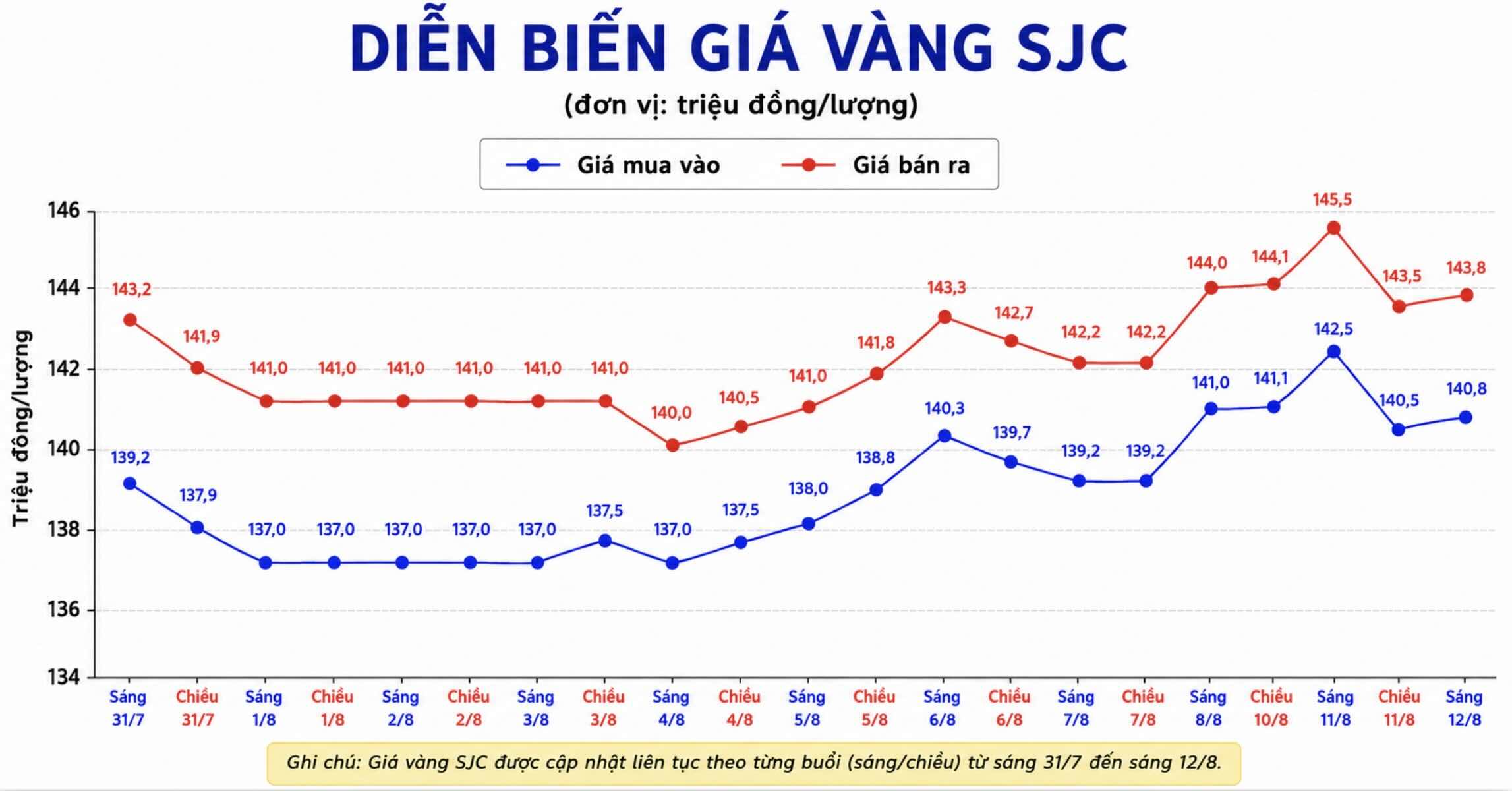
As of 9:00 AM, Phu Quy listed SJC gold bar prices at 140.8-143.8 million VND/tael (buying - selling), down 1.7 million VND/tael in both buying and selling directions. The buying - selling difference is at 3 million VND/tael.
At the same time, SJC gold bar prices were listed by DOJI Group at 140.8-143.8 million VND/tael (buying - selling), down 1.7 million VND/tael in both buying and selling directions. The buying - selling difference was at 3 million VND/tael.
9999 gold ring price
As of 9:00 AM, Phu Quy Gold and Gems Group listed the price of gold rings at 140.8-143.8 million VND/tael (buying - selling), down 1.7 million VND/tael in both buying and selling directions. The buying - selling difference is at 3 million VND/tael.
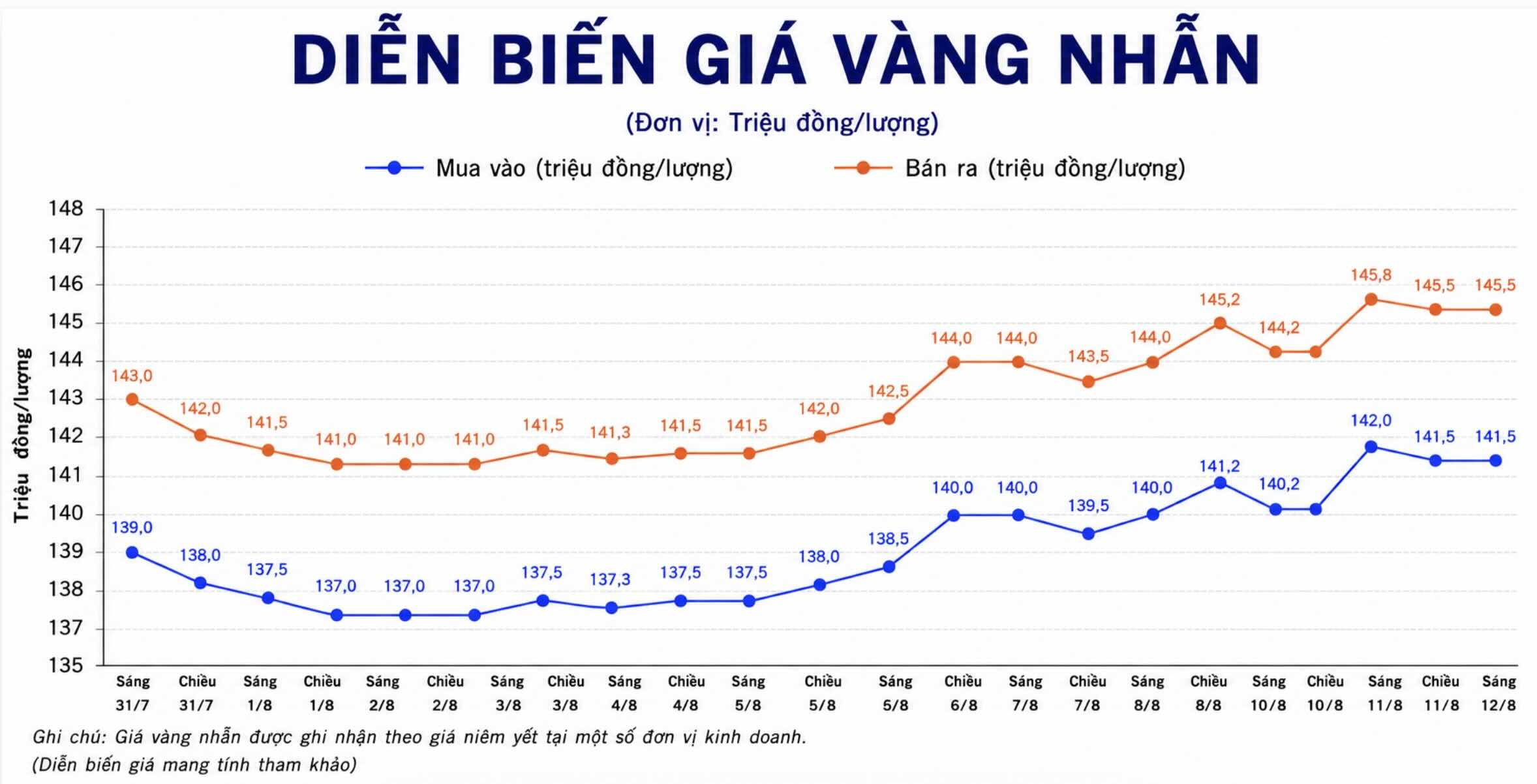
DOJI Group listed gold ring prices at the threshold of 141.5-145.5 million VND/tael (buying - selling), down 500,000 VND/tael on the buying side and down 300,000 VND/tael on the selling side. The buying - selling difference is at 4 million VND/tael.

World gold price
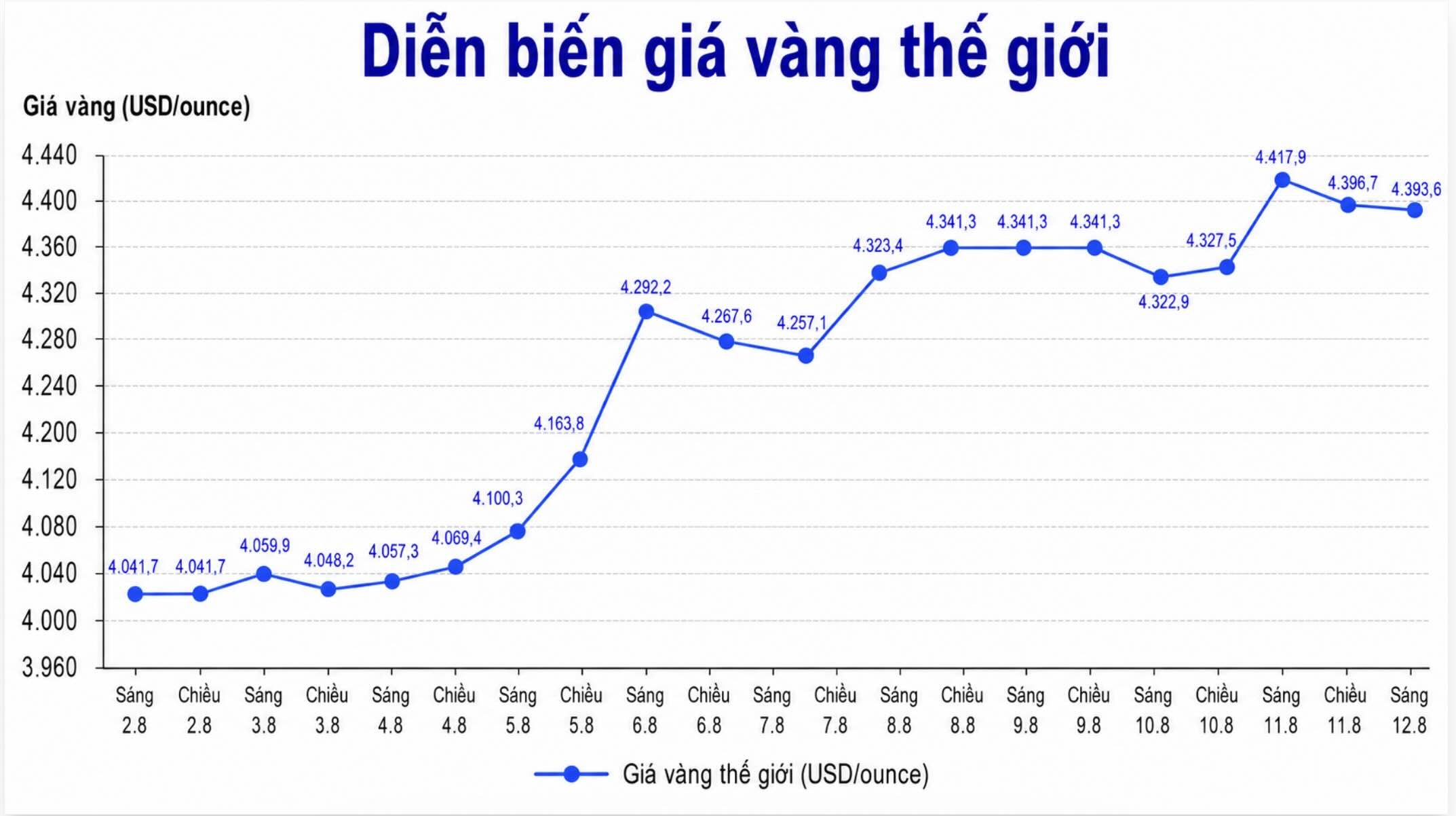
At 8:55 AM, world gold prices were listed around the threshold of 4,393.6 USD/ounce, down 24.3 USD/ounce.
Gold price forecast
Gold prices are entering a period of fluctuation as the market is simultaneously affected by geopolitical tensions, fluctuations in the USD and expectations about US monetary policy.
In the US trading session, demand for safe-haven assets continued to support precious metals. Tensions related to the Strait of Hormuz have not shown signs of cooling down, causing investors to maintain cautious sentiment. This development partly helps gold maintain its attractiveness, although the USD strengthens and US government bond yields remain high.
The focus of the market in the short term is US inflation data, especially the consumer price index (CPI) and producer price index (PPI). These data may significantly affect expectations about when the US Federal Reserve (Fed) adjusts interest rates.
Previously, negative employment data increased expectations that the Fed could ease monetary policy. However, the rebound in oil prices made the inflation risk unavoidable. The yield of 10-year US government bonds remained around 4.7%, creating certain pressure on gold as the precious metal did not yield.
Meanwhile, Brent and WTI oil prices both increased as investors continued to monitor tensions in the Strait of Hormuz. Higher energy prices could cause prolonged inflationary pressure, making the Fed's policy outlook more unpredictable. This is also a factor that could cause gold prices to continue to fluctuate sharply in the coming sessions.
The weakening developments of some major stock indices in the US are also contributing to promoting defensive cash flow to gold.
Technically, after gold prices surpass the 4,360-4,380 USD/ounce zone, this area may become a noteworthy support zone if the upward momentum is maintained. On the upward side, the 4,480 USD/ounce zone and the psychological level of 4,500 USD/ounce are the levels to be monitored.
Conversely, if the price weakens and loses the 4,350 USD/ounce mark, selling pressure may increase, bringing gold back to the 4,300 USD/ounce zone. Further, the 4,180-4,200 USD/ounce area is considered an important support zone.
Gold price data is compared to the previous day.
The information in the article is for reference only, reflecting market developments at the time of recording and not an investment recommendation. Investors need to carefully consider their financial capacity, personal goals and related risks before making a decision to buy or sell gold.
See more news related to gold prices HERE...


