
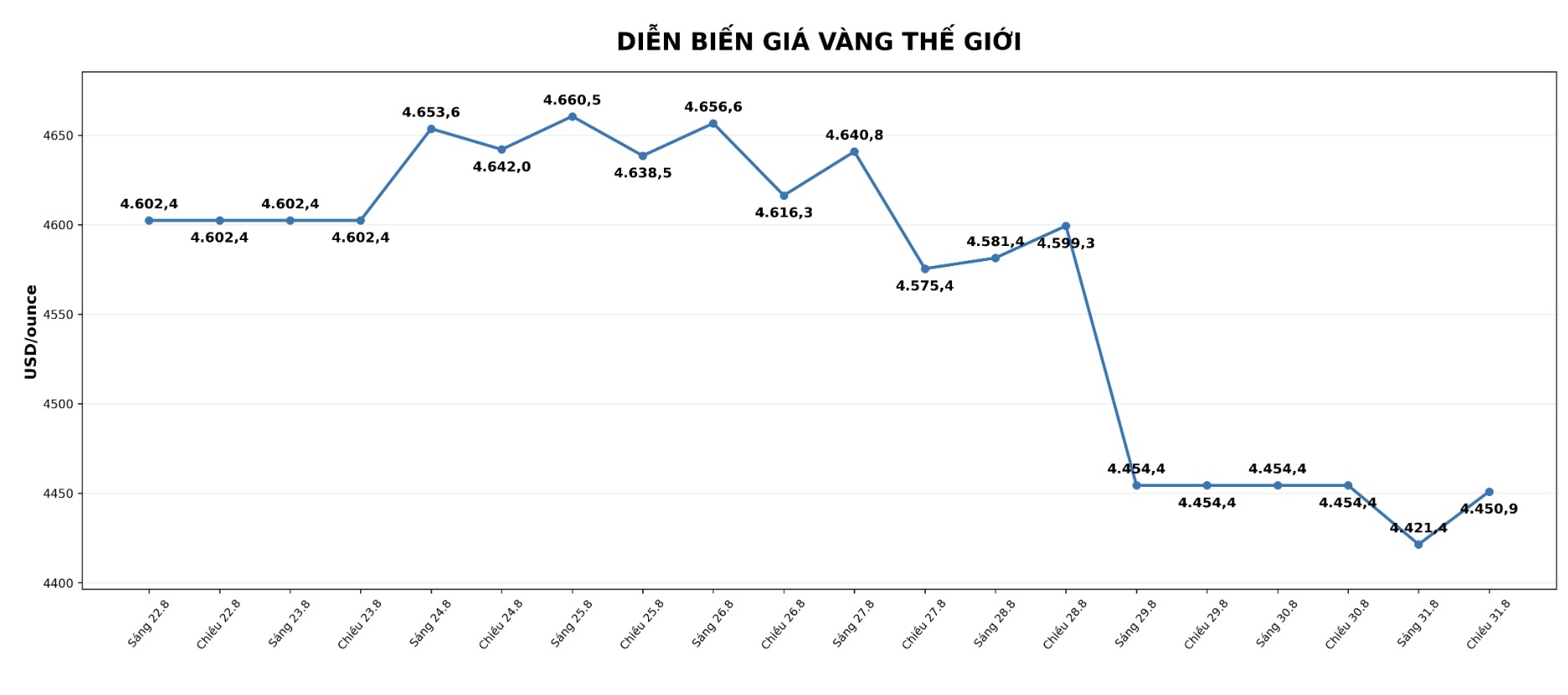
World gold prices were under downward pressure in the trading session on August 31, as tough monetary policy signals from the US Federal Reserve (Fed) continued to affect investor sentiment.
As of 8:35 GMT (ie 15:35 Vietnam time), spot gold prices fell 0.4% to 4,436.04 USD/ounce, after hitting their lowest level since August 19. Meanwhile, the US December gold futures contract fell about 1%, to 4,486.40 USD/ounce.
Selling pressure continued to appear after a sharp drop last weekend. In the trading session on August 28, gold prices lost more than 3%, recording the largest one-day drop since June 10.
The main reason comes from Fed Chairman Kevin Warsh's tough message at the Jackson Hole conference. He said the US central bank still has a lot of work to do if policymakers cannot believe that inflation is returning to the 2% target.
This statement raises expectations about the Fed's ability to continue to raise interest rates rapidly. According to the CME FedWatch tool, the market currently values about 60% of the Fed's ability to raise interest rates in September, significantly higher than the level of about 36% before the speech at Jackson Hole.
Higher interest rates are often detrimental to gold because precious metals do not yield yields. At the same time, expectations of tight monetary policy may support the USD and push US government bond yields up, thereby increasing pressure on gold prices.
Tensions in the Middle East are also creating opposite impacts. New attacks involving the US and Iran caused oil prices to rise nearly 2% on August 31. The risk of energy supply disruption raises concerns that inflation may remain high, thereby strengthening the Fed's ability to maintain tight monetary policy for longer.
Despite a sharp decrease in recent sessions, gold is still heading towards a positive trading month. Since the beginning of August, the price of precious metals has increased by more than 10%, the strongest monthly increase since January.
Previously, gold had climbed to 4,696.18 USD/ounce last week, the highest level in more than 3 months. The upward momentum was boosted after the US Treasury Department announced plans to double the scale of long-term bond repurchases to support liquidity. This move increased concerns about the decline in currency purchasing power and boosted demand for gold holdings.
In the coming sessions, the market will focus on US labor data. The ADP private sector jobs report and the non-farm payroll expected to be released this week, could become important factors determining the next direction of gold.
To bring gold prices back to the above 4,600 USD/ounce zone, the market may need weaker US job data than expected, thereby reducing expectations of interest rate hikes, pulling bond yields and the USD down. Cooling down tensions in the Persian Gulf region may also contribute to reducing inflationary pressure.
In other precious metals, spot silver prices rose about 1% to $66.99/ounce and have risen more than 16% in the month. Platinum prices fell 1.1% to $1,799.89/ounce, while palladium lost 1.3% to $1,403.92/ounce.
The gold market is fluctuating strongly as interest rate expectations change rapidly. Investors need to closely monitor US economic data, USD developments, bond yields and geopolitical tensions, and be cautious in the face of chasing purchase decisions at times of large price fluctuations.
The content of the article is to update the developments of the gold market, impact factors and price trends at the time of recording, not an investment recommendation.


