
According to the 2024 Law on Social Insurance, from July 1, 2025, Vietnamese citizens aged 75 and over who do not receive pensions or monthly social insurance allowances and have written requests are entitled to social pension benefits.
Especially people from 70 years old to under 75 years old from poor or near-poor households, if they meet the conditions according to regulations, are also entitled to this policy.
Currently, the Ministry of Home Affairs is studying a plan to reduce the age for enjoying social pension benefits from 75 to 70 years old.
For older freelancers, continuing to work to maintain their lives is not uncommon.
Already in her 70s, Ms. Chu Thi Lyn - from Thanh Hoa, suffers from many diseases such as salivary gland inflammation, knee arthritis, but still has to go to Hanoi to sell goods on the street to earn extra income. The prolonged work every day makes her pains often worse after returning to her residence.
Without a pension, at an old age, Mrs. Lyn still has to continue working to cover living expenses, buy medicine for herself and take care of her blind husband in her hometown.
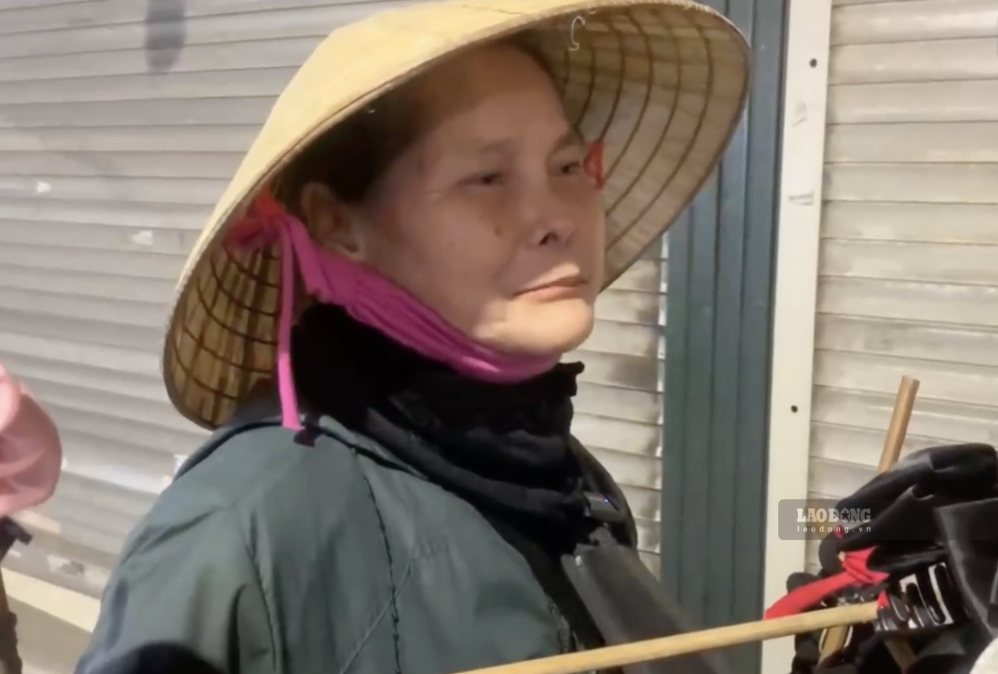
For freelancers like her, the ability to generate income is increasingly limited as she gets older, while essential expenses still have to be maintained.
If possible, elderly people without pensions like me will have an additional support, reducing some of the burden of life," Ms. Lyn expressed.
Talking to Lao Dong, Dr. Pham Ngoc Toan - Director of the Center for Strategic Forecast Analysis and Public Services under the Institute of State and Labor Organization Science (Ministry of Home Affairs) - proposed reducing the retirement age to 70 years old, which is actually expanding the scope of social security protection for the elderly group who have not been fully protected by the system.
According to Dr. Pham Ngoc Toan, this proposal is consistent with the approach of building a multi-layered social insurance system. In which, pensions based on contributions are still the foundation to ensure income in old age for eligible workers. Social pensions play a role as a basic guarantee layer for those who do not have full guarantees from the contribution system.
Social pension allowances do not replace social insurance but supplement the gap in the social insurance system," Dr. Pham Ngoc Toan analyzed.
According to him, paying social pension benefits can bring certain social benefits, first of all, ensuring a basic income level for the elderly, reducing the risk of falling into poverty when working capacity declines, and sharing part of the responsibility of caring for and ensuring social security with the family.
Therefore, when considering expanding the scope of social pension benefits, it is necessary to simultaneously assess both the ability to balance budget resources and the social security efficiency that the policy brings.
Reducing the age for enjoying allowances also needs to be placed in the overall process of expanding the coverage of social insurance, so that more and more people have a stable income when they get old.
Dr. Pham Ngoc Toan emphasized that a good social security system needs to aim for three requirements: broad coverage, adequate protection and ensuring resource sustainability.
In the long term, social pensions should be considered the last guarantee, while the basic goal is still to expand the coverage of social insurance based on contributions, so that more and more elderly people can live on their accumulated achievements.


