
Gold prices rose 2% in the first trading session of the week as oil prices fell sharply and the USD weakened, helping the market reduce concerns about inflationary pressure as well as the prospect of prolonged high interest rates.
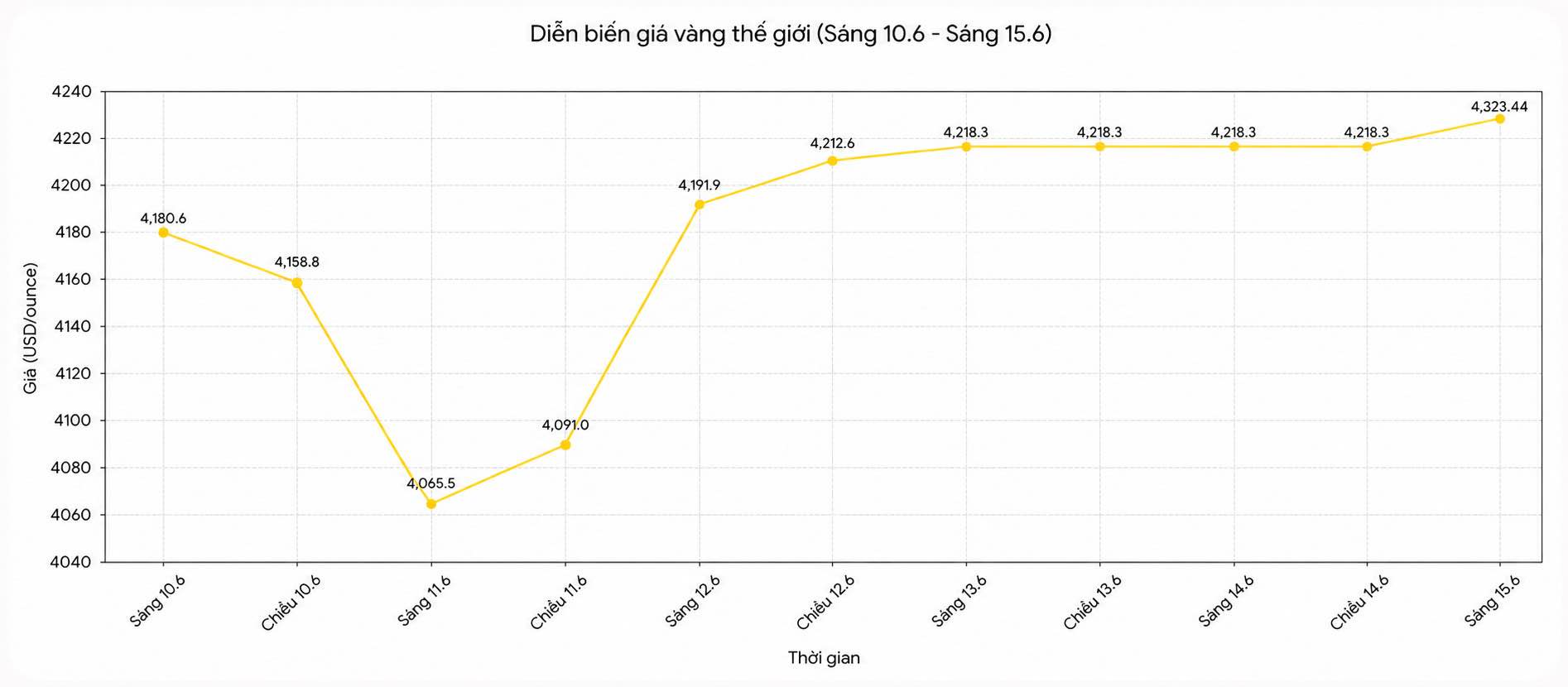
As of 10:11 am Vietnam time, spot gold prices increased by 2.46% to 4,323.44 USD/ounce, the highest level since June 9. August gold futures also increased by 2%, to 4,347.20 USD/ounce.
Information released on June 14 shows that the parties have reached an initial framework aimed at restoring energy and trade flow in the Middle East region. According to Pakistani Prime Minister Shehbaz Sharif, the peace agreement is expected to be officially signed in Switzerland later this week.
The above development has dragged the USD down to its lowest level in 10 days, while causing oil prices to fall by more than 4%. The weakening USD makes gold cheaper for investors holding other currencies, thereby supporting demand for precious metals.
Mr. Tim Waterer - Chief Market Analyst at KCM Trade - said that falling oil prices and weakening the USD are contributing to cooling inflation expectations in the market.
Lower oil prices and softer USD are helping to ease concerns about inflation. This is the most positive supporting factor for gold in recent weeks. However, the sustainability of this trend will depend on the ability to maintain current positive signals," he said.
In recent months, gold prices have been under significant pressure as energy costs have increased sharply, raising concerns about prolonged inflation. This has caused the market to continuously raise forecasts about the ability of central banks to maintain high interest rates for longer than expected.
Although gold has long been seen as an inflation hedging tool, the high interest rate environment reduces the attractiveness of the precious metal because the opportunity cost of holding assets does not generate increased returns.
According to CME's FedWatch tool, after the latest developments, the market currently only assesses about 47% of the possibility that the US Federal Reserve (Fed) raises interest rates in December, down sharply from 69% recorded last week.
In a newly released report, OCBC believes that long-term supporting factors for gold remain intact.
Concerns about currency depreciation, fiscal risks and the trend of asset diversification are still supporting long-term gold demand. If inflationary pressure from energy continues to cool down, these factors may once again become the main driver of the gold market," OCBC said.
Not only gold benefited from the change in market sentiment, other precious metals also simultaneously increased in price. Silver increased by 3.04% to 70.31 USD/ounce. Platinum increased by 3.1% to 1,771.27 USD/ounce, while palladium increased by 3.3% to 1,325.76 USD/ounce.
Despite a strong recovery in the first session of the week, gold prices are still about 20% lower than the historical peak set in January. Investors are monitoring whether the decline in oil prices and interest rate expectations will be enough to create momentum for a new upward cycle of precious metals in the coming months.


