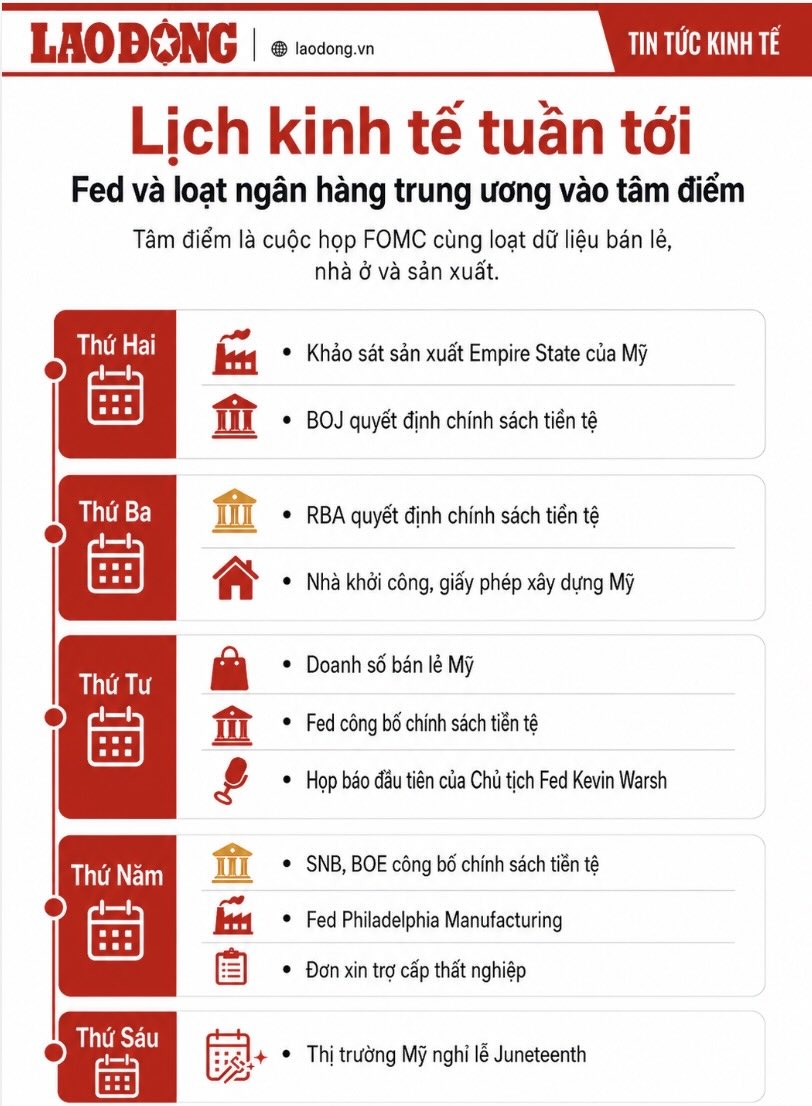
This trading week may be an important period for the global financial market, as a series of monetary policy decisions and big economic data are released.
For the gold market, this could be a week to retest the strength of both safe-haven buying and pressure from interest rates, the USD and US bond yields.
The biggest focus is the policy meeting of the US Federal Reserve (Fed). This is also the first FOMC meeting under the direction of Fed Chairman Kevin Warsh. Although the market is not only monitoring interest rate decisions, speaking at a press conference after the meeting is a factor that could create stronger fluctuations for gold.
Gold is often sensitive to US monetary policy because the precious metal does not yield interest rates. If the Fed signals to maintain a high interest rate level for longer to control inflation, the USD and bond yields may rise, thereby putting pressure on gold prices.
Conversely, if the Fed leaves open the possibility of policy easing in subsequent meetings, gold may be supported by expectations that the opportunity cost of holding precious metals will decrease.

Before the Fed meeting, the market will receive a series of important data. Opening the week is the Empire State Manufacturing Survey production index. This is a measure reflecting the health of manufacturing activity in the New York area.
If the data is weaker than forecast, the market may increase concerns that the US economy slows down, thereby supporting safe-haven demand for gold. However, too weak data may also cause investors to sell assets to hedge liquidity, causing gold to fluctuate unpredictably in the short term.
At the same time, policy decisions of the Bank of Japan and the Reserve Bank of Australia are also being noted. If major central banks signal tougher on inflation, the global rate of return may be under increasing pressure.
This is often not beneficial for gold. Conversely, a cautious or softer stance can help gold maintain its defensive asset role.
On Tuesday, the market will monitor May housing start data and construction permits in the US. This group of data reflects the health of the real estate sector, which is very sensitive to interest rates.
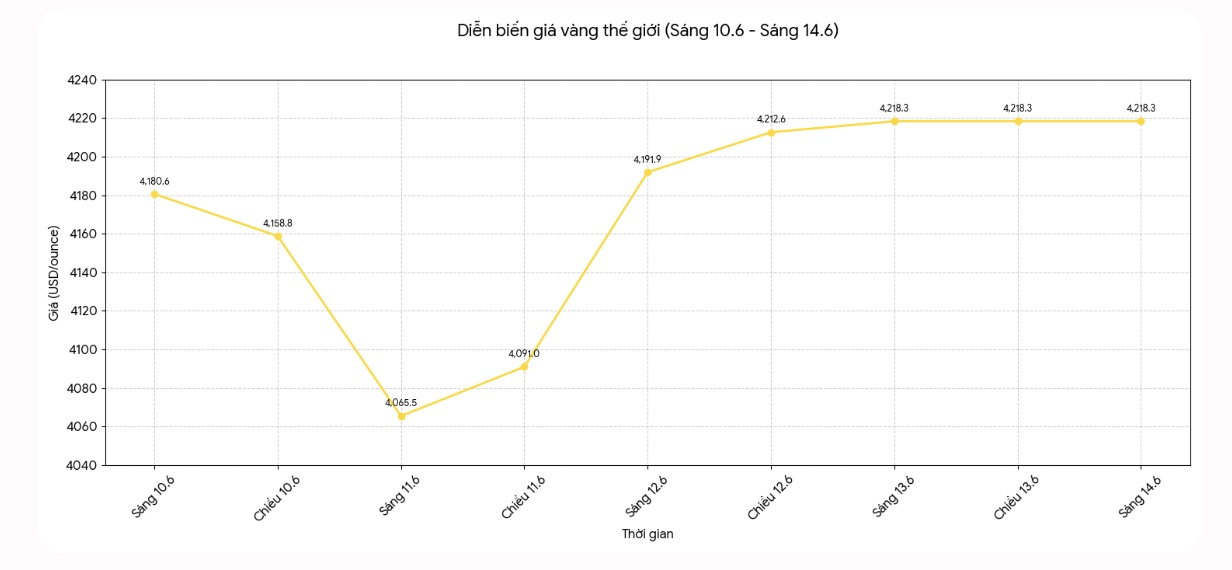
If the housing market continues to weaken, investors may expect the Fed to be less tough. This is a scenario beneficial for gold. Meanwhile, positive housing data may strengthen the view that the US economy is still strong enough to withstand high interest rates, thereby limiting the upward momentum of precious metals.
By Wednesday, May retail sales will be closely monitored data. This is an important indicator of US consumer purchasing power. If retail sales increase sharply, the market may worry about persistent service and consumer inflation, making it difficult for the Fed to cut interest rates soon. Then, gold may be under pressure. Conversely, weak data will increase expectations of softer monetary policy, supporting gold prices.
Also on this day, sales data of pending houses will add to the picture of the real estate market. A slowing housing market often shows that high interest rates are having a clearer impact on the economy. With gold, this is a factor that can strengthen the shelter role if growth concerns spread widely.
On Thursday, the market continued to monitor policy decisions from the Swiss National Bank and the Bank of England, along with the Philly Fed manufacturing index and weekly unemployment claims in the US. Weakening job data could reduce expectations of the Fed maintaining high interest rates, while negative manufacturing data could boost cash flow to gold.
However, investors also need to note that the US market will close on Friday due to the Juneteenth holiday. Thin pre-holiday liquidity may cause gold price fluctuations to be strong, especially if messages from the Fed and economic data in the week create major changes in interest rate expectations.
In general, gold prices this week will depend heavily on how the market interprets the Fed's message and US economic health. A tough Fed scenario, strong consumer data and rising yields will put pressure on gold. Conversely, slower growth signals, weaker labor markets or a more cautious Fed may help precious metals recover.