
Gold prices rebound
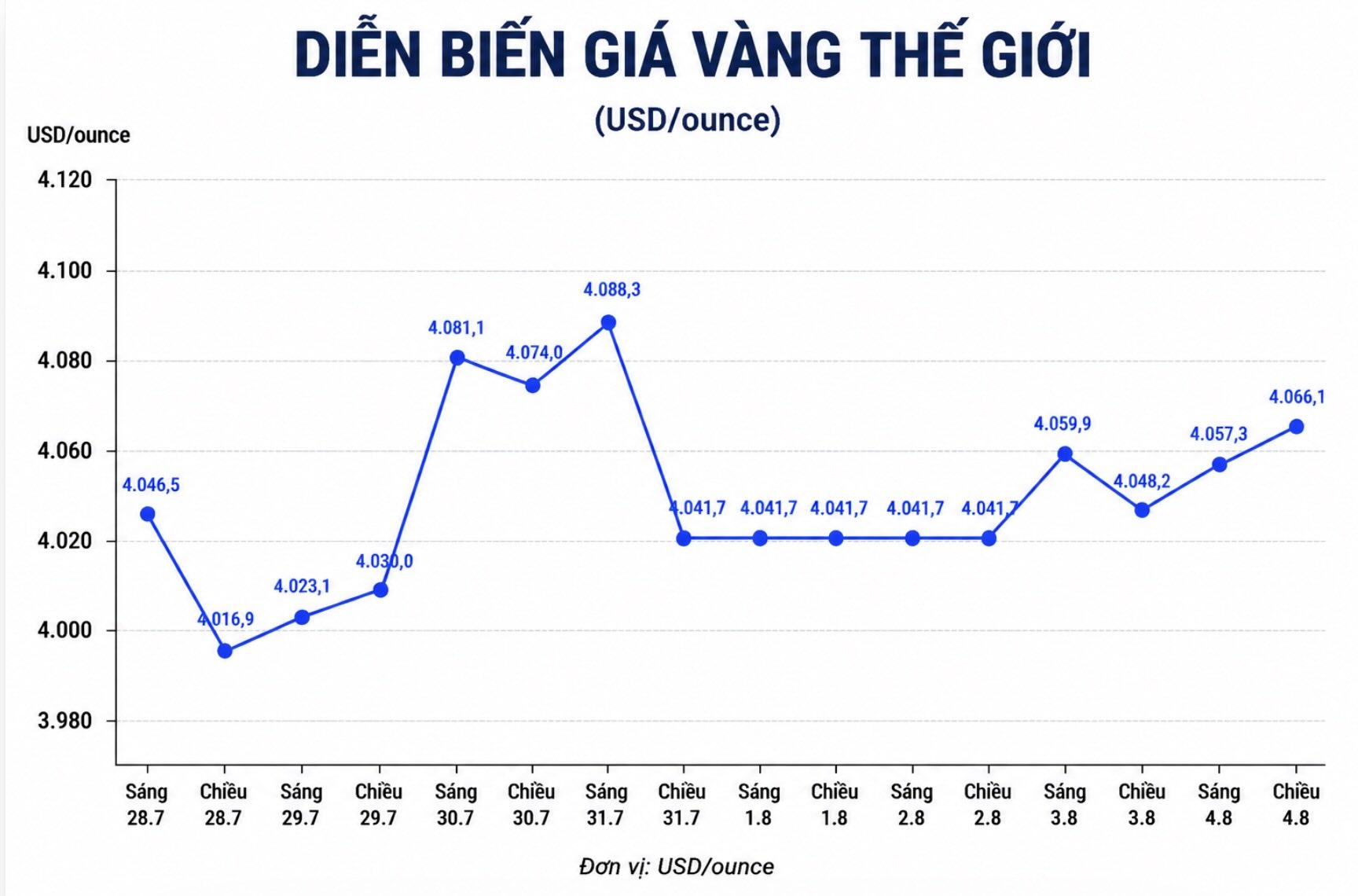
Recorded at 3:20 PM on August 4th Vietnam time, spot world gold prices increased by 0.28%, to 4,066.1 USD/ounce. The precious metal maintained green as investors simultaneously monitored tensions in the Middle East and important US economic reports.
New developments show that buying power still appears every time gold prices fall, helping the market maintain the price range above 4,000 USD/ounce. However, the increase margin is not large because investors are still cautious in the face of mixed signals about inflation and monetary policy.
In the short term, gold prices are supported by the need to find safe assets. Unconfirmed information related to the possibility of the US and Iran resuming negotiations continues to cover the market with geopolitical risks.
US President Donald Trump warned on August 3 that Iran has a "last chance" to sign a peace agreement.
Speaking from the White House, Mr. Trump said Washington and Tehran have begun new negotiations, despite the Iranian Foreign Ministry previously deniving any negotiations.
We are negotiating. And we are negotiating at the request of Iran, backed by Saudi Arabia, the United Arab Emirates and especially Qatar" - Mr. Trump told reporters in the Oval Office - "This is the last chance for them to sign a good document" - he added.
The difference between the statements makes it impossible for the market to determine whether tensions will cool down soon or not. When the risk of prolonged conflict is still present, a part of investors continue to hold gold to hedge against risks.
US job data becomes the focus
Besides geopolitical factors, the diễn biến of gold prices in the coming sessions may depend heavily on the US job data chain.
The market is waiting for reports on the number of vacancies, private sector employment data and non-farm employment reports. These are important data to assess the health of the labor market as well as the ability to adjust policies of the US Federal Reserve (Fed).
If recruitment activities weaken, expectations that the Fed will continue to raise interest rates may fall. This scenario often puts pressure on the USD and US bond yields, thereby creating more room for gold to increase.
Conversely, positive employment data, especially when accompanied by high wage increases, may increase concerns about inflation. At that time, the Fed has more reason to maintain tight monetary policy, putting pressure on gold prices.
The market currently assesses the possibility of the Fed raising interest rates in September at around 65%. This expectation formed after the US monetary regulator kept interest rates unchanged at its most recent meeting but still left open the possibility of action if inflation does not decrease as expected.
Conflict both supports and puts pressure on gold
Middle East tensions are creating two opposing waves of impact on the precious metals market. In one direction, geopolitical instability increases safe-haven demand, directly supporting gold prices. Investors often increase their holdings of precious metals when the risk of widespread conflict or volatile risky investment channels appears.
Conversely, the conflict caused energy prices and transportation costs to rise, raising concerns about inflation. If price pressure persists, central banks may have to keep interest rates higher for longer or consider raising them further.
Gold is considered an inflation hedging tool but does not create regular cash flow. Therefore, high interest rates increase the opportunity cost when holding gold, thereby limiting the upward momentum of precious metals.
The tug-of-war between safe-haven demand and interest rate risks may cause gold prices to continue to fluctuate strongly. US economic reports this week will play an important role in determining whether the market has enough momentum to surpass the 4,070 USD/ounce zone or not.
The article only provides information about market developments, not investment recommendations.


