
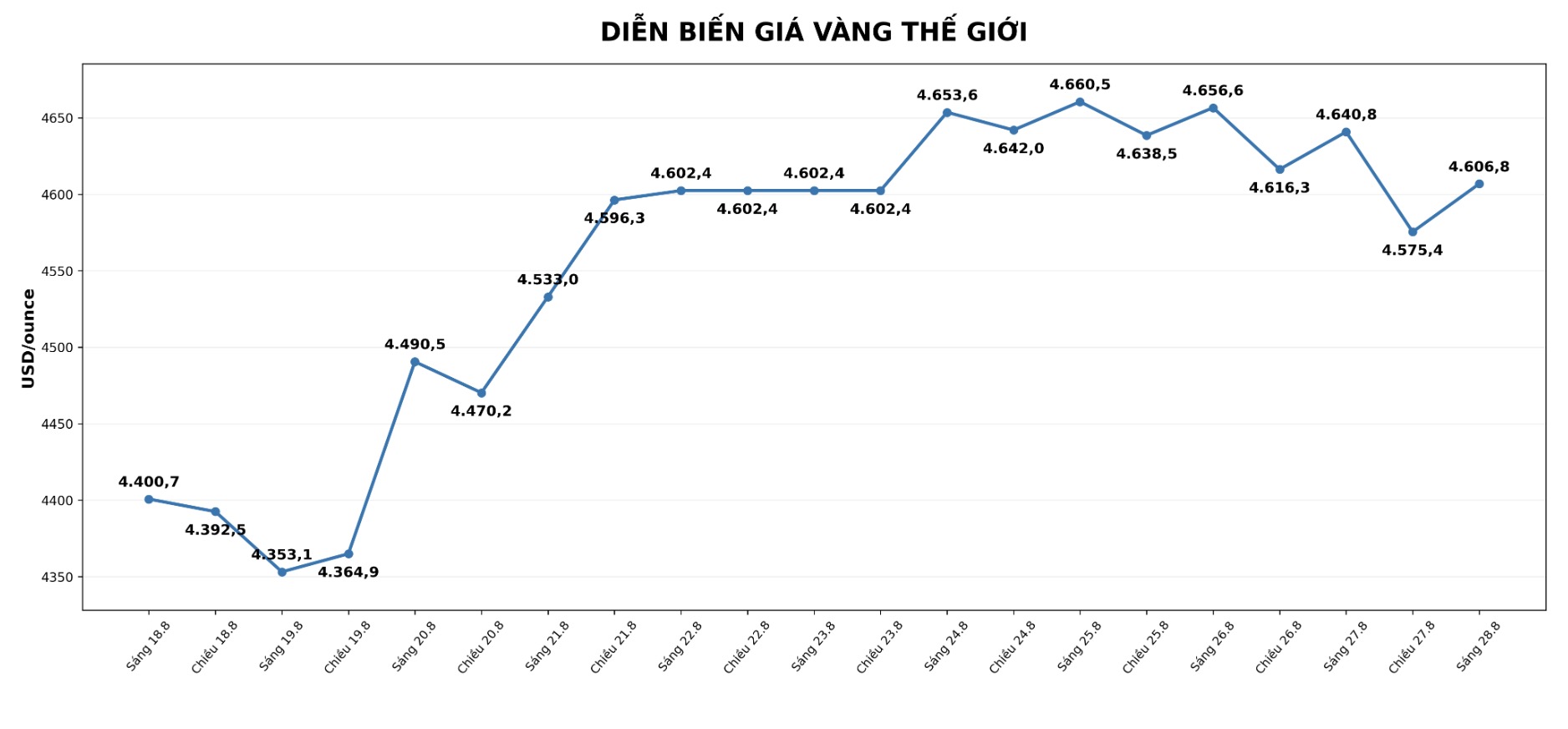
World gold prices went sideways in last night's trading session as the USD and US bond yields maintained pressure, while investors continued to assess the monetary policy outlook of the US Federal Reserve (Fed).
Precious metals are being negatively impacted as bottom-fishing buying power appears after a strong correction from US inflation data, but pressure from the general level of interest rates still limits the recovery momentum.
The gold market is reacting to a series of new US economic data, notably the jobs report. The number of initial jobless claims in the week ending August 22 reached 203,000, lower than the market's forecast of 208,000.
This figure shows that the US labor market still maintains a relatively stable state, making expectations of monetary policy easing not yet strongly increase. The number of people continuing to receive unemployment benefits in the week ending August 15 decreased to 1.778 million people, lower than the forecast of 1.790 million people.
Previously, US July Personal Consumption Expenditure (PCE) data showed that the price index increased by 0.2% compared to the previous month and increased by 3.7% compared to the same period last year. The core PCE index - a measure of particular interest to the Fed - also increased by 0.2% in the month and increased by 3.3% compared to the same period.
This information makes the market continue to be cautious about the roadmap for interest rate adjustments. The yield of 10-year US government bonds remained around 4.7%, while the USD index stabilized at a high level, creating pressure on gold prices.
Gold does not generate yields, so it is often under pressure when interest rates and bond yields increase. However, the precious metal still receives support from defensive needs as geopolitical instability factors continue to present.
One of the factors the market is monitoring is the situation in the Strait of Hormuz - the world's important energy transportation route. Signals about the possibility of resuming negotiations help ease concerns about oil supply disruptions, but the market has not yet assessed this as a completely stable solution.
In addition, investors are waiting for more policy signals from Fed Chairman Kevin Warsh's speech at the Jackson Hole conference. This is considered important information for the market to assess the direction of interest rates in the coming time, especially after PCE data showed that inflationary pressure is still higher than the Fed's target of 2%.
Regarding technical trends, gold prices are in a period of accumulation around the 4,600 USD/ounce zone. If it surpasses the resistance zone of 4,607-4,652 USD/ounce, the precious metal may head towards higher targets at 4,699 USD/ounce and 4,744 USD/ounce.
Conversely, if the support zone of 4,560 USD/ounce is lost, selling pressure may increase, bringing gold prices back to lower zones around 4,511 USD/ounce and 4,468 USD/ounce.
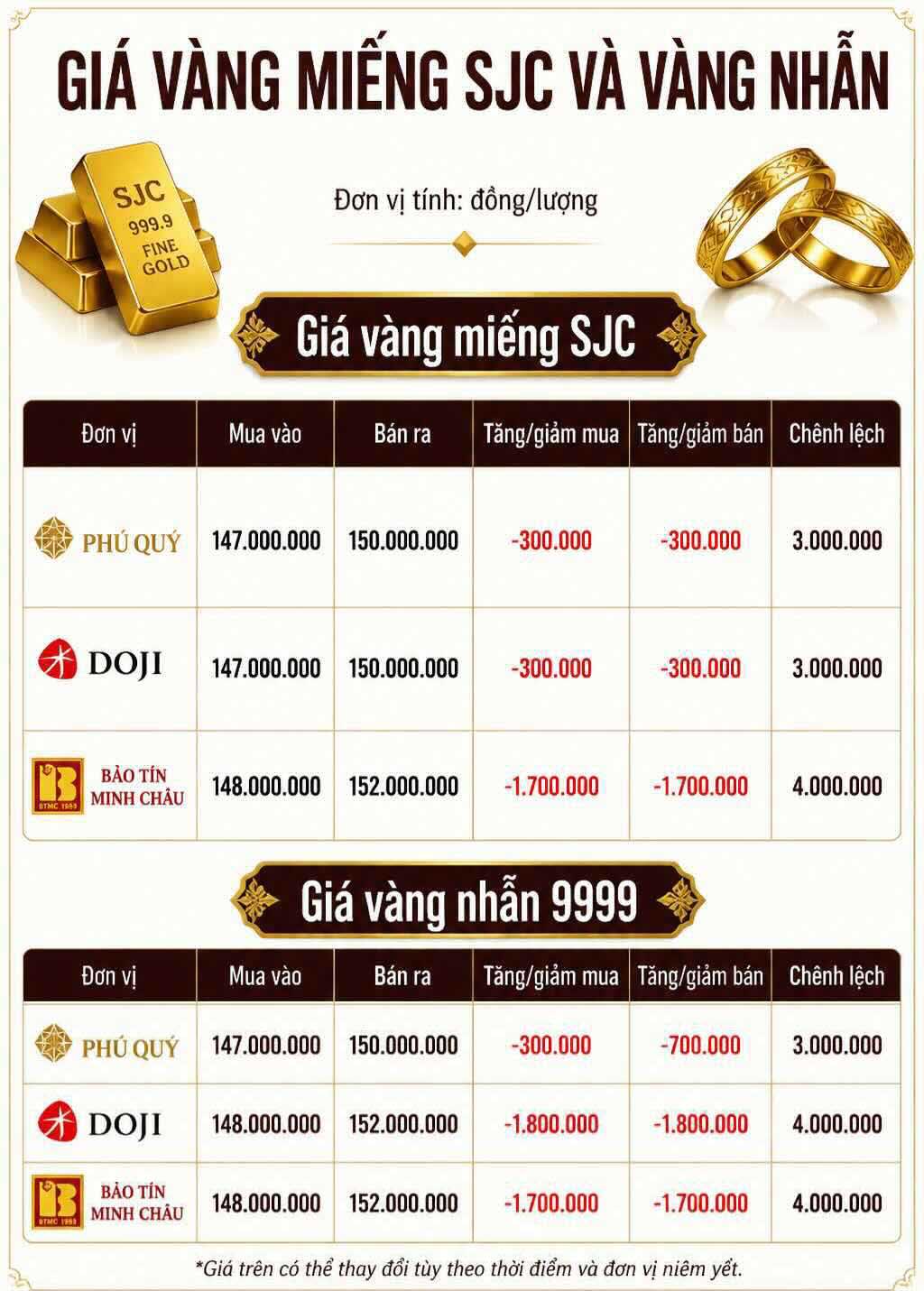
In the short term, gold prices are forecast to continue to fluctuate strongly as the market simultaneously monitors US monetary policy, the strength of the USD, bond yields and geopolitical developments. Investors need to be cautious of rapid fluctuations in gold prices, especially in the context that the buying-selling price difference in the country is still high, posing risks when trading in the short term.
The content of the article only provides information about gold market developments, not investment recommendations. Investors need to carefully consider risk factors, especially in the context of rapid gold price fluctuations and the difference between buying and selling prices may affect transaction efficiency.


