
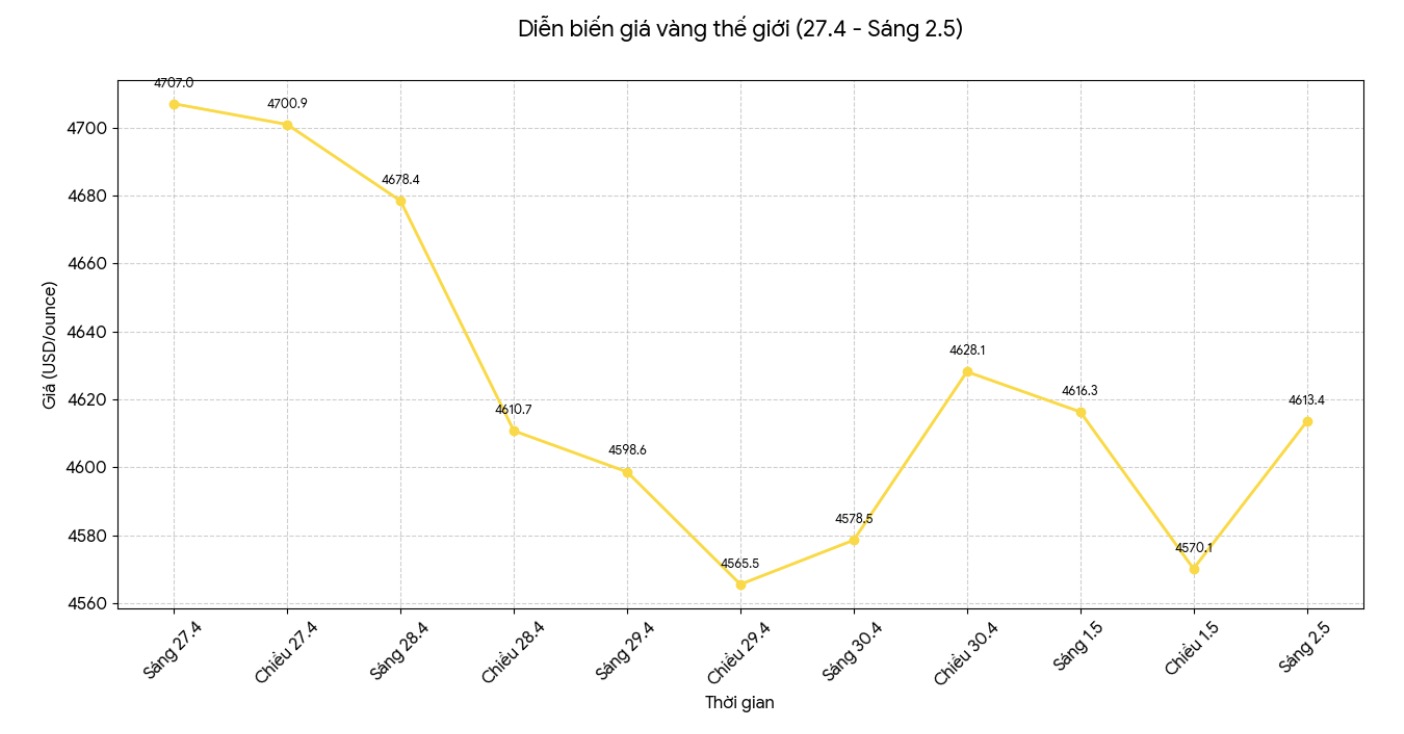
According to Kitco - World gold prices are under pressure as oil prices rise sharply, raising concerns about inflation, forcing central banks to maintain a more cautious monetary policy. The context once expected to be favorable in 2026 - with inflation cooling down and interest rate reduction prospects quickly changing.
Instead of easing, many central banks have switched to a state of "waiting and observing" as energy inflation becomes an unpredictable factor. Although the possibility of interest rate hikes is unclear, delaying cuts has increased the opportunity cost of holding gold - a non-interest asset.
This development makes the precious metal market more sensitive to interest rate expectations. Gold prices are no longer simply operating as a safe haven channel but are strongly affected by monetary policy.

The main reason comes from the oil supply shock. According to the latest forecast from the World Bank, the global economy is facing one of the biggest oil shocks in history due to the escalating conflict in the Middle East. Brent oil prices have increased sharply from about 72 USD to 118 USD/barrel in March, leading to forecasts that energy prices may increase by 24% in 2026.
This inflation driven by costs puts the central bank in a difficult position: to maintain tight monetary policy for longer even when economic growth shows signs of slowing down. This is a disadvantageous factor for gold in the short term.
However, the long-term foundation of the gold market is still positively assessed. The World Gold Council said that total global gold demand in the first quarter of 2026 reached 1,231 tons, up 2% compared to the same period last year. Notably, the trading value jumped 74% to a record level of 193 billion USD.
Investment demand, especially physical gold, continues to play a key role. Gold bar and coin purchases increased by 42% to 474 tons - the second highest level in the quarter ever recorded. This development reflects the trend that investors, especially in Asia, are still turning to gold as a hedging channel.
From a long-term perspective, many financial institutions still maintain an optimistic view. Bank of America continues to maintain its forecast that gold prices could reach 6,000 USD/ounce in the next 12 months, thanks to structural factors such as increased global debt and prolonged geopolitical risks.
Meanwhile, the World Bank forecasts the average gold price in 2026 around the threshold of 4,700 USD/ounce - showing that the market is entering a more "mature" stage, with high prices but facing much resistance from the interest rate environment.
The tug-of-war between two factors - inflation due to oil boosting the safe-haven role of gold and high interest rates hindering the upward momentum is shaping the current trend.
In the short term, gold prices may fluctuate and be under adjustment pressure. However, in the long term, in the context of rising global debt and increasingly complex geopolitics, gold is still considered an asset maintaining a sustainable upward trend.


