
SJC gold bar price
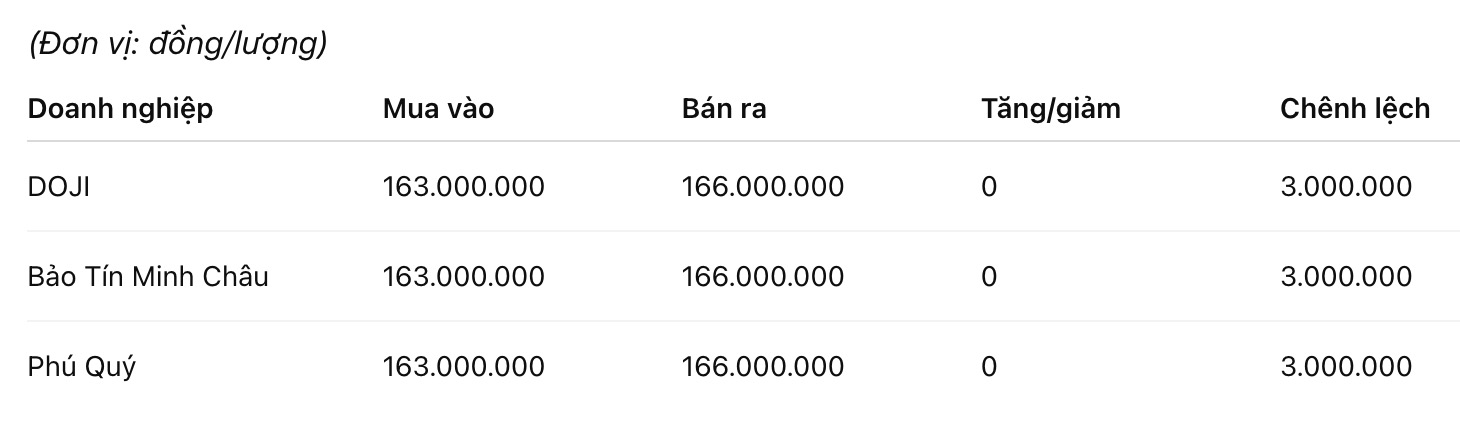
As of 6:00 AM on May 2nd, SJC gold bar prices were listed by DOJI at 163-166 million VND/tael (buying - selling), unchanged in both buying and selling directions. The difference between buying and selling prices is at 3 million VND/tael.
SJC gold bar prices were listed by Bao Tin Minh Chau at the threshold of 163-166 million VND/tael (buying - selling), unchanged in both buying and selling directions. The difference between buying and selling prices is at the threshold of 3 million VND/tael.
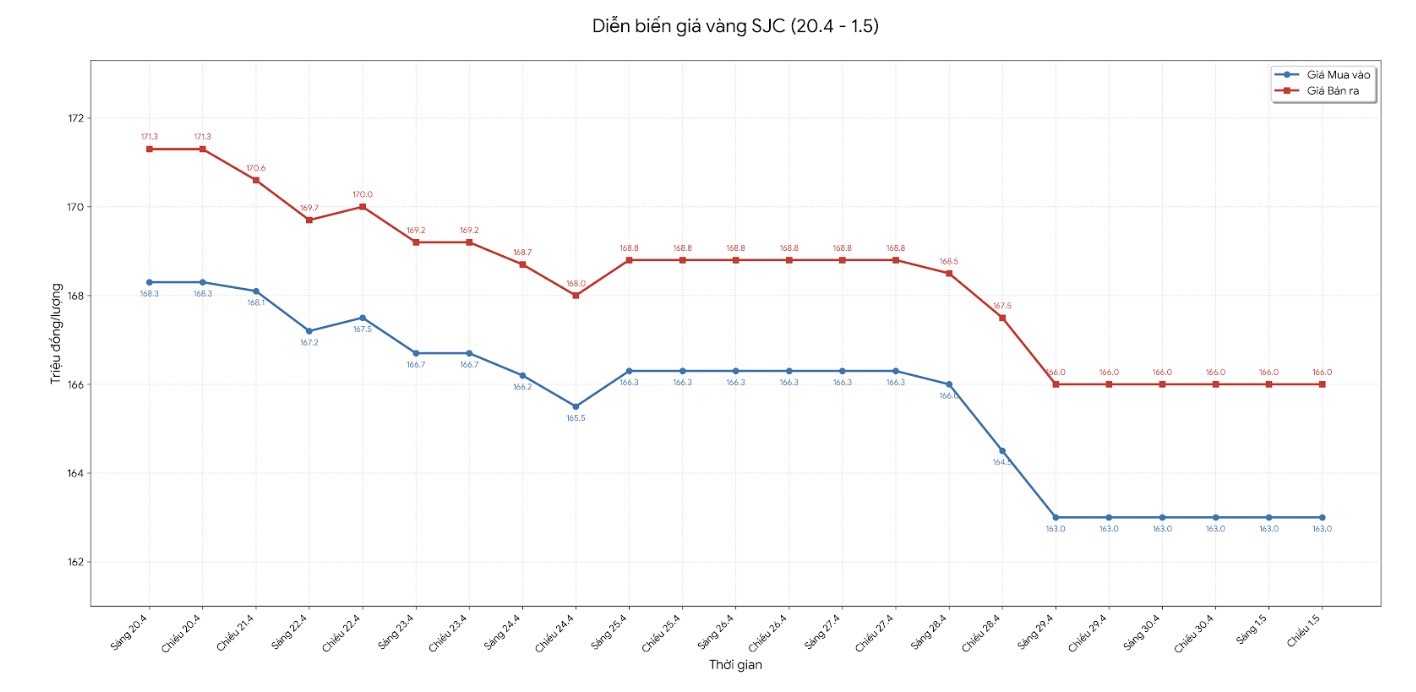
Phu Quy Jewelry Group listed SJC gold bar prices at 163-166 million VND/tael (buying - selling), unchanged in both buying and selling directions. The difference between buying and selling prices is at 3 million VND/tael.
9999 gold ring price
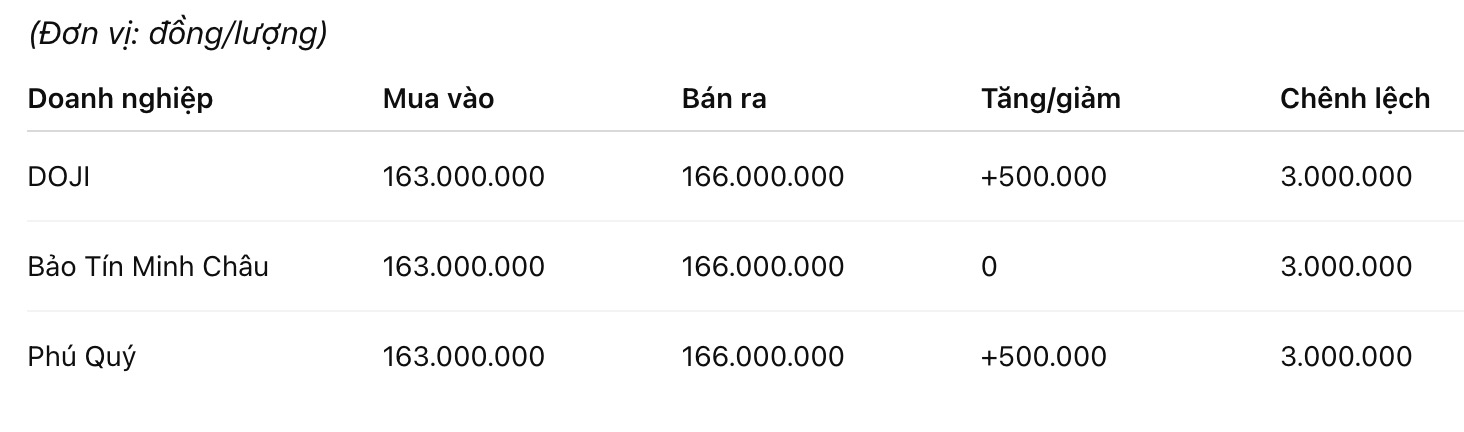
As of 6:00 AM on May 2nd, DOJI listed the price of gold rings at 163-166 million VND/tael (buying - selling), an increase of 500,000 VND/tael in both buying and selling directions. The difference between buying and selling prices is at 3 million VND/tael.
Bao Tin Minh Chau listed gold ring prices at the threshold of 163-166 million VND/tael (buying - selling), unchanged in both buying and selling directions. The difference between buying and selling prices is at the threshold of 3 million VND/tael.
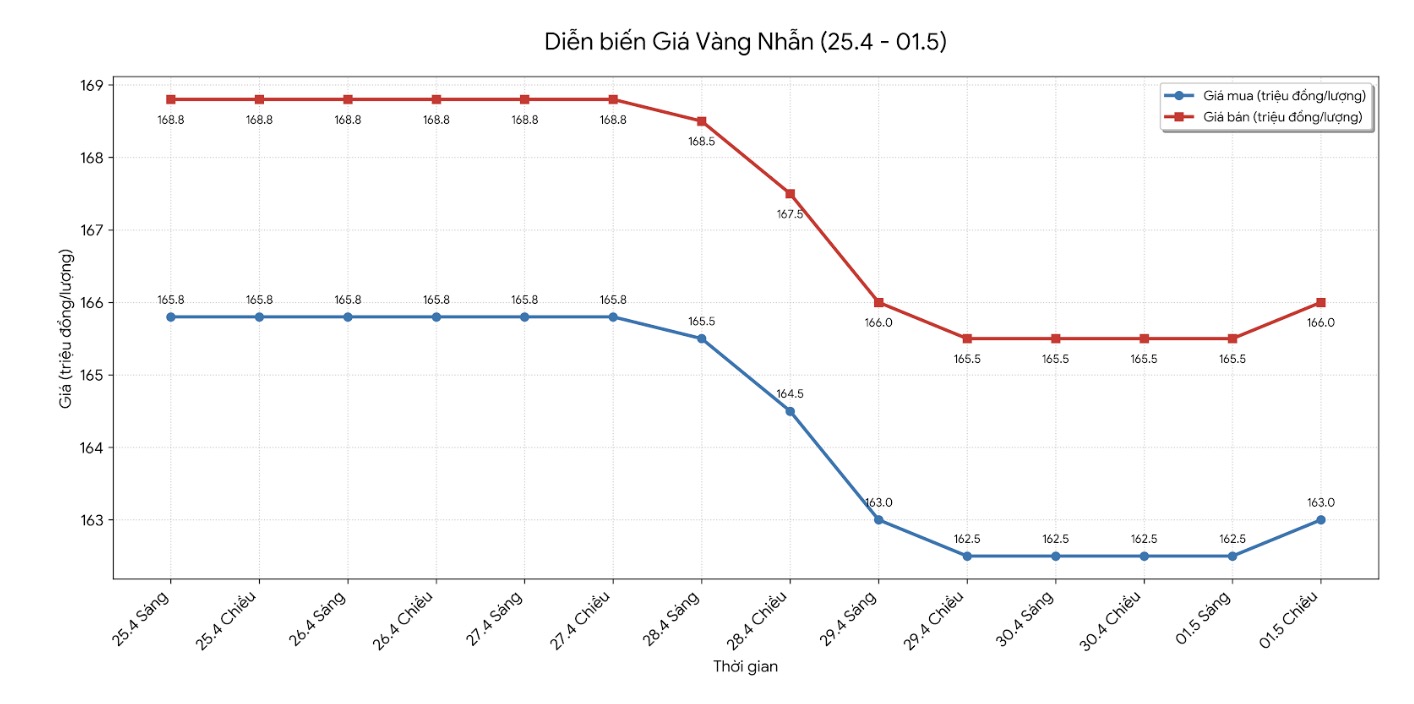
Phu Quy Jewelry Group listed the price of gold rings at 163-166 million VND/tael (buying - selling), an increase of 500,000 VND/tael in both buying and selling directions. The difference between buying and selling prices is at 3 million VND/tael.
Currently, the buying - selling price difference of gold is at a very high level, around 3 million VND/tael, posing a risk of losses for investors.
World gold price
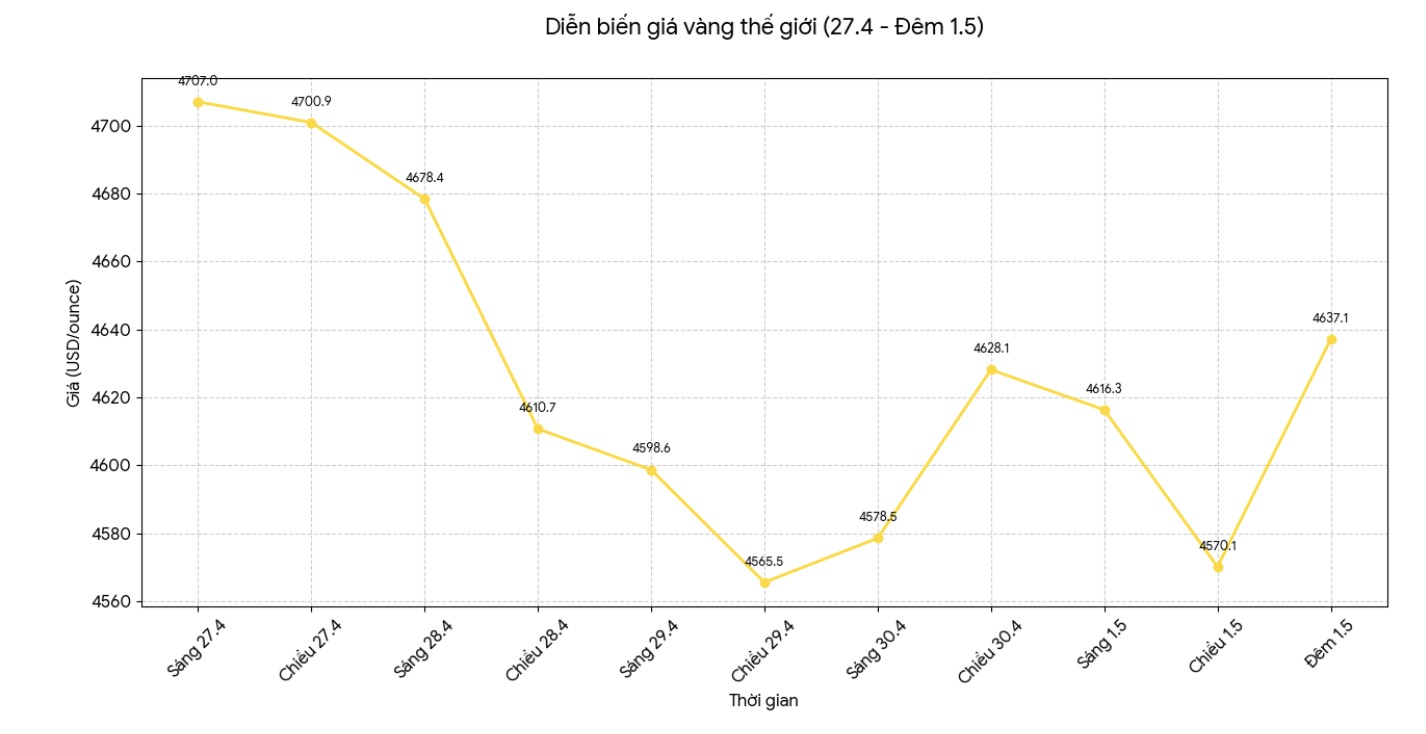
At 11:53 PM on May 1st, world gold prices were listed around the threshold of 4,637.1 USD/ounce, up 16.7 USD/ounce.
Gold price forecast
The world gold market is being interspersedly affected by geopolitical factors and US economic data, making price trends unpredictable in the short term. The fact that Iran is said to have sent a new negotiation proposal to cool down the conflict has somewhat improved risk psychology in the market, thereby putting pressure on the USD and supporting gold prices to recover after the previous sharp decline.
According to Mr. Jim Wyckoff - senior analyst at Kitco Metals, the signal of resuming dialogue from Iran has boosted investors' risk appetite, causing the USD index to weaken and creating conditions for gold to regain its upward momentum. However, this recovery is still not enough to reverse the downward trend throughout the week, as the precious metal is still under pressure from the prospect of interest rates remaining at a high level.
Developments from monetary policy continue to be a factor dominating the market. The US Federal Reserve (Fed) maintaining interest rates and sending a cautious message about inflation has significantly weakened expectations of interest rate cuts this year. In the context of high borrowing costs, gold – which is non-performing – becomes less attractive than profitable assets such as bonds.
In the opposite direction, negative US economic data supported gold prices at some points. A report from the Institute for Supply Management (ISM) showed that the PMI manufacturing index in April did not meet expectations, while input price pressure continued to increase. This raised concerns about the risk of "inflation stagnation", when growth weakens but prices still escalate - an environment that is often beneficial for gold.
Although oil prices cooled down in the recent session, they remained at a high level during the week, increasing concerns about global inflation. This development may cause central banks to maintain tight monetary policy for longer, continuing to create resistance to the upward momentum of precious metals.
In the current context, analysts believe that gold prices may continue to fluctuate strongly, depending on geopolitical developments and new signals from the US economy.
Gold price data is compared to the previous day.
The world gold and silver market operates through two main pricing mechanisms. The first is the spot market, where the buying and selling and immediate delivery prices are listed. The second is the futures market, where prices are set for future delivery.
Due to the impact of year-end position restructuring and market liquidity, the December gold futures contract is currently the most actively traded contract on the CME exchange.
See more news related to gold prices HERE...


