According to the latest assessment from Mr. Bart Melek - Commodity Strategy Director at TD Securities (a financial services and investment banking company belonging to Toronto-Dominion Bank - commonly known as TD Bank), although gold prices are maintaining a support zone above 4,600 USD/ounce, this precious metal is still heavily affected by oil price movements.
Mr. Melek said that the oil supply shock, stemming from tensions in the Middle East, is pushing inflation concerns to increase. This forces central banks to maintain a cautious monetary policy stance, even leaning towards "hawkish".
In that context, the opportunity cost of holding gold increased, as real interest rates remained high. This is considered the reason for the weakening demand from large institutions, ETFs and central banks since the conflict broke out.
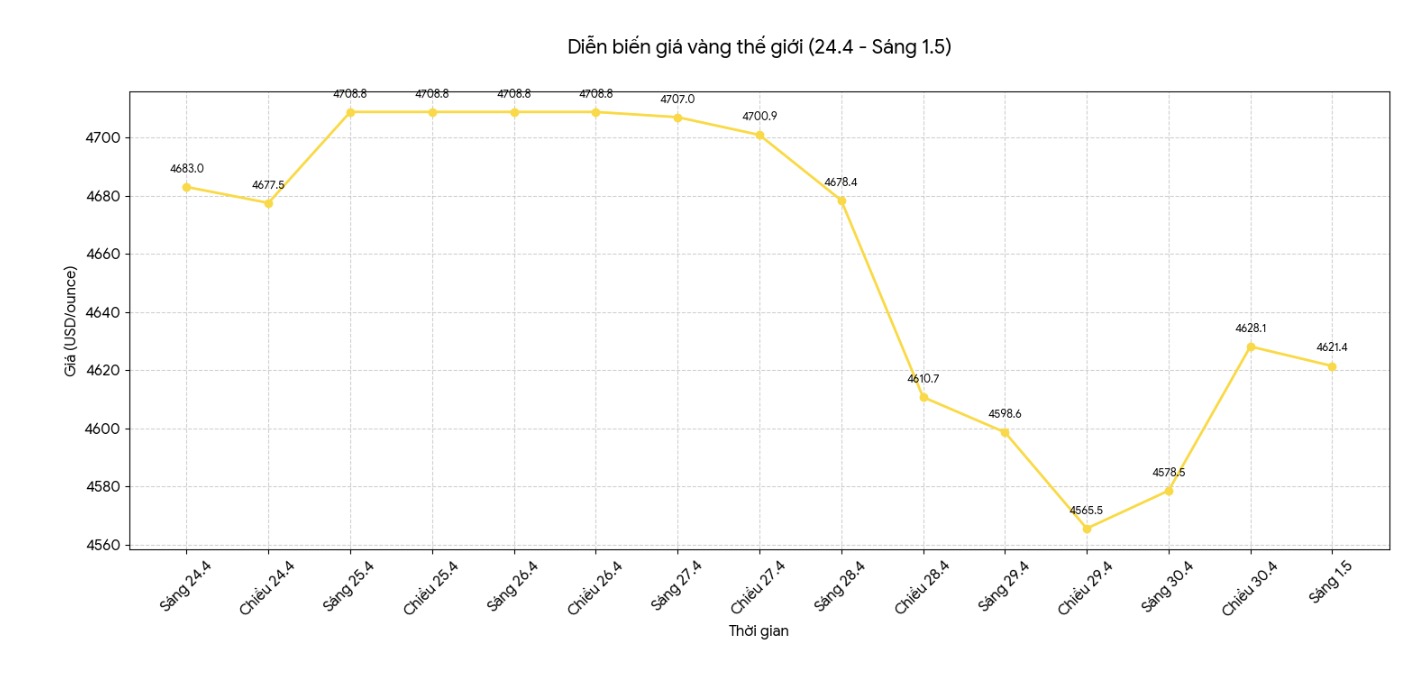
However, gold prices still show certain resistance. This precious metal continues to hold firmly above the 200-day moving average, currently around 4,258 USD/ounce. According to Mr. Melek, this is an important technical threshold to help maintain the long-term upward trend. In the most recent session, spot gold prices reached 4,619.9 USD/ounce, up 1.6%.
However, the biggest risk to the gold market still comes from oil. TD Securities experts warn that if oil prices soar to 150 USD/barrel, gold may face downward pressure back to the 200-day moving average.
From a long-term perspective, gold's prospects are still positive. Mr. Melek forecasts that prices could exceed 5,000 USD/ounce by the end of the year, even reaching the 5,200 USD/ounce zone when the energy market stabilizes again and inflationary pressure cools down.
Along with that, expectations that the US Federal Reserve will adjust policies in the direction of supporting jobs, while public debt remains high, may continue to create momentum for gold. Factors such as dedollarization, weakening USD and concerns about "financial restraint" are also forecast to boost demand for holdings of precious metals.
For silver, Mr. Melek identified a similar trend to gold. Silver prices may be under pressure in the short term as oil prices rise and the global economy slows down, weakening industrial demand. However, when the energy crisis subsides, production demand recovers, supporting silver prices to rise again.