
Gold prices return above the 4,100 USD/ounce mark
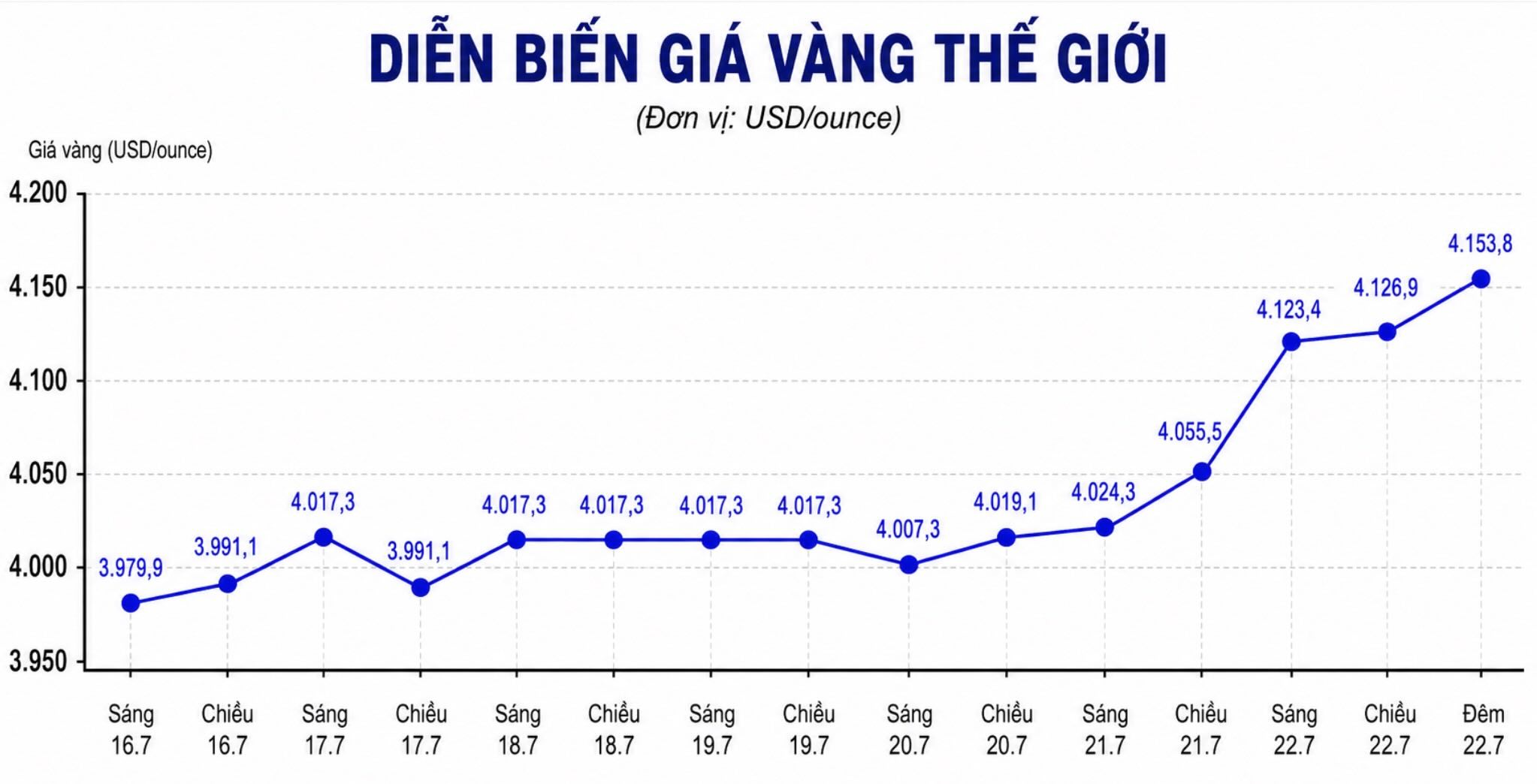
At the time of recording, spot gold prices were traded around 4,150 USD/ounce, up more than 1.64% compared to the previous session. Silver prices also went up 1.31%, reaching about 59.95 USD/ounce.
During the session, gold prices fluctuated from 4,075.9-4,142.7 USD/ounce. Maintaining above the 4,100 USD/ounce zone shows that buying power is dominating, while bringing the precious metal closer to the 4,200 USD/ounce resistance zone.
Silver prices fluctuate in the range of 58.61-60.11 USD/ounce. This metal still maintains its short-term recovery structure.
The current upward momentum reflects an improvement in market sentiment after gold prices fell below 4,000 USD/ounce last week. However, the trend is still sideways due to mixed US economic data.
Recent reports show that the consumer price index and production price index in June cooled down, reducing immediate interest rate hike pressure. However, US retail sales still increased by 0.2%, the number of initial jobless claims fell to 208,000 and the Philadelphia regional production index increased sharply to 41.4 points.
These figures reinforce expectations that the US Federal Reserve (Fed) will keep interest rates unchanged in next week's meeting. However, the market has not clearly bet on a soft shift in the second half of the year.
The yield on 10-year US government bonds is still fluctuating around 4.6%, while the USD Index remains near the 101-point mark. These are two factors that limit the strong increase of gold, although selling positioning and more positive inflation data are supporting prices.
Geopolitical risk supports shelter needs
Developments in the Strait of Hormuz continue to be the focus of attention. Transportation activities have not been completely disrupted, but the maritime environment is still under pressure from political and military tensions.
Brent oil was traded above 94 USD/barrel, while WTI oil surpassed 87 USD/barrel. High energy prices create a two-way impact on gold.
Geopolitical instability boosts defense demand, but rising oil prices could also prolong inflationary pressure, causing the Fed to maintain high interest rates longer.
The market is currently focusing on monitoring statements from the Fed and the European Central Bank, US bond yield developments, preliminary PMI data from the US, and new disruption risks in the Strait of Hormuz or the Red Sea.
Technically, keeping gold prices above 4,080 USD/ounce will help preserve the short-term recovery trend. Conversely, if the price falls below the 4,050-4,040 USD/ounce range, the recovery momentum may weaken significantly.
Information in the article only reflects market developments, not investment recommendations.


