
Two recent major surveys show that gold continues to hold an important position in the global reserve management strategy. The World Gold Council said that the percentage of central banks expected to increase gold reserves in the next 12 months reached a record high of 45%.
Meanwhile, the annual survey of the Forum of Official Financial and Monetary Institutions shows that reserve managers continue to classify gold as a priority asset group. This trend takes place in the context of countries seeking to diversify their portfolios in the face of increasingly clear fragmentation of the global financial system.
However, the survey only reflects intentions. Recently released reserve data shows that central banks are turning views into concrete actions.
According to the World Gold Council, central banks net bought 41 tons of gold in May. This is a continuation of the strong demand trend from the formal sector that has lasted for many years.
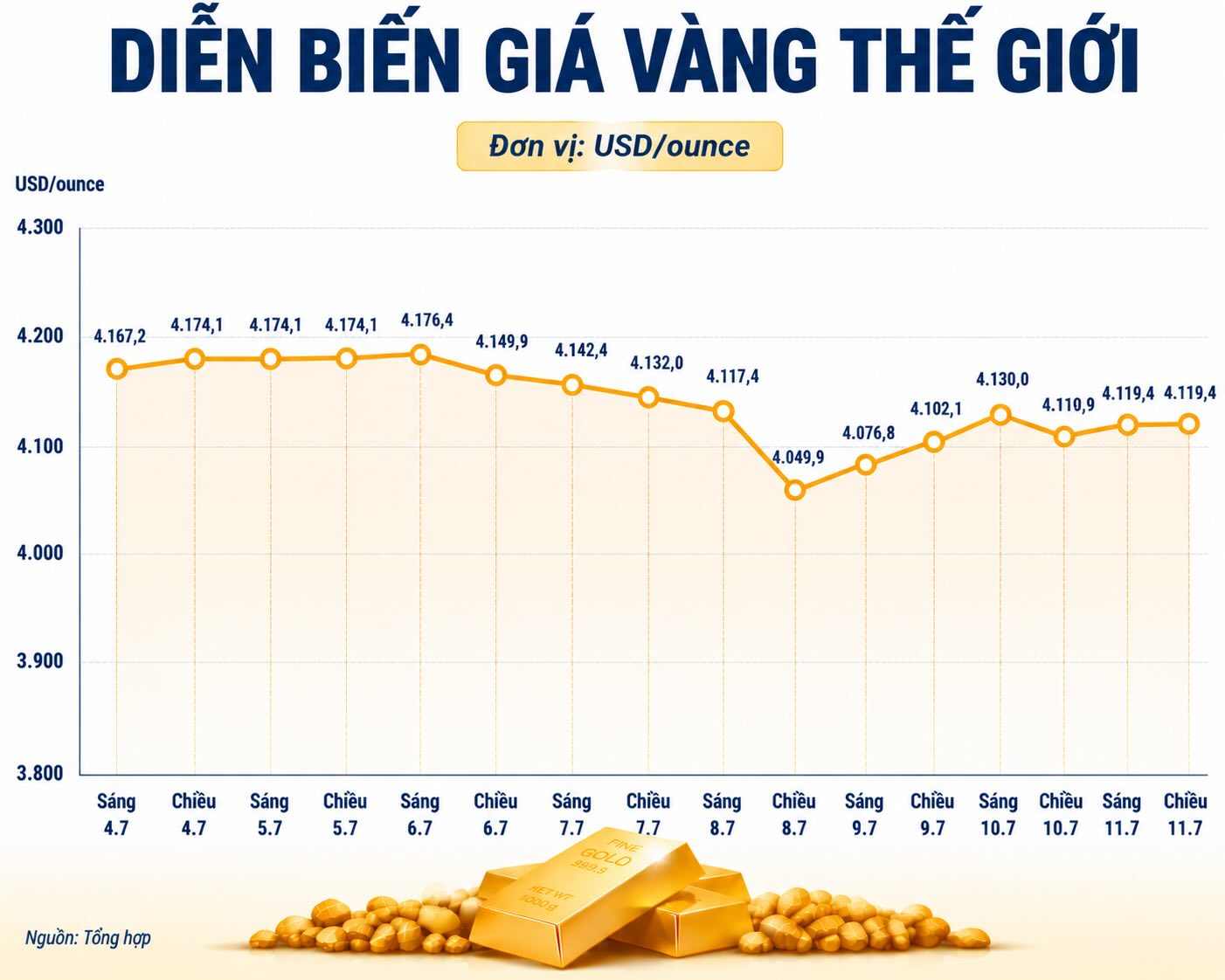
As gold prices continued to adjust in June, some countries that were the largest gold buyers in the world increased accumulation activities.
The Central Bank of China added 15 tons of gold to its reserves. This is the 20th consecutive month of purchases, and also the largest increase in reserves of this agency since the beginning of 2026.
Poland is also stepping up its accumulation strategy. The State Bank of Poland purchased about 82 tons of gold in the first half of 2026. Governor Adam Glapiński said that the country's central bank has taken advantage of periods of price drops to increase reserves.

The above move is contrary to the psychology of a part of individual investors. Some speculative traders left the gold market to seek opportunities from artificial intelligence stocks. Meanwhile, increased opportunity costs also caused a part of investors to narrow their gold holdings.
This difference raises questions about when individual investors will start following the trend that central banks are establishing.
Central banks do not buy gold just because they expect inflation data next month to be higher than forecast or the Fed to cut interest rates soon. They also do not seek to trade in short-term uptrends.
These are long-term monetary decisions. Reserve managers often assess risks for decades, instead of just focusing on quarters.
The reserve portfolio is built to increase resilience to geopolitical shocks, currency fluctuations and the shift of the global financial system towards multipolarity.
The attractiveness of gold lies in its distinct monetary characteristics. This precious metal has high liquidity, is widely accepted, does not depend on the solvency of a partner and is not directly influenced by the fiscal or monetary policies of a single country.
This is also the reason why the recent weakening of gold prices does not reduce demand from central banks. On the contrary, adjustments are creating more attractive prices for countries to continue to increase reserves.
While short-term investors may be influenced by interest rates, the USD or trends of other asset markets, central banks are making choices with their own balance sheets. Continuous purchases show that gold is still seen as a reserve protection tool in an increasingly unpredictable world.
The content of the article is for reference only, providing an additional perspective on gold price developments and buying activities of central banks, not an investment recommendation. Investors need to carefully assess risks, balance their financial capacity to make appropriate decisions.


