Gold prices and many commodities have increased sharply in the past year thanks to geopolitical tensions, monetary policy and investment demand. However, CME Group believes that the USD is still the biggest influencing factor.
According to a newly published analysis by Dr. Mark Shore - Director and economist at CME Group, the global commodity market has experienced a period of historical volatility in the past 14 months.
He believes that investors are currently facing a "complex network" including geopolitical tensions, currency fluctuations and constantly changing supply-demand cycles. According to Mr. Shore, goods are not a uniformly mobile asset group, because each sector can be affected by different micro and macro factors.
Based on the Bloomberg Commodity Index (BCOM), Mr. Shore said that commodity markets tend to return to an average level after periods of strong increases or decreases.
CME Group's analysis recalls the early 2000s when the energy group increased by more than 860% from February 1999 to September 2005. The main driver came from strong demand in China and India, along with supply shocks in Iraq and Venezuela.
After that, the energy market continued to explode from the beginning of 2007 to mid-2008, bringing WTI oil prices above the 147 USD/barrel mark. According to Mr. Shore, the reasons stem from increased global demand, tight supply, geopolitical risks and a weaker USD.
Not only energy, the industrial metal group also once increased by about 395% in the period from the end of 2001 to May 2007 thanks to China's strong industrialization and urbanization.
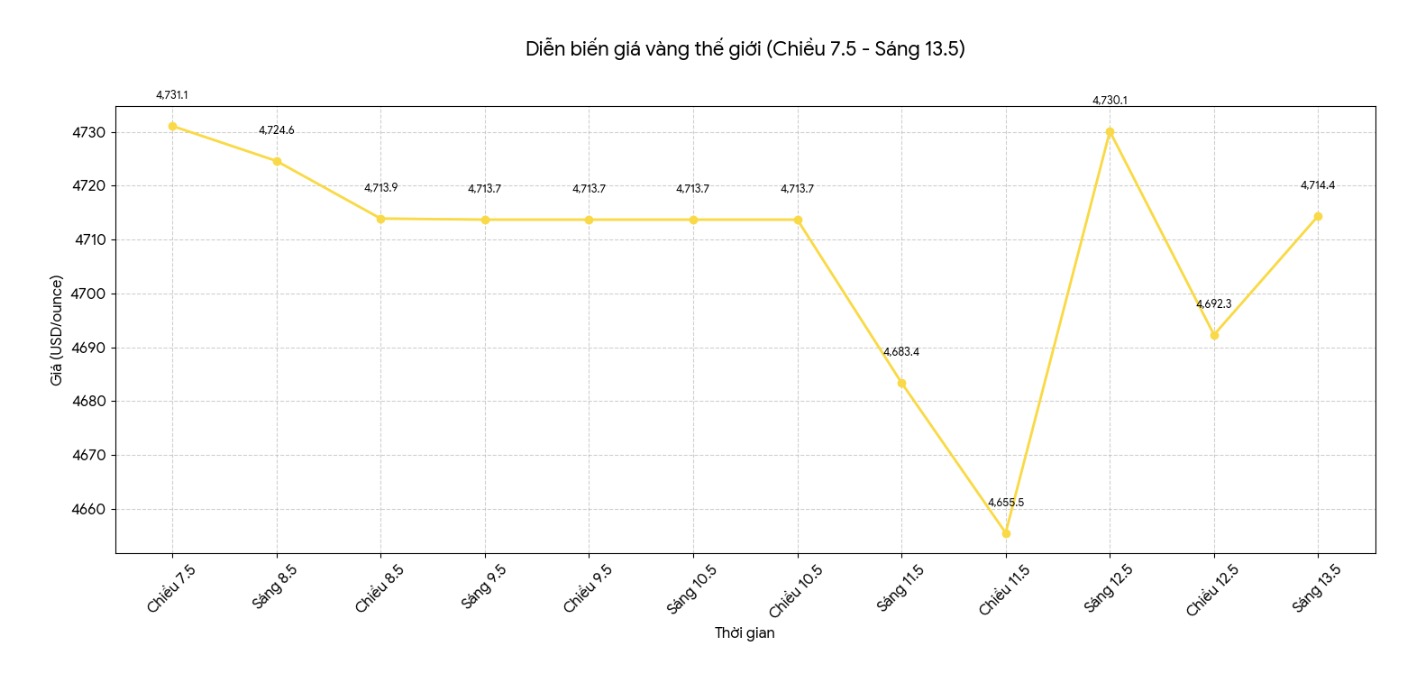
In the current cycle, precious metals are leading the commodity market. According to CME Group, the increase in gold and silver is driven by increased geopolitical tensions, loose fiscal and monetary policies, the demand for gold from central banks, and the demand for silver to serve energy transition and data center building.
In addition to precious metals, the livestock group in the BCOM index also recorded a significant increase. From April 2020 to March 2026, this group increased by 86%, mainly due to the scale of livestock in the US falling to the lowest level since 1951 while consumer demand is still very strong.
However, Mr. Mark Shore emphasized that the USD is still the most important factor for the entire commodity market.
There is no relationship more important than the influence of the USD on commodity investors," he said.

According to CME Group, most goods are valued in USD, so the fluctuation of the greenback directly affects global demand. When the USD weakens, goods become cheaper for international buyers, thereby stimulating demand and supporting price increases.
CME Group's data shows that in the period from January 1992 to March 2026, the USD Index (DXY) and BCOM had a reverse correlation with a coefficient of -0.31, while the opposite trend was up to 89% in the 12-month cycle.
Referring to inflation, Mr. Shore said that the impact of commodity prices on consumer prices is often quite slow. Accordingly, it takes several months for raw material fluctuations to fully reflect the inflation indicators that consumers actually feel.
In the context that central banks are still closely monitoring inflation risks, CME Group believes that understanding key factors such as the USD, monetary policy, geopolitics, and supply and demand will play a key role for commodity and precious metal investors.