
A new study by The Royal Mint shows that 33% of adults in the UK regret not investing in gold in the past 5 years, a period when the price of this precious metal increased by about 128%.
Not only gold, nearly 1/3 of respondents, equivalent to 30%, also said they regretted missing the opportunity to invest in silver. According to The Royal Mint, silver prices increased by about 126% in the same period.
The level of regret for gold and silver is significantly higher than for Bitcoin. Only 20% of respondents said they regretted not investing in Bitcoin in the past 5 years.
Financial instability drives demand for a place to keep money
The survey results were released in the context of UK people facing many concerns about financial prospects.
Up to 73% of adults surveyed said they are concerned that conflicts around the world and economic instability could affect their asset value.
About 2/3 of respondents are concerned about the overall financial future, while 53% are unsure where the most suitable place to keep money to ensure financial safety.
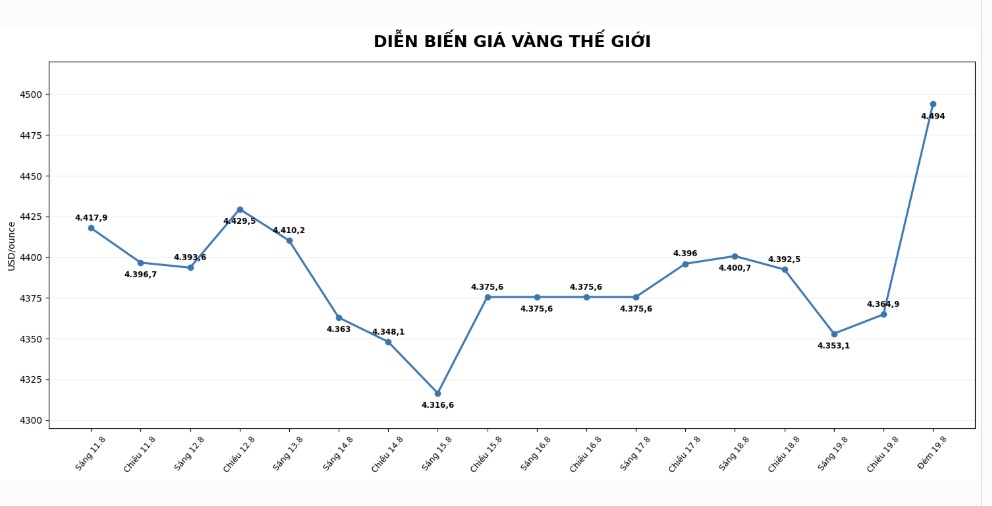
Although gold and silver prices have increased sharply and many people say they feel they are missing opportunities, the trend of investing in precious metals in the coming years is still relatively cautious.
According to The Royal Mint, only 25% of British people said they are likely to put a portion of their savings into gold or silver in the next 5 years. Meanwhile, 60% still choose to keep money in their payment accounts.
Survey data also shows that precious metals are not yet a popular choice for most savers in the UK.
In the past 5 years, only 8% of adults in the UK said they had kept a portion of their savings in gold and only 3% held silver. Conversely, 63% used payment accounts to hold money, making it the most popular choice.
Great gap in financial knowledge
Mr. Stuart O'Reilly - personal asset consultant at The Royal Mint - said this is a special period for the precious metals market.
According to him, research results show that many adults in the UK are looking back at opportunities they may have missed when gold and silver bring significant increases.
However, Mr. Stuart O'Reilly believes that investment should not only be based on looking back at past performance or chasing after assets that have just increased sharply in price.
Instead, investors need to understand the role of each type of asset in a long-term financial strategy and portfolio diversification.
The Royal Mint's research also shows a significant gap in confidence and financial knowledge in the UK.
41% of adults believe they do not have enough financial knowledge to create a positive impact on their personal financial situation.
Among these, 11% self-assess that they have almost no knowledge of finance, savings and investment; another 30% feel that their knowledge is not enough. On the contrary, only 2% think they are financial experts.
According to Mr. Stuart O'Reilly, improving financial understanding is important, thereby helping more people make decisions based on more complete information and identifying how precious metals can play a role in overall financial plans.
He also said that interest rate expectations may put pressure on gold and precious metals in the short term. However, in the long term, central banks' gold buying demand, geopolitical instability, fiscal pressure and portfolio diversification demand are still fundamental supporting factors for the precious metals market.
The article updates market developments, not investment recommendations; investors need to consider before deciding.


