
Many experts believe that although the precious metal is temporarily under pressure from the risk-loving trend in the financial market, the medium-term outlook still leans towards the upward trend.
Marc Chandler - Managing Director at Bannockburn Global Forex - believes that gold prices are likely to increase as the market returns to its previous normal state.
According to him, selling pressure from central banks may decrease, while buying power is still maintained from some countries such as China and Poland.
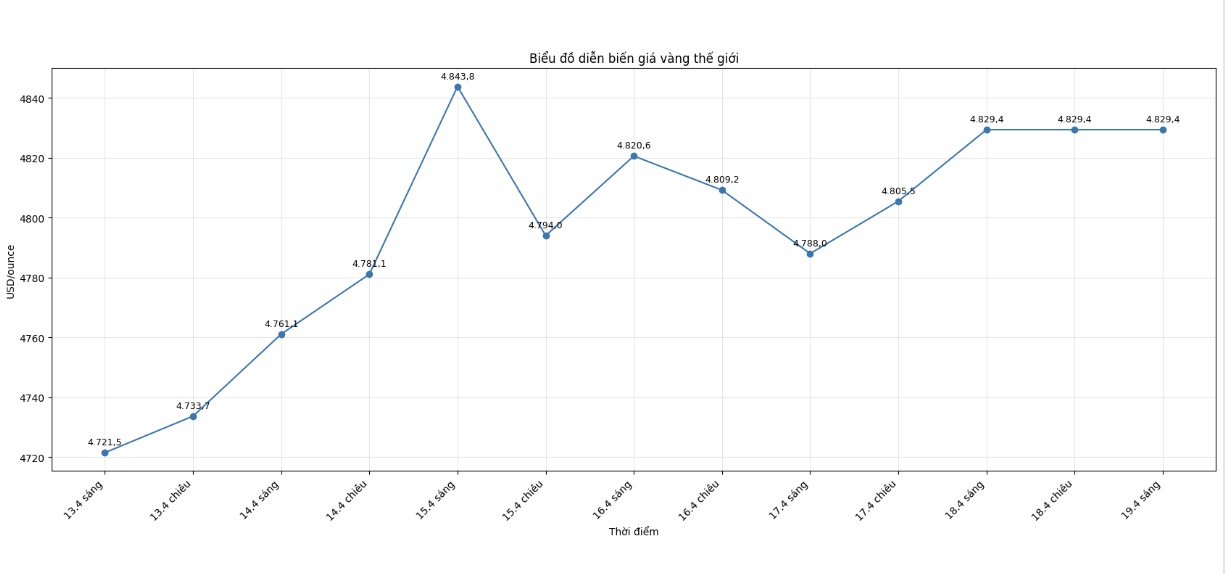
Chandler believes that the nearest resistance zone for gold is around the 5,000 USD/ounce mark, and also said that momentum indicators are still sending positive signals.
Sharing the same view, Adam Button - Head of Currency Strategy at Forexlive. com, assessed that gold will ultimately be the asset that benefits after geopolitical fluctuations. According to him, after a period of pressure from deleveraging and selling from some emerging markets, cash flow is showing signs of returning to precious metals.
Button believes that as countries increase reserve demand to hedge against future risks, gold will continue to be a priority asset, thereby opening up the possibility of reaching the 5,000 USD/ounce mark.
Meanwhile, Daniel Pavilonis - senior commodity broker at RJO Futures, believes that gold may not be the immediate focus as cash flow is prioritizing stocks, but the appeal of the precious metal will soon return.
According to him, if the risk-loving mentality lasts in the short term, the market may witness a period of gold temporarily receding into the "dark area". However, when the excitement factor on the stock market weakens, cash flow is likely to return to gold and silver. This is considered a basis to strengthen the upward outlook for precious metals in the coming weeks.
In general, optimistic opinions all believe that the current correction momentum of gold prices is mainly short-term. In the context of geopolitical risks still existing, confidence in the USD is not really stable and the demand for accumulation of central banks is still large, gold is still assessed as an asset with many opportunities to increase in price again.


