
While speculators and small investors are selling off their gold holdings, an important market support remains strong as central banks see the current price adjustment as an opportunity to increase reserves.
The Bank of Poland (NBP) is one of the most active gold buyers in the market. At a press conference on Thursday, NBP Governor Adam Glapiński outlined the bank's gold buying strategy.
We are still continuously buying gold, taking advantage of recent price reductions," Mr. Glapiński said.
He also said that NBP bought an additional 82 tons of gold this year.
In a social media post, Mr. Krishan Gopaul, senior analyst in charge of the EMEA region of the World Gold Council (WGC), estimated based on current reserve data, Poland bought about 19 tons of gold last month.
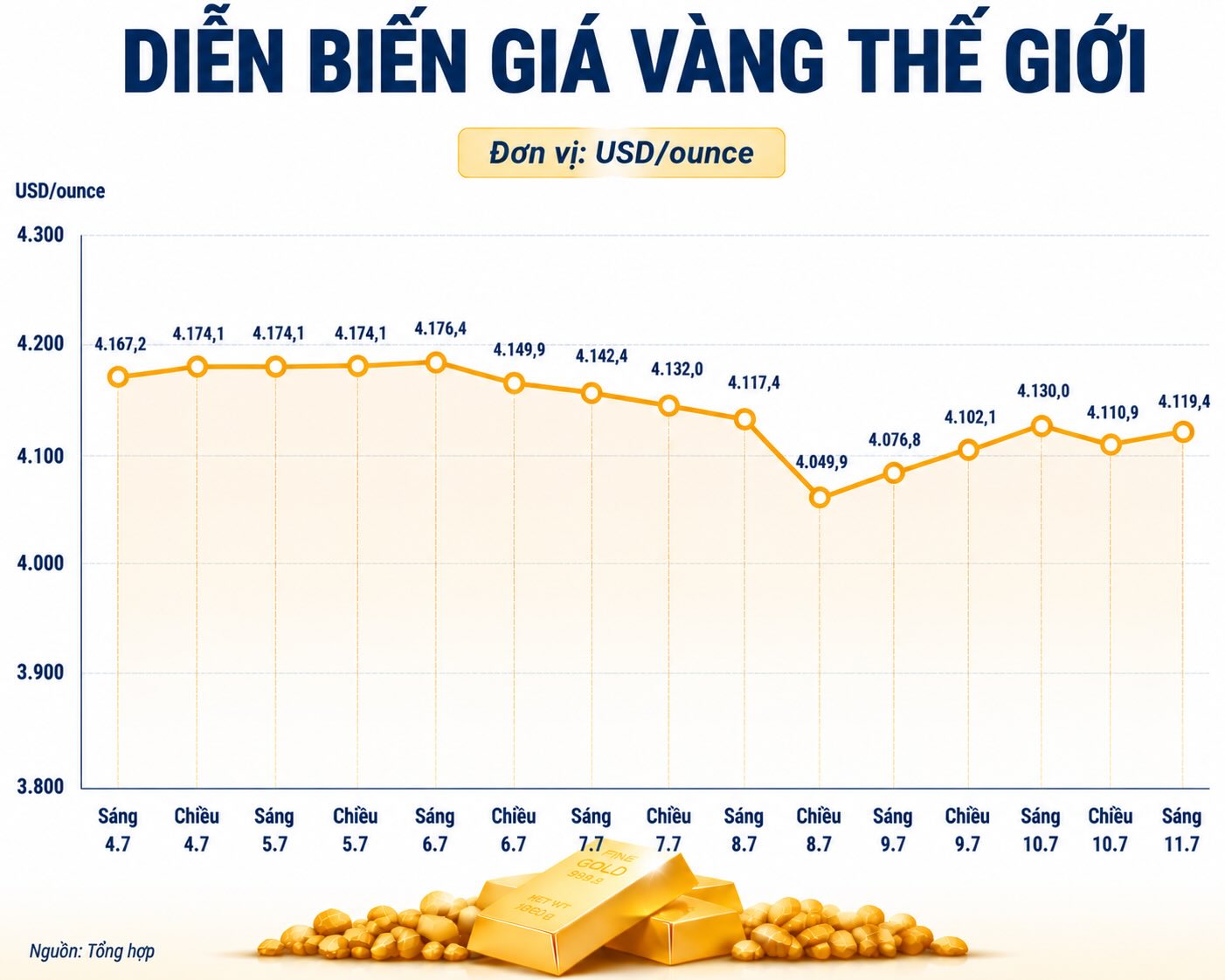
Poland still maintains steady gold buying in the context that the price of this precious metal has decreased by nearly 30% compared to the record high set at the end of January. In June, gold recorded the strongest monthly decrease since 2008, the time of the global financial crisis.
Last month, gold prices fell 11.74% after the US Federal Reserve (Fed), under the direction of Mr. Kevin Warsh, signaled that monetary policy could continue to tighten before the end of the year.
Increased inflationary pressure from the global energy crisis, stemming from the conflict with Iran, has pushed up real bond yields. This increases the opportunity cost of holding gold - an asset that does not generate yields.
However, in recent weeks, the views of central banks show that the role of gold as an investment portfolio diversification tool is still superior to the disadvantages from increased opportunity costs.
This is not a race or a purchasing activity simply for the purpose of buying gold," Mr. Glapiński said. "Behind this decision is a deep awareness of the role of the state in ensuring security for Poland and the Polish people in all circumstances, including during wartime, although of course we do not want that to happen.
Poland has emerged as one of the leading countries in the gold buying trend of central banks, after increasing gold reserves by more than 100 tons last year. The country is expected to reach a similar buying level this year.
Mr. Glapiński also reaffirmed NBP's goal of accumulating 700 tons of gold. Currently, this bank holds 632.4 tons of gold, of which about 100 tons are stored in Poland. The remaining reserves are kept in London (UK) and New York (USA), according to information from Mr. Glapiński.
Last month, two major surveys on central bank gold buying activities conducted by the World Gold Council (WGC) and the Forum of Official Financial and Monetary Institutions (OMFIF) continued to show positive prospects for gold in the next 12 months.
According to a WGC survey, up to 45% of central banks expect to increase their gold holdings in the next 12 months - a record high. Nearly 90% of surveyed central banks believe that total global gold reserves of formal institutions will continue to increase.
Meanwhile, more than 60% of foreign exchange reserve managers participating in the OMFIF survey expect gold prices to trade in the range of 5,000-6,000 USD/ounce in the coming year.
Experts believe that although gold prices have fallen sharply in many months of adjustment, persistent buying demand from central banks is creating a support zone around 4,000 USD/ounce.
The information in the article is for reference only, providing a perspective on the gold market developments and the operations of central banks. This is not an investment recommendation. Investors need to carefully consider risks, financial capacity and make appropriate decisions themselves.


