The gold market closed a volatile week as monetary policy signals from the US Federal Reserve (Fed) continued to dominate investor sentiment. Although gold prices recovered at times thanks to expectations of cooling geopolitical tensions, the precious metal quickly lost momentum after the Fed issued a tougher message on interest rates.
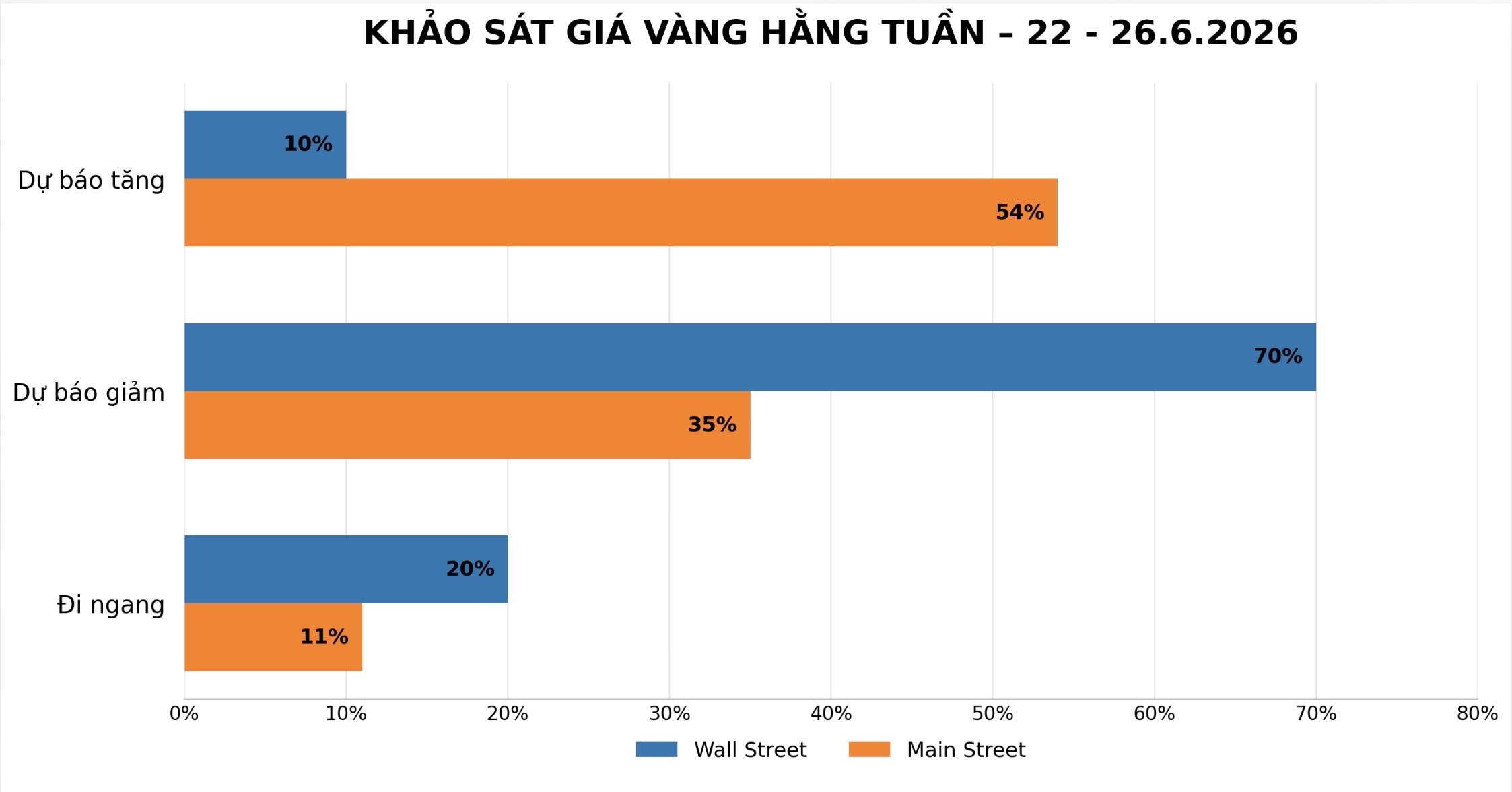
According to a weekly gold survey by a precious metals website, Wall Street sentiment has shifted to pessimism. Among the 10 experts surveyed, only 1 predicted gold prices would increase next week, 7 thought prices would decrease, and 2 predicted the market would move sideways. This development shows that analysts are more cautious about the risk of interest rates in the US remaining high or even continuing to increase.
Mr. Darin Newsom - senior market analyst at Barchart. com - is one of the forecasters that gold prices will continue to fall. According to him, in essence, the market has not changed much. Central banks are still buying gold, while investors continue to sell. Inflation is still a major concern, especially as the US Federal Open Market Committee (FOMC) leaves open the possibility of raising interest rates before the end of 2026.
Mr. Newsom believes that this scenario could support the USD, thereby putting pressure on commodities valued in the greenback, including gold.
As the USD strengthens, gold often becomes less attractive to investors holding other currencies. However, he also noted that the long-term trend has not necessarily reversed, because central banks still tend to hold gold instead of being too dependent on the USD.
From a technical and short-term trading perspective, Mr. Kevin Grady - Chairman of Phoenix Futures and Options - believes that gold prices may retest recent lows. According to him, Mr. Kevin Warsh's first meeting as Fed Chairman was relatively favorable, but what attracted market attention was the division within the FOMC over the interest rate roadmap. Many Fed members seem to be leaning towards the possibility of raising interest rates, and this is a factor directly affecting gold prices.
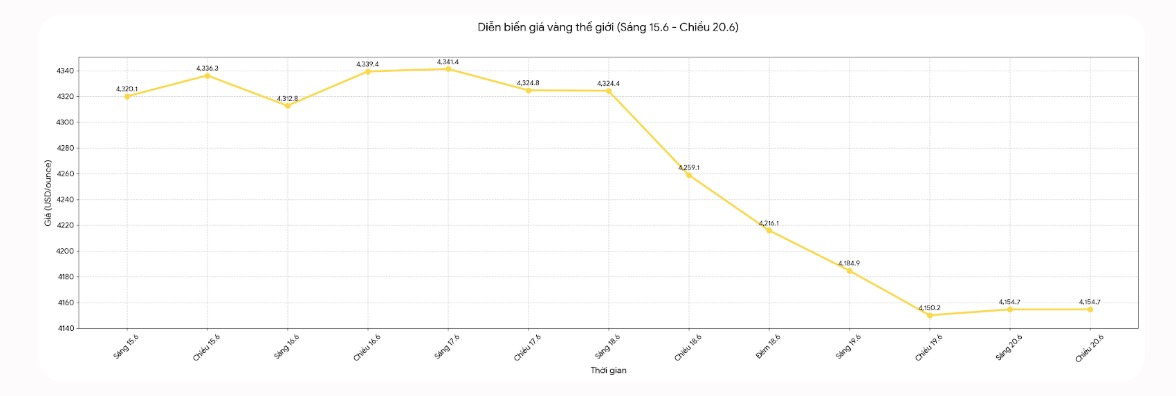
Mr. Grady said that although gold prices fell sharply during the session, trading volume was very low. This shows that selling pressure has not really come with large cash flow, but also reflects the lack of strong enough buying power to support the market. According to him, if gold prices continue to fluctuate around the current zone without new cash flow, the possibility of retesting the 4,000 USD/ounce mark is something to consider.
The 4,000 USD/ounce mark is an important psychological support zone for gold" - Mr. Grady said. However, this expert believes that if investors consider the current price range attractive, buying power should appear more clearly. Low liquidity, reduced open positions and investors standing outside the market show that gold still needs to find a sufficiently attractive price range to activate new buying demand.
Sharing the same cautious view, Mr. Alex Kuptsikevich - senior market analyst at FxPro - predicts that gold prices may fall next week. According to him, the rally triggered by expectations related to the US-Iran memorandum of understanding seems to have ended, while the Fed's tough stance adds momentum to the wave of buying the USD.
Technically, Mr. Kuptsikevich believes that the 200-day moving average - which used to be an important support zone for gold - has now turned into resistance. This is an unfavorable signal for buyers.
However, to make the downward trend more clearly confirmed, gold prices need to fall below the 4,000 USD/ounce mark, thereby breaking the important psychological support zone and the area that previously helped prices rebound.
Although there is still a possibility of bottom-fishing buying appearing around the 4,000 USD/ounce zone, experts believe that the gold market will hardly regain its upward momentum if the Fed continues to maintain a tough message.
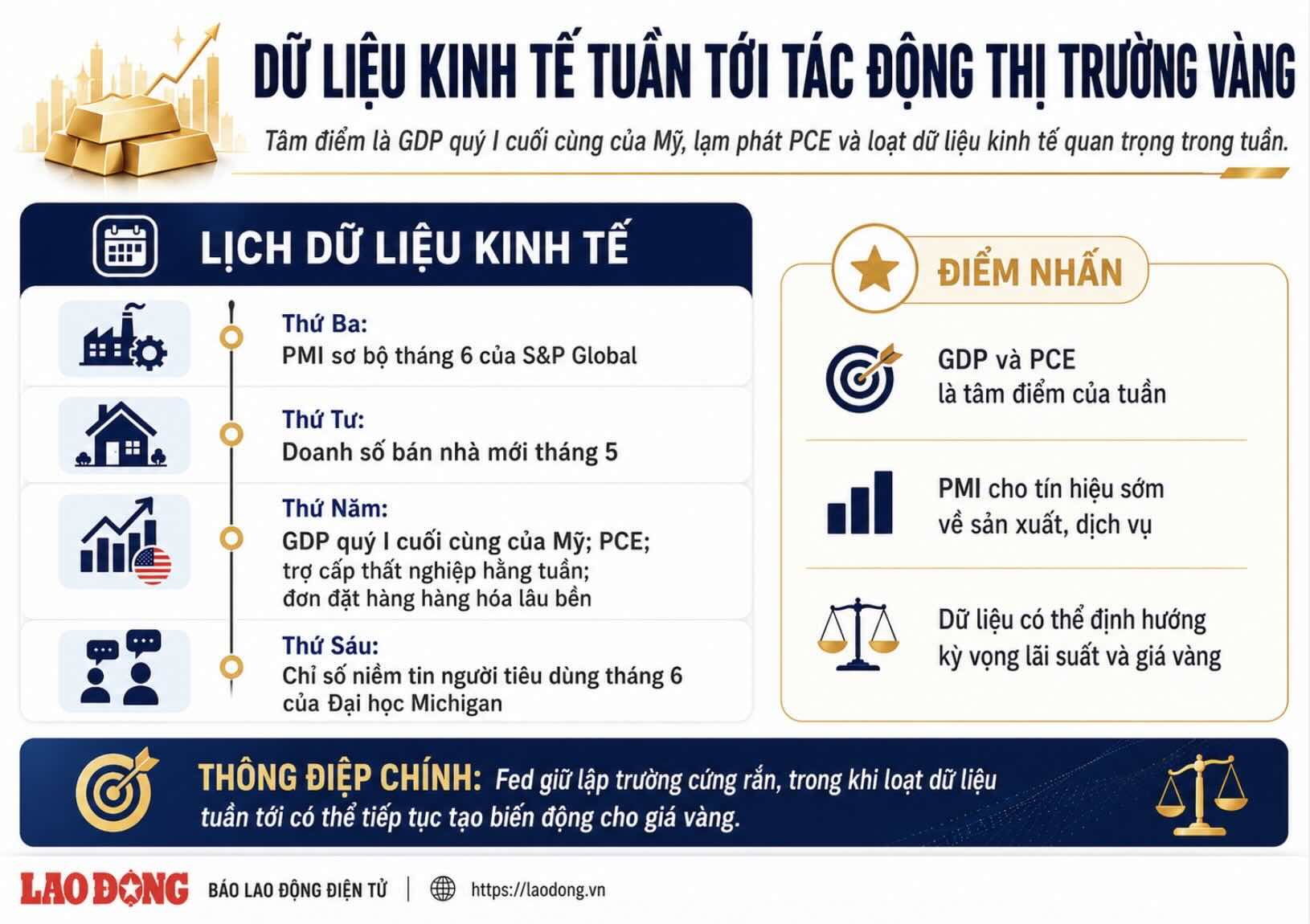
In the coming week, investors will monitor a series of important US economic data, including the final Q1 GDP, PCE inflation index, weekly unemployment claims and orders for durable goods. These data may directly affect interest rate expectations, the USD and the next trend of gold prices.