Entering the world of geiko and maiko

Việt Văn |

In Kyoto (Japan), traditional performers are not called "geisha" but "geiko". Before becoming geiko, they go through about 5 years of vocational training under the title "maiko". Therefore, the image of young girls in bright kimonos, seasonal flowers on their hair and wearing Okobo wooden clogs that tourists often encounter on the streets of Gion are actually maiko - artists who are on the journey to preserve and continue a cultural tradition that has existed for hundreds of years.

Inaugurated in 2024 in the Gion Kobu Kaburenjo campus, the theater where the Miyako Odori dance festival has been held since 1872, has the Gion Kagai Art Museum, the world's first museum dedicated to the art and culture of geiko and maiko in Gion Kobu. Not only preserving kimonos, obi, hairpins, okobo boots, musical instruments and many precious artifacts, the museum also offers the opportunity to directly enjoy Kyomai dances, the quintessence of Kyoto's performing arts.

Walking along Gion street today, visitors can easily encounter signs reminding them not to chase or take geiko, maiko photos. Instead of turning them into targets for "photo hunting", Kyoto encourages the public to learn about their lives and cultural values through the space of Gion Kagai Art Museum.

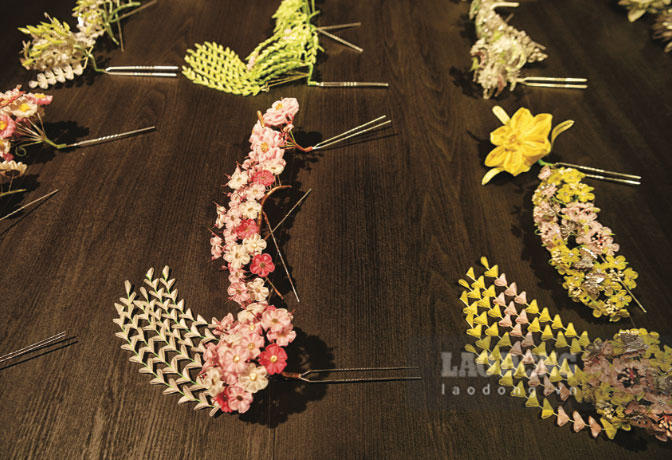
Entering the museum, viewers explore a world behind the beauty of geiko and maiko. Yuzen hand-painted kimonos, sophisticatedly woven obi Nishijin, or kanzashi folded from small silk flower petals using tsumami-zaiku techniques all show the sophistication of the Kyoto craft. In particular, maiko's hairpins change seasonally throughout the year, reflecting the deep connection between art and nature.

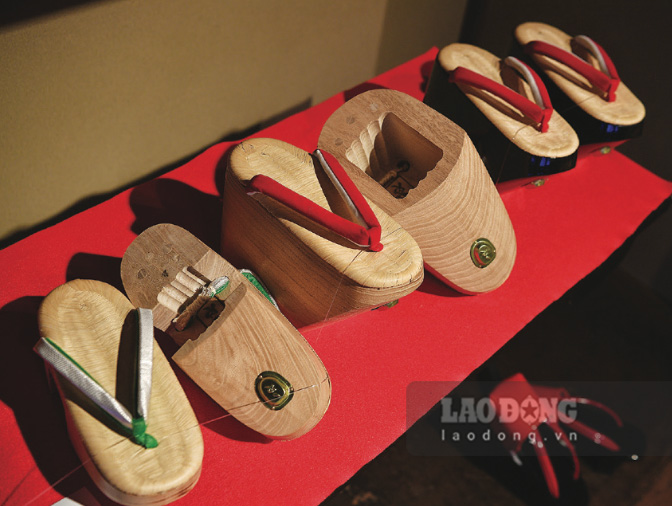
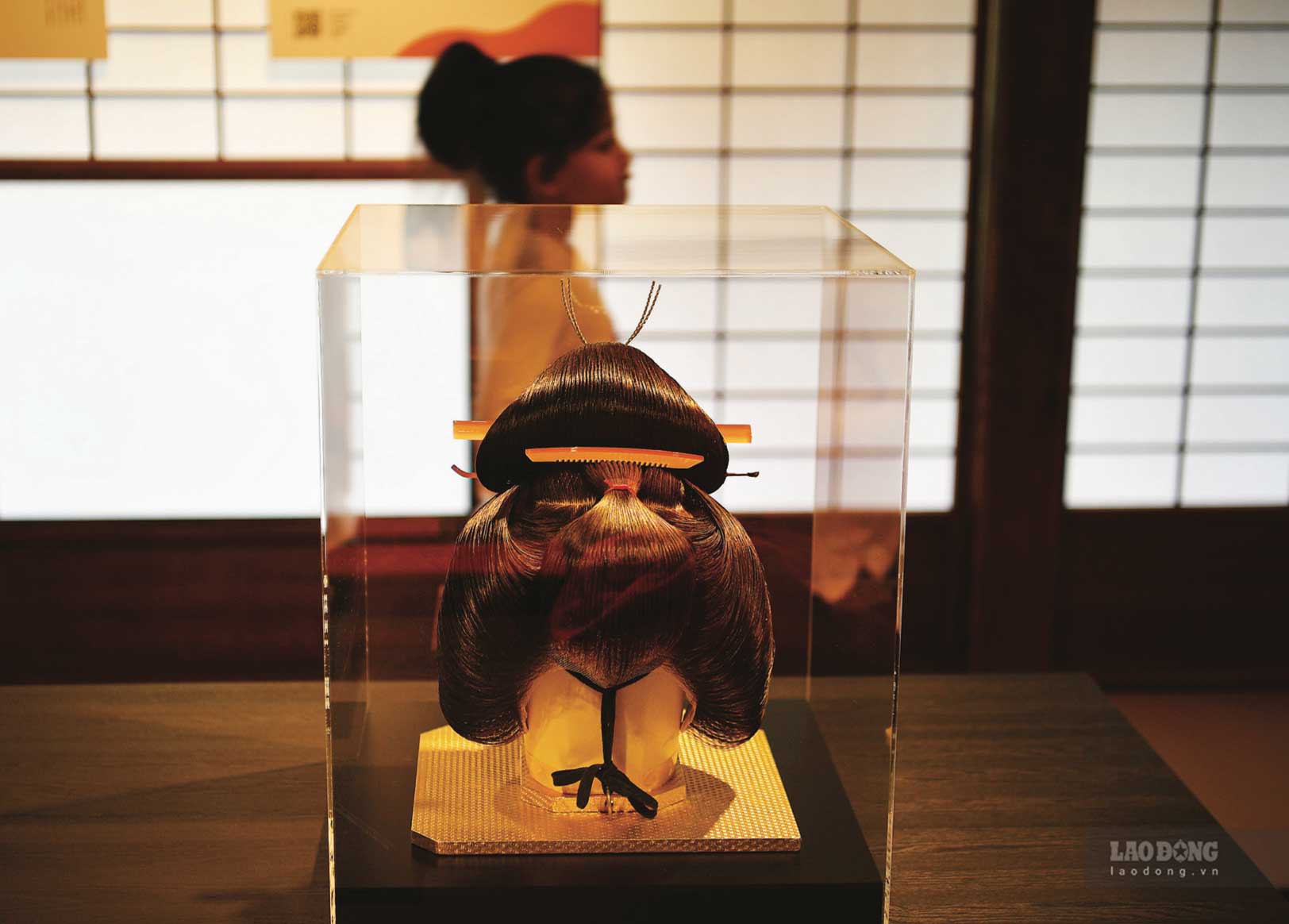
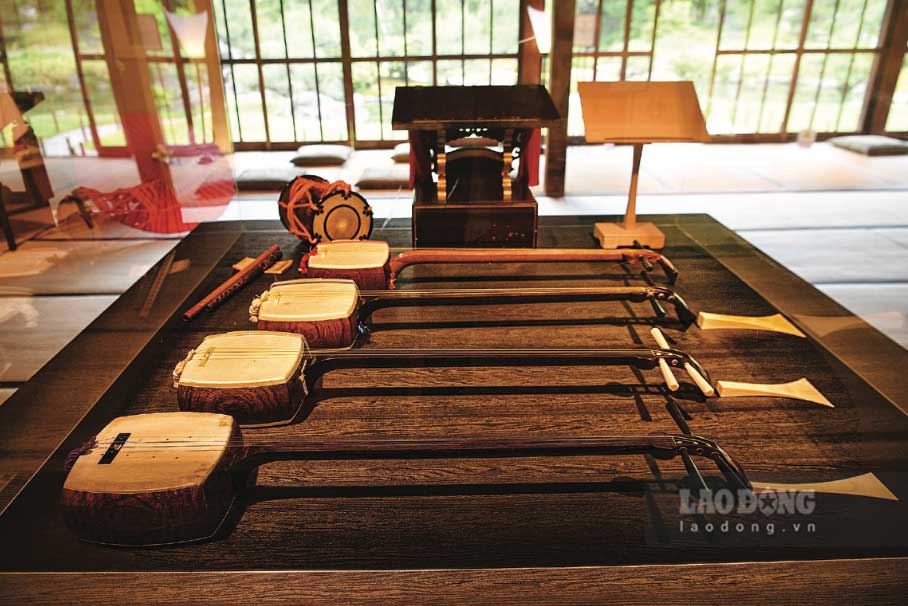
The museum also introduces traditional hairstyles, white chalk, red lipstick, Okobo wooden clogs and shamisen - indispensable elements to create the image of a maiko. Each artifact tells about years of learning dance, music, rituals and behavior before a maiko becomes a geiko.

Perhaps the most precious thing about Gion Kagai Art Museum is helping viewers realize that behind a geiko or maiko is a whole traditional craft ecosystem: From kimono dyeing artisans, obi weaving, kanzashi making, Okobo shoes making to musical instrument makers. It is their hands that have contributed to preserving a living cultural heritage of Kyoto over many centuries.

Leaving the museum, when you encounter a maiko quietly walking through Gion street in the sound of wooden clogs gently echoing on the stone surface, you no longer just see a beautiful young woman wearing a kimono. That is the crystallized image of hundreds of years of tradition, of hard work, of the hands of silent artisans and of a city that is still persistently preserving cultural values amidst modern life.
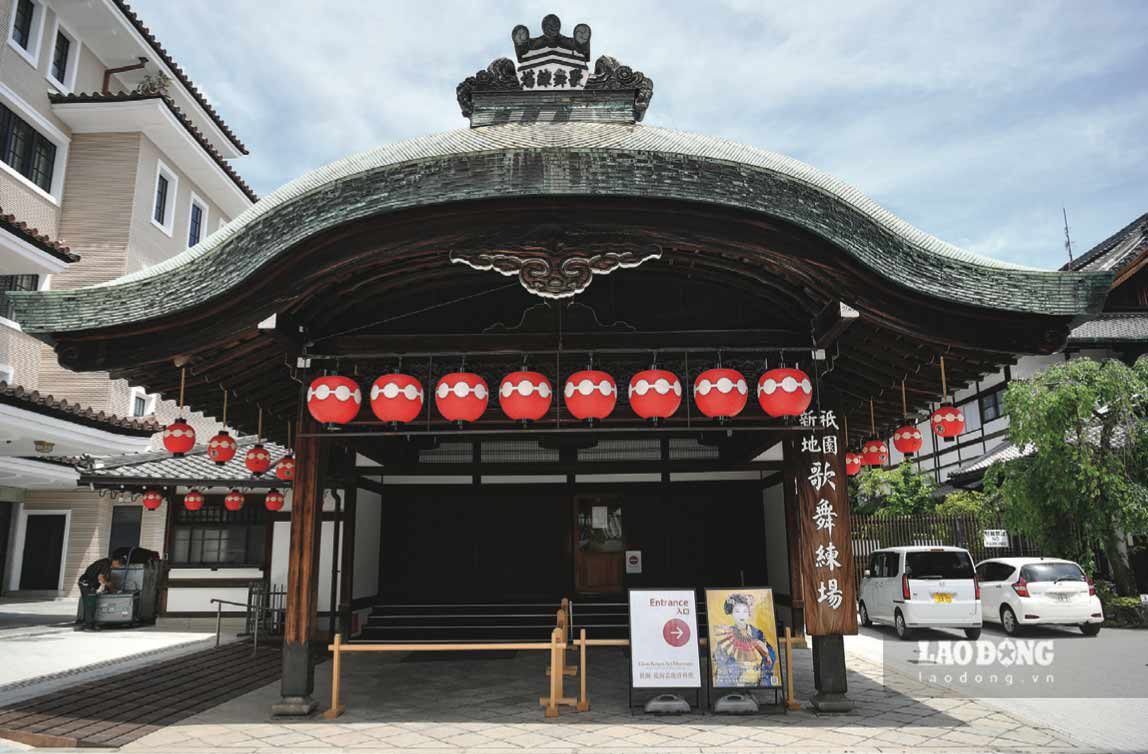
Lối vào Gion Kagai Art Museum, bảo tàng đầu tiên tại Kyoto dành riêng cho việc lưu giữ, giới thiệu nghệ thuật và đời sống của geiko, maiko ở khu Gion Kobu.
Entrance to Gion Kagai Art Museum, the first museum in Kyoto dedicated to preserving and introducing the art and life of geiko and maiko in the Gion Kobu area.
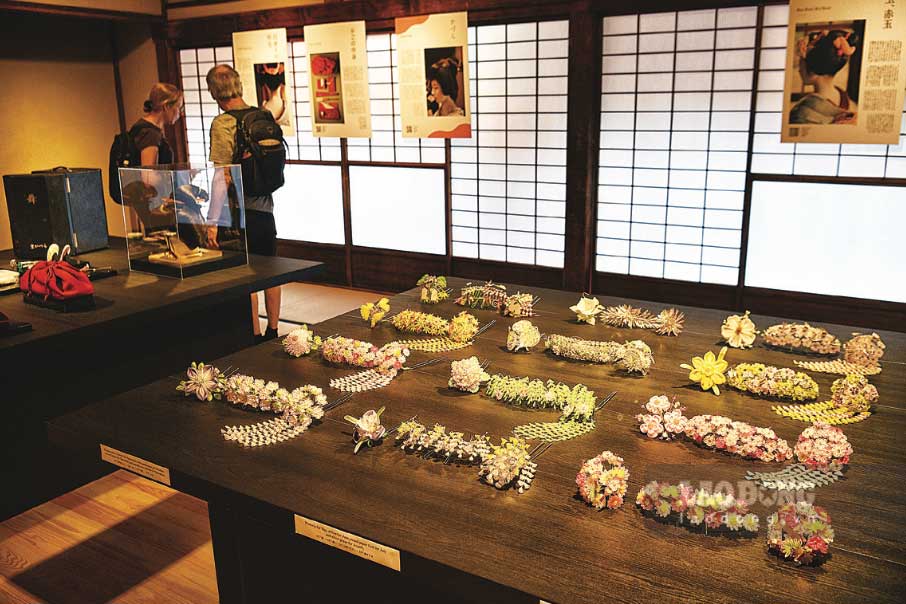
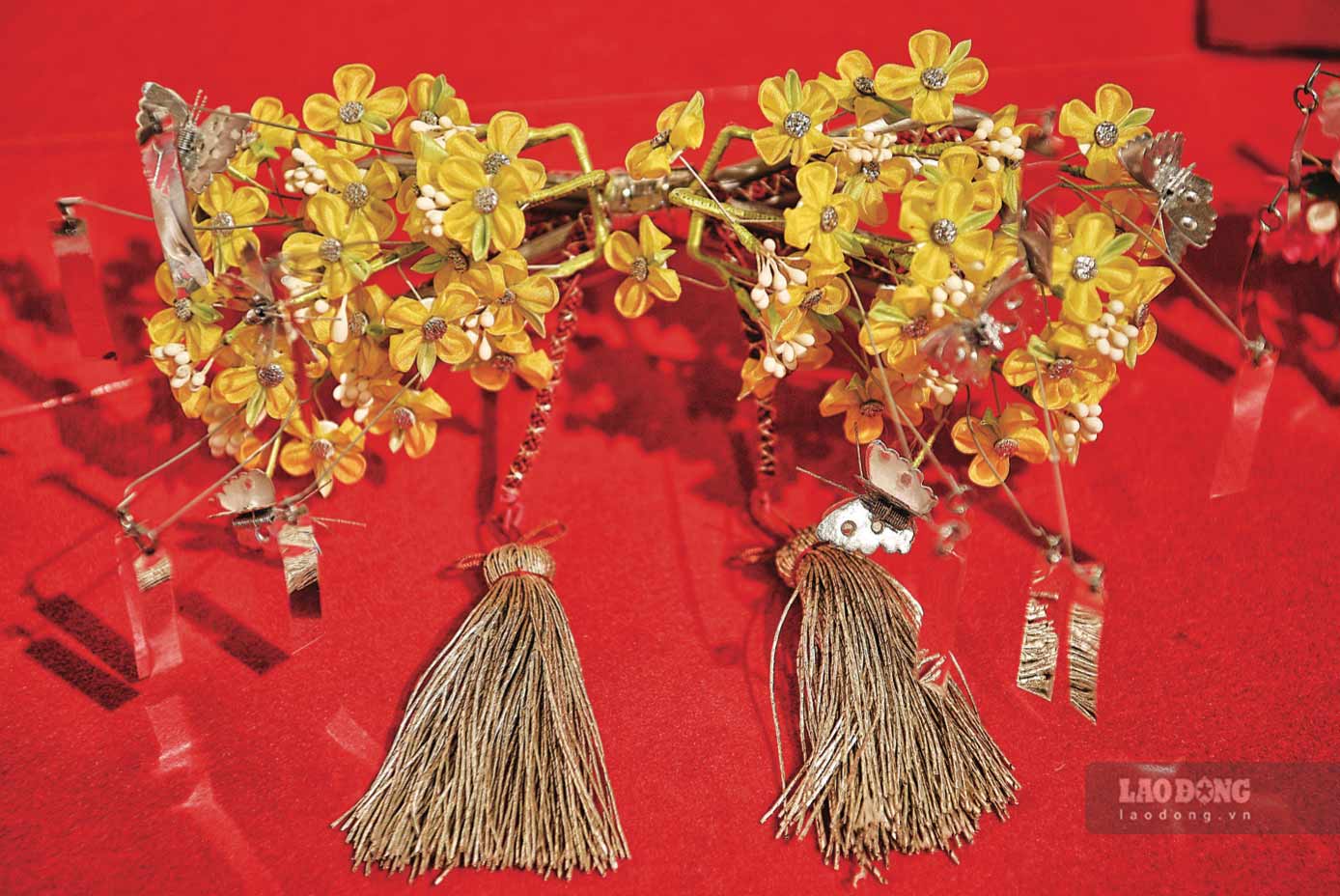
Trâm cài tóc của maiko. Những bông hoa lụa thủ công được chế tác bằng kỹ thuật tsumami-zaiku, kết hợp cùng các tua rua và chi tiết kim loại.
Maiko hairpins. Handmade silk flowers are crafted using tsumami-zaiku techniques, combined with tassels and metal details.
Kanzashi là những trâm cài tóc truyền thống của Nhật Bản, được chế tác thủ công từ lụa, kim loại và giấy. Hoa văn và màu sắc thay đổi theo từng mùa, là phụ kiện đặc trưng trong trang phục của geiko và maiko ở Kyoto.
Kanzashi are traditional hairpins of Japan, handcrafted from silk, metal and paper. Patterns and colors change seasonally, are typical accessories in the costumes of geiko and maiko in Kyoto.
Okobo là đôi guốc gỗ đã đồng hành cùng các maiko Kyoto suốt hơn một thế kỷ.
Okobo are wooden clogs that have accompanied the Kyoto maiko for more than a century.
Mẫu tóc truyền thống của maiko được phục dựng để giới thiệu kỹ thuật tạo kiểu cùng những loại trâm cài đặc trưng của nghệ thuật geisha Kyoto.
The traditional maiko hairstyle is restored to introduce styling techniques and the characteristic brooches of Kyoto geisha art.
Đàn shamisen cùng các nhạc cụ truyền thống được geiko và maiko sử dụng trong các buổi múa, hát và biểu diễn nghệ thuật cổ truyền Kyoto.
The shamisen and traditional musical instruments are used by geiko and maiko in dance, singing and performances of traditional Kyoto art.
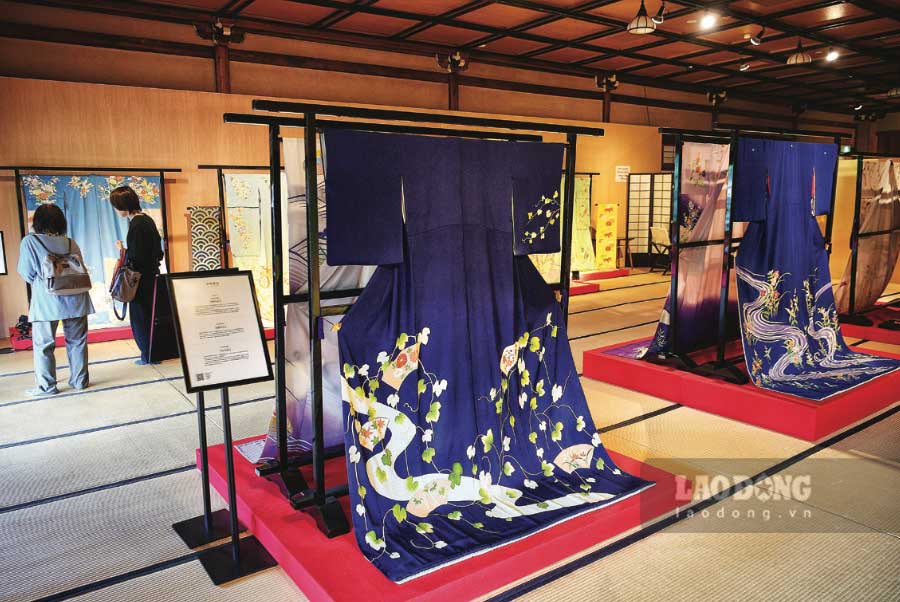
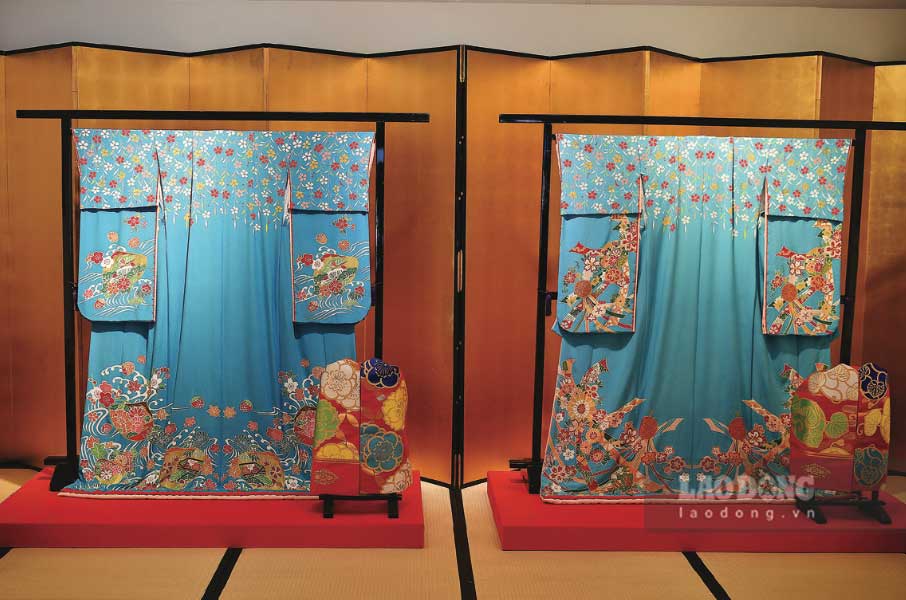
Kimono của geiko và maiko được vẽ, nhuộm và thêu thủ công, phản ánh vẻ đẹp tinh tế của nghệ thuật dệt may Kyoto.
Kimonos by geiko and maiko are hand-painted, dyed and embroidered, reflecting the delicate beauty of Kyoto textile art.
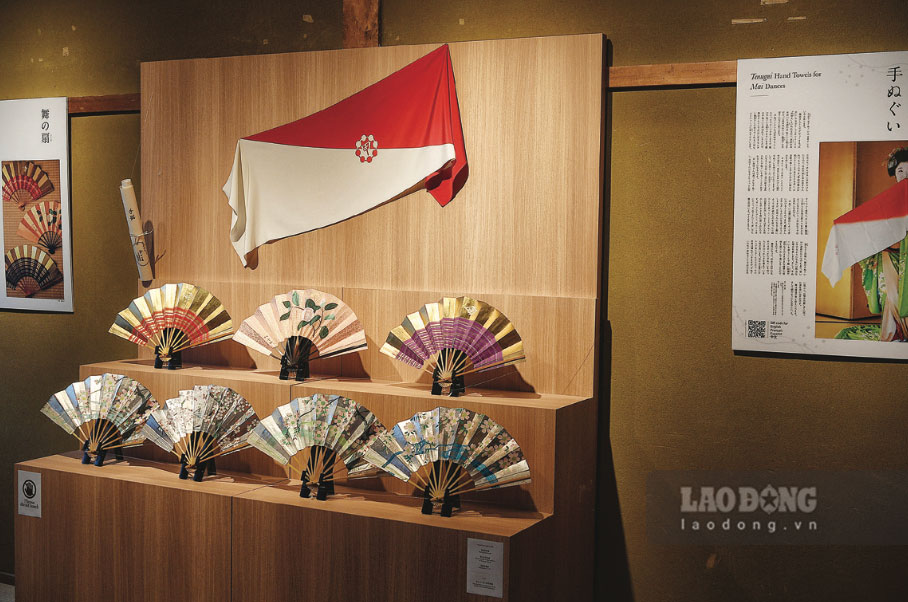
Quạt và khăn tenugui – hai đạo cụ quen thuộc trong các điệu múa truyền thống của geiko và maiko được giới thiệu cùng cách sử dụng trong từng tiết mục biểu diễn.
Fans and tenugui scarves - two familiar props in the traditional dances of geiko and maiko are introduced with their use in each performance.
Những bộ kimono dùng trong các buổi biểu diễn của geiko được trưng bày như những tác phẩm nghệ thuật, với họa tiết thêu và nhuộm thủ công đặc trưng của Kyoto.
The kimonos used in geiko performances are displayed as works of art, with embroidery and hand-dyeing motifs typical of Kyoto.
Không gian trưng bày các bộ kanzashi của geiko và maiko. Mỗi kiểu hoa, màu sắc và cách kết hợp phản ánh mùa trong năm cũng như cấp bậc của người sử dụng.
Display space of kanzashi sets of geiko and maiko. Each type of flower, color and combination reflects the season of the year as well as the rank of the user.
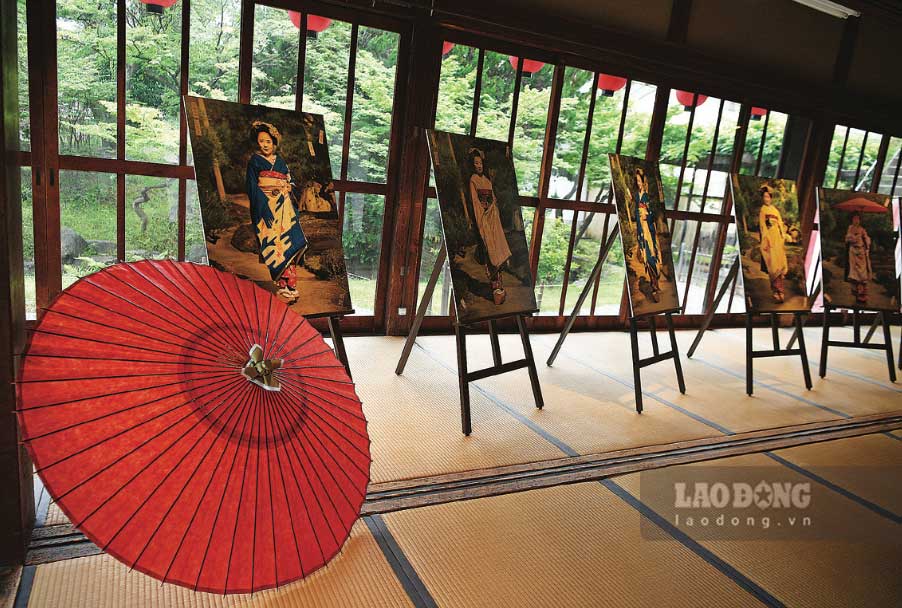
Không gian triển lãm ảnh giới thiệu vẻ đẹp và đời sống của geiko, góp phần giúp du khách hiểu hơn về nghệ thuật truyền thống Kyoto.
The photo exhibition space introduces the beauty and life of geiko, contributing to helping visitors better understand traditional Kioto art.

Việt Văn
RELATED NEWS

Japan lowers emergency alert after record heavy rain, more than 400,000 people ordered to evacuate

|

Record heavy rain in Chiba Prefecture, Japan has killed 4 people, 1 missing and more than 400,000 people have been asked to evacuate.

Japan's billionaire race close, Masayoshi Son closely follows Uniqlo owner

|

The total assets of the 5 richest billionaires in Japan reached 172.1 billion USD. Compared to the previous trading session, the group's assets decreased by about 1.3 billion USD.

Japan mobilizes police dogs to search for victims after earthquake disaster

|

Japanese rescue forces continue to mobilize nghiệp vụ dogs to search for victims after a 7.1 magnitude earthquake occurred in Kumamoto Prefecture.

Trailer truck fire on Ho Chi Minh City - Long Thanh - Dau Giay expressway

|

Dong Nai - A tractor-trailer traveling on the Ho Chi Minh City - Long Thanh - Dau Giay expressway (Nhon Trach ward section) suddenly caught fire.

Collecting rocks overflowing into the Gianh River due to blasting, clearing the flow

|

Quang Tri - Businesses have mobilized human resources and equipment to handle the volume of limestone falling into the Gianh River area and reduce dust when mining stone.

Line disguised as a spa treating bone and joint diseases, deceiving nearly 300 people

|

Nghe An - A line disguised as a spa facility, subjects advertised bone and joint disease treatment to deceive nearly 300 people, transacting more than 9 billion VND.

5 fishing boats caught fire in Nghe An, damage of about 6 billion VND

|

Nghe An - The fire at the fishing port in Quynh Phu commune caused 3 fishing boats to be burned down, 2 other boats damaged, and estimated damage of about 6 billion VND.

Japan lowers emergency alert after record heavy rain, more than 400,000 people ordered to evacuate

Châu Anh |

Record heavy rain in Chiba Prefecture, Japan has killed 4 people, 1 missing and more than 400,000 people have been asked to evacuate.

Japan's billionaire race close, Masayoshi Son closely follows Uniqlo owner

Khương Duy |

The total assets of the 5 richest billionaires in Japan reached 172.1 billion USD. Compared to the previous trading session, the group's assets decreased by about 1.3 billion USD.

Japan mobilizes police dogs to search for victims after earthquake disaster

Châu Anh |

Japanese rescue forces continue to mobilize nghiệp vụ dogs to search for victims after a 7.1 magnitude earthquake occurred in Kumamoto Prefecture.