
Full name: A history seen from the identity of Vietnamese people" is the 3rd work by author Tran Quang Duc, after "Millions of Years of Hats" and "The Tea Story". This is a laborious, systematic study, with solid and rich historical materials to reach profound insights: Each name is not just a symbol, it is a "cut" of the mind, a place where the past and present constantly dialogue with each other. Behind a few short words on our birth certificate is a whole stream of history, marking emotions, aspirations, and thoughts of people.
In the early days, the name was associated with the desire for survival. In the old days, Vietnamese people thought that sick children were often caused by ghosts, so they gave their children very vulgar and ugly names such as "Coc", "Chuot", "Chon", "Chay"..., believing that ghosts and demons would avoid catching children with bad names, so that they could grow up peacefully.
Then when society became more stable, knowledge spread, along with the introduction of Chinese characters, the name began to embody a gentle or symbolic look. The concepts of "appropriate", "noble" or "glorious" names gradually took shape, bearing the imprint of family, Buddhism, Taoism and especially Confucianism.
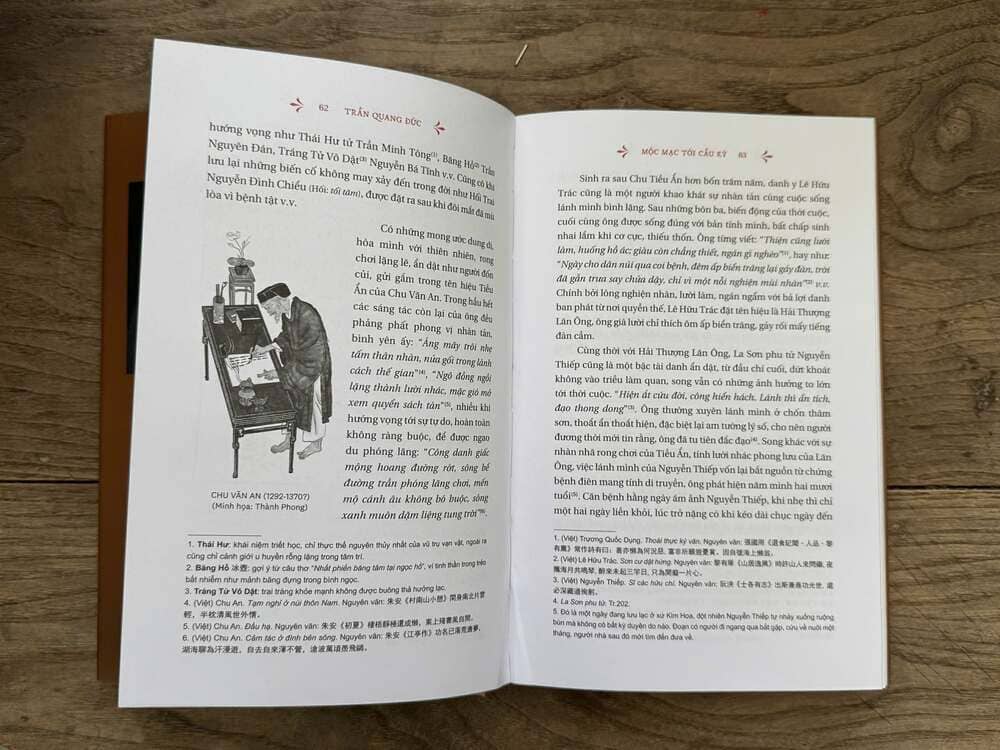
The names of Vietnamese people, from being simple single names, gradually develop into names that go along with them, then become middle names, both expressing the family lineage that the individual belongs to, both carrying aspirations for achievements and expressing nobility and nobility.
The name is also a story about a personal person: The name is used to affirm "Who am I". Writers and scholars use "self" and "virtue" to convey life's ideals or ups and downs of life. For example, Nguyen Du took his initials as To Nhu, or revolutionary Phan Boi Chau changed his name and surname continuously - when to express his orientation and thoughts on each stage of life.
The change in the names of Vietnamese women in the 20th century is also a very special story. From almost everyone being called by their last name plus the word "Thi" - single name, as a mark for the patriarchal society, the position of women is gradually being clearly recognized and therefore they are given more modern double names.
Finally, the book also reaches an important conclusion: The surname is a collective imaginary structure. We are born with the name as a given, it indicates we belong somewhere, but on the other hand we also understand that the clan is a fictional framework maintained to serve cohesion and governance. This understanding is not to deny tradition, destroy connection, but to make us less burdened with imposition, and to elevate the spirit of humanity.
The book is divided into 3 parts, each part following the development of the name through historical periods. In the first part "Intricate to simple", we see that, in its infancy, humans named it to survive.
Part two "Power conspiracy", focuses on the period when the Vietnamese dynasties took power - a period when the name became a symbol and tool of power and prestige.
In part three is "Towards Freedom", where the name becomes a way for people to affirm "who I am".
Full Name" by author Tran Quang Duc gives readers a different, cautious and reflective view of the names we still encounter every day, everywhere. This book shows that our names can open up a wider world, can protect, organize, persuade, and sometimes – liberate people; and Vietnamese history has also changed with them.
Tran Quang Duc was born in 1985, graduated from Peking University and is a translator, cultural and historical researcher with many famous works, causing great resonance in the country.
He is actively involved in research and teaching with the goal of preserving and bringing the colorful and diverse cultural history of the nation closer to young people.


