
At the age of 68, Nguyen Quang Chanh still painfully tells heroic stories, keeping his promise to rewrite historical memories for old and weak witnesses. From Minsk to Saint Petersburg, he brings stories about special forces, intelligence, and Vietnamese pilots to international readers, nurturing patriotism for the young generation and expanding the spiritual borders of Vietnamese books.
It is known that in May, he was invited to participate in the 2026 International Book Exhibition in Saint Petersburg (Russia). Thus, this is the 3rd consecutive time he has participated in this prestigious book fair. Which new works and more new information about Vietnamese special forces, intelligence, and heroic pilots will he bring to introduce to Russian readers?
- I will bring two new books: First is the Russian version (which has been translated and launched last year in Vietnam), about Mr. Nguyen Van Bay - a legendary pilot and his comrades; second is the book about the Saigon Special Forces, which has just been completed. This is a series of books about Vietnamese heroes in the resistance war against the US for national salvation. Readers in Russia are very interested and I believe they will warmly welcome them.
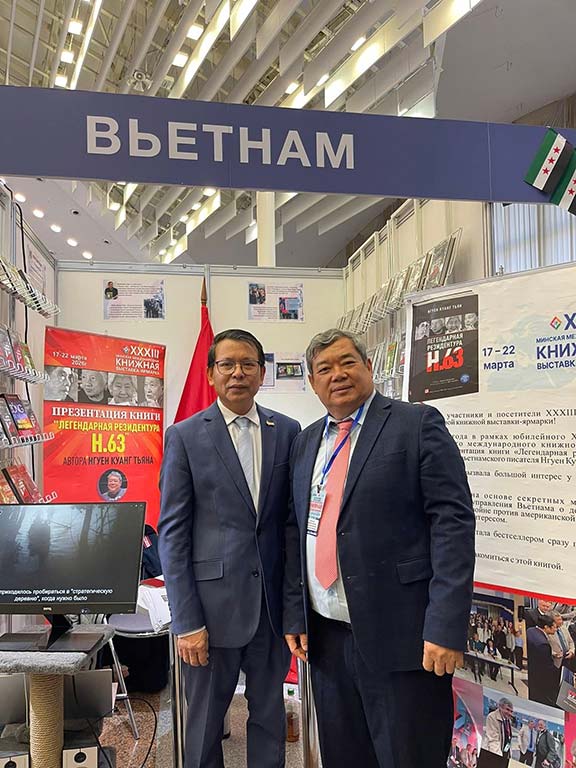
In mid-March, he was also invited to attend the 33rd International Book Fair in Minsk (Republic of Belarus). Thus, it can be said that he has/is starting to expand the borders (geographical scope) for his books - telling readers of the SNG bloc (Community of Independent States) about Vietnamese heroes in the resistance war against the US. Why did he choose Russian to translate his books, do he see any common ground between the war literature genres of Russia and Vietnam?
- First of all, I graduated from university in the Soviet Union (former), I loved Russia and then for decades I lived and worked in this place. Therefore, when I needed to translate my works into foreign languages, I first thought of Russian.
Our revolutionary literature in the resistance war against France as well as against the US for national salvation was very good, with many valuable book sections, but currently, as I see, the translation of those works into other languages, such as English, French, Russian, Chinese, Japanese... is generally very little, especially after more than 50 years since the victory on April 30, 1975. Many very good books have not been widely disseminated in Russia.
When my books were translated into Russian and launched in May 2025 in Russia, they were warmly welcomed. Because readers felt the losses of war, and at the same time cherished the most noble values: Preserving patriotism, preserving heritage for the younger generation. Our revolutionary literature is very close to them in this story.
Through attending fairs and book exhibitions in Russia and Belarus, can you see the interest of Russian and Belarusian readers in the books he writes, especially the stories and characters of Vietnamese intelligence, most clearly in what points, for example, the heroic H63 intelligence cluster or legendary individuals like Mr. Pham Xuan An? Is there any difference in the interest of Vietnamese and foreign readers in the stories he tells through his books?
- While the world is familiar with the image of lonely, outstanding spies through movies or novels, foreign readers are extremely surprised to be exposed to an intelligence network based on the strength of a collective and the protection of the people. The concept of "people's intelligence" is a completely new and interesting "specialty" for them. Especially for Russian readers, they find a great intersection between Vietnamese revolutionary literature and literature about the Great Patriotic War. They are curious about how a nation lacking in technology, with only human strength and well-organized ingenuity, has defeated modern machines...
51 years after the Liberation of the South Day, national reunification, will you have any new materials to continue telling to readers at home and abroad - who are very eager to hear more stories about the heroic and resourceful Vietnamese intelligence?
- There is still a treasure trove of stories about Vietnamese intelligence that are being exploited and told truthfully to readers at home and abroad. These new documents are not just simple feats of arms but also profound pieces about the people and silent sacrifices of an entire intelligence collective - from spies to liaison officers and the masses.
Such as the story of H3 spy Nguyen Van Minh in the puppet General Staff, the story of Mr. Sau Tri - Head of the Regional Intelligence Department, or grassroots families in the inner city such as Ms. Tam Thao's house at 136B Gia Long, willing to trade off both property and the safety of their children to hide intelligence officers. And Cu Chi mothers like Mrs. Nguyen Thi Ly, even though witnessing their children being brutally tortured, still give their children more will to not confess. All are heart-touching stories.
Do you intend to translate your books into English? In fact, translating Vietnamese literature into Russian in recent years has encountered many difficulties and translating into English will help the story of intelligence officers live "longer". What do you feel?
- Many readers have also raised requests, saying that the book should be translated into English. Regarding this matter, there are currently two places proposing to support me. In Russia, the Russian Writers' Association said that if I wanted to, they would support translating this book into English. In Vietnam, some friends also supported it, they will help translate it to widely disseminate to tourists as well as those who know English, so that they can access very good books about the H.63 Intelligence Cluster. I am trying to translate the book about the H.63 Intelligence Cluster into English by the end of 2026.
Resistance literature needs to be renewed to make stories live forever, not just recorded as a archive document. What is your opinion on this? Do you intend to write resistance novels - where you have the right to fictionalize and create more to attract young people?
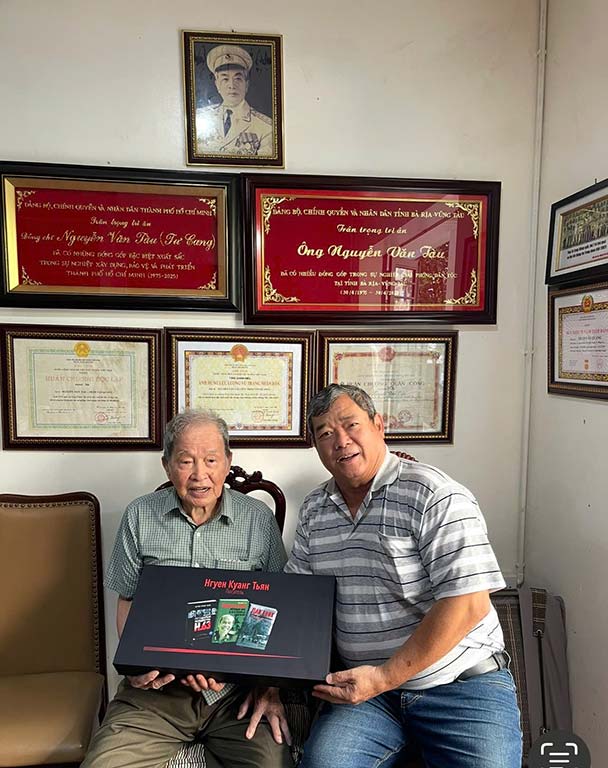
- I believe that the true stories of the intelligence industry are already too mysterious and attractive, there is no need to add them. In fact, we are not short of emotional stories, real stories, real people about sacrifice, about ingenuity, courage, wartime love stories of Mr. Tu Cang, Mr. Bay Be....
For me, writing about the truth is difficult because the writer is not allowed to add or subtract, but it is that honesty that creates lasting value.
My concept of "reinventing" does not lie in fictionalization but in the way of telling true stories, capable of attracting readers. I want my books to not only be materials for later generations to look up, but also attractive and easy-to-read literature books. Readers today have very high demands, if they write in a fictional, rosy or one-sided propaganda style, they will forget immediately after reading. After all, what I always want to say and have written in the last page of my work: "Please don't forget them, the heroes who live forever in the hearts of the people".
Thank you, sir!


