Teasing friends and relatives with a gentle joke on April 1st (April Fourth Fish) is a familiar thing. However, history has recorded many elaborate "tricks" that shocked public opinion and were recalled as classic anecdotes.
One of the most famous jokes must be mentioned is the report "harvesting spaghetti" of the Panorama program on BBC (UK) in 1957.
In a short film lasting about 3 minutes, viewers witness the scene of Swiss farmers picking spaghetti strands from a tree, after a warm winter to help "eliminate cassava worms".
Realistic images, serious hosting voices make about 8 million British viewers believe that spaghetti really grows on trees.
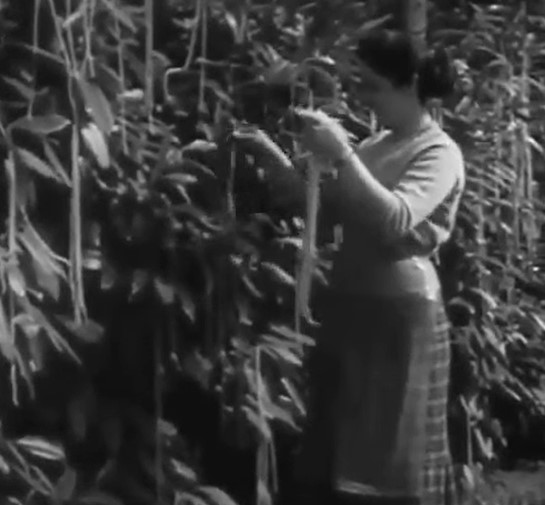
The incident took place in a context where spaghetti was still unfamiliar to many British families at that time, making the story even more convincing. Many people called the BBC to ask how to grow this "special tree" and received a half-joking, half-real answer: just put a spaghetti branch in a tomato sauce box and wait. From here, the media began to realize the power of combining visual images with "seemingly scientific" information.
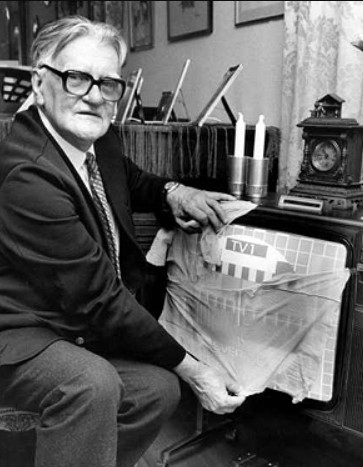
This trick continued to be repeated in a different way a few years later in Sweden.
When color television was not yet popular, Sveriges Television broadcast a "technical" tutorial to help turn black and white TVs into color with just a nylon sock stretched in front of the screen.
Arguments based on complex physics terms make many people believe and follow. However, the only result they receive is a stretched sock and a lesson about gullibility in the face of seemingly reasonable "scientific explanations".
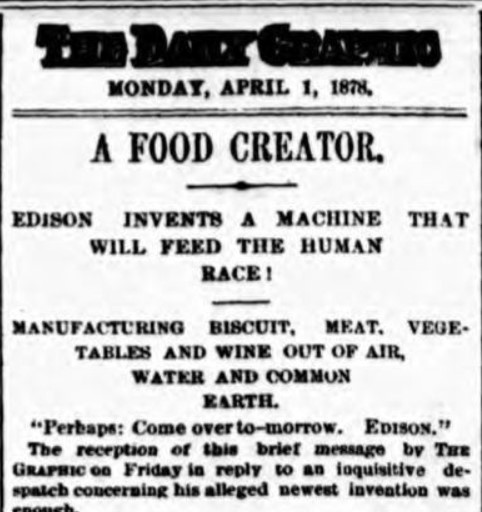
In 1878, The New York Graphic (USA) published a shocking article about Thomas Edison's successful creation of a machine to turn soil, water and air into food.
The article describes in detail the meal at Menlo Park laboratory with "unprecedented" dishes, bringing a feeling that is both magical and convincing.
In fact, the whole story is just a dream of a reporter - the detail revealed in the last line.
However, many readers did not finish reading the article, leading to the information being spread widely as if it were true. In the context that Edison at that time had just made a big splash with his inventions, the public was even more likely to believe in the image of a "scientist who can do the impossible". It was the personal reputation factor that unintentionally became the "catalyst" for the prank to spread.
Not only stopping at the media, real-life staging also contributes to bringing Cá tháng Tư to a new level.
On the morning of April 1, 1974, people in Sitka (Alaska) panicked when they saw black smoke rising from Mount Edgecumbe - a volcano that had been inactive for a long time.
Emergency calls were made, rescue forces quickly intervened, and even helicopters were mobilized to check the situation.

However, when approaching the crater, they discovered that the "disaster" was just a pile of burning tires, with the giant words "April Fool" (April Fool).
The author of the joke - Oliver "Porky" Bickar - has been preparing for many years, waiting for the right time to implement the plan.
Looking at examples spanning many periods, it can be seen that the common point of classic jokes is not at the level of exaggeration, but in how they hit the psychology of the recipient. When information is placed in a reasonable context, accompanied by reliable images or "experts", the boundary between real and fake becomes slimmer than ever.