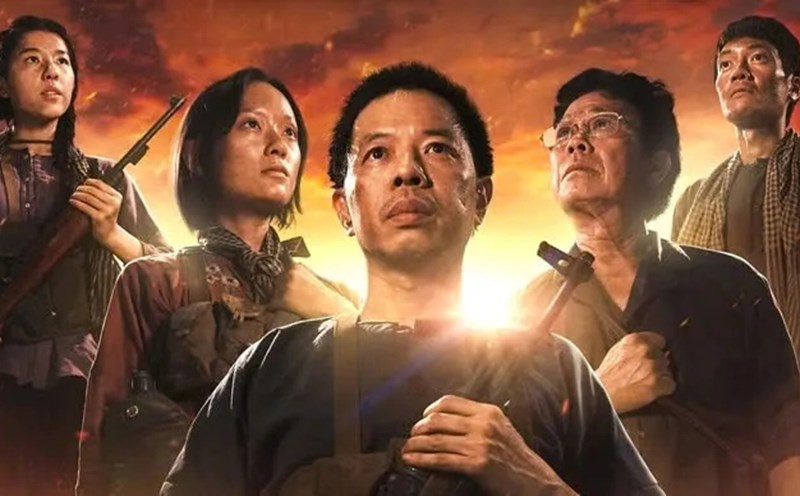
Dear director, the topic of war is a difficult topic, requiring meticulousness in context, historical materials, investment... Can you share about the journey that began with "geography: Sun in the dark"?
- War films are considered something very... terrible for filmmakers. Even with the world's major film industries, they still have to "play peony skin" when making films about the theme of war.
With geography: Sun in the dark, I can imagine what I will encounter, when the Vietnamese film industry is still very young.
But I have been dreaming of making a film about Cu Chi's geography for many years. When I heard stories about Cu Chi terrain, I thought it was a topic I could do.
I accept the fact that making films about Cu Chi's geography is still very difficult. However, there are special things about topological warfare, such as taking place underground, operating in a special way, and the participants are also special.
The biggest and most difficult challenge for you personally when starting this project?
- After researching, I learned that no film had been filmed in the land of Cu Chi, because I could not film in the land. Challenges in lighting and cramped space are difficult problems to solve.
I like it because I built a vivid and beautiful context, not formal but in terms of human. The design team and I have also discussed and tested many times. Cu Chi people take nearly 20 years to dig the tunnel system, no measuring machines, no modern tools. Therefore, I want the shape of the tunnel to be rudimentary, awkward, is a tunnel that is not straight, not shaping. I have tried many materials, how the audience can distinguish the tunnels, understand the position of each tunnel. It is a big challenge when designing a context.
I wrote the script from 2014 to 2016 and started looking for investors for the project. Until 2022, everything went smoothly and the chance to come to me. It can be said that this is a very valuable opportunity. The film consumes a large amount of investment, about more than 50 billion - is the most expensive film I've ever made. Not to mention, the project also has unprecedented precedents, which is supported by the Ministry of Defense, the Propaganda Department - the Mobilization, Ho Chi Minh City Party Committee. The Ministry of Defense for the first time lent a private film borrowed weapons and military weapons.
When fate comes, everyone converges in one moment, together towards the 50th anniversary of the National Reunification Day. That was a very sacred moment when the country was at peace.
The movie "Tunnel: Sun in the dark" is set in 1967, at that time he was only 4 years old. How have you heard about war?
- I remember April 30, 1975. I felt the difference of that day, when I walked on the street and the flag of heaven, everyone was excited. But at that time I was too young, I could only remember that emotional trough. As for the war, I did not really experience it to have a real experience. I love history so I should find out.
Writer Bao Ninh once told me that people who have gone through war can be trapped there, they cannot have an objective view like those who do not live directly in war. Mr. Bao Ninh praised me when reading the script, but I thought he wanted to encourage me.
I think I can think independently about war, after a period of researching and verifying information. I am always moved and proud when the picture of Cu Chi terrain gradually appears clearly. Cu Chi is associated with the people's war, because that war is not between the army and the army but between the common people and the army. Our people have defeated the enemy in very unique and smart ways.
The ability to adapt, turn weaknesses into strong points, the intelligence in the transformation of the people's war seems to have no limit. We use the enemy's own weapons to fight the enemy. The way to organize a battle in the heart of the tunnel is a too stature thinking from small guerrillas.
There are details that not every young person knows, sometimes I am surprised when I hear about the stories in Cu Chi topography. On a special occasion like April 30, I think stories like this need to be told again. So that we can understand how much peace is worth, how beautiful peace is after what our ancestors have gone through and fought for.
In your opinion, what in the stories about war will create sympathy and strong emotions for those who were born and raised in peace?
- I think war is never an old topic. Speaking of dramatic elements, no topic can compare to war. The most attractive films are those that mention people in situations that border life and death.
The key is that when talking about war, we do not talk in one direction but exploit the humanity in it. When depicting the war, people must be the subject of the story.
The way of talking about war also requires modesty, maturity, and moderation. I always think that history is greater than what we tell. The film cannot fully recreate the greatness of history.
During the process of meeting the deserters who fought in the ancient land of Cu Chi, which story made a strong impression on you?
- Actually, I regret that there are many details that cannot be included in the film.
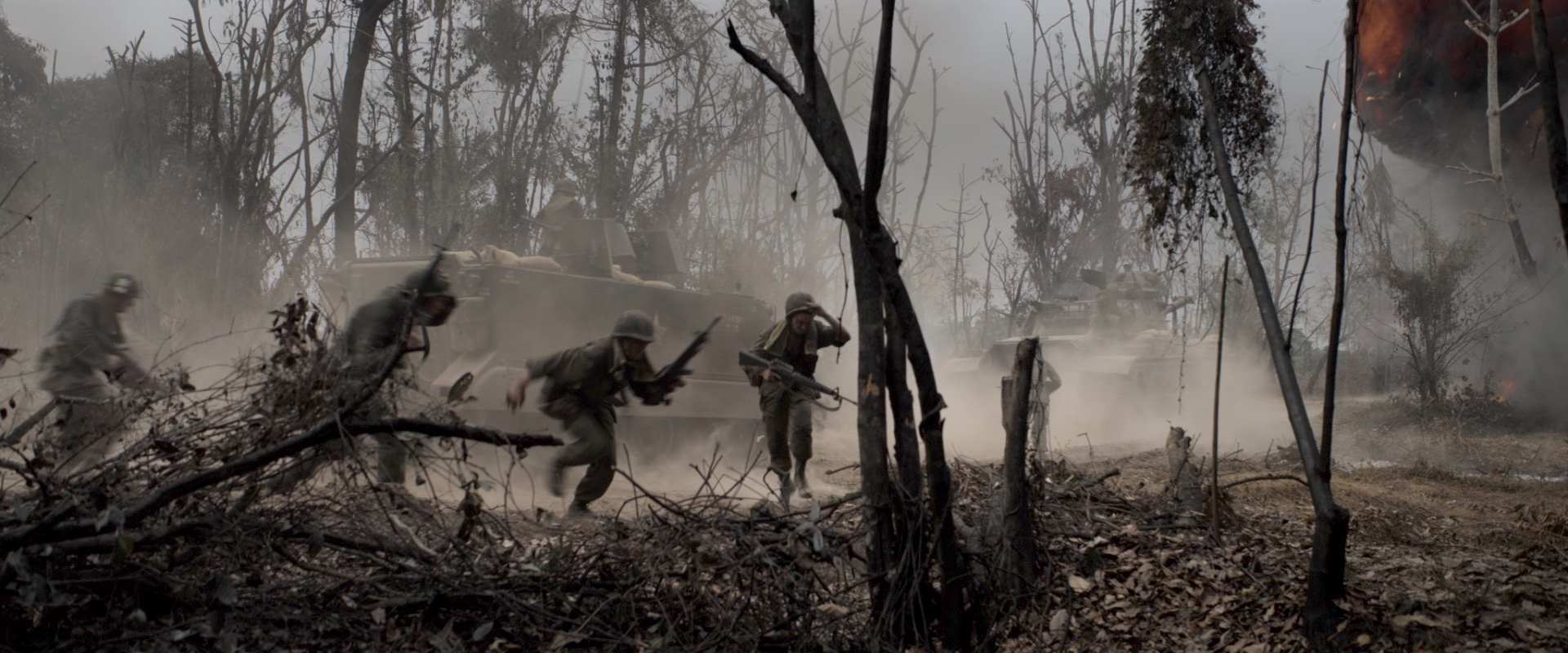
When watching war films, many of us will have the mindset of waiting for fierce, dramatic battles between the two sides of the army. But this is not a story that took place in Cu Chi in 1967,
The war in Cu Chi is a people's war, a guerrilla war. The group of Seven Duong Tuong comes from the people, they are not properly trained and formed in strategy and combat like the army. They are also not equipped with weapons, and have to pick up the weapons that the enemy used to recycle.
This war is completely unbalanced, with a small group of "land-forward" youth volunteers on one side and the most powerful military force in the world on the other side, equipped with modern weapons.
The way small travelers find a way to survive, stay strong and steadfast in the terrain, and fight without fear is what impressed me when I heard the story in Cu Chi.
"Diotics: Sun in the dark" wants to touch the emotions of the audience, first of all, the film must be his own emotions. The feeling of war that you want to express the most through the language of cinema?
- There is a saying, if you do not "crazy" because your film will definitely not be able to make the audience "crazy". Before making "geography: Sun in the dark", I went to Cu Chi to interview the veterans for a documentary.
They told me many things, from eating and sleeping to the way of arranging matches and playing matches from the ground.
I remember a very interesting story, a veteran told me that the way to dig a dia dao was to dig 2 wells about 2 meters deep, then dig them across and meet at a point in the middle. From there, the terrain will connect with each other and develop further.
The distance each hole is from each other, the people divide it into half, and the nomads listen to the others' whistling to make room. He said that that day, he arranged for a couple to pet from both ends and they pet very enthusiastically. I imagined the scene where the couple dug up soil and wanted to meet each other, then see each other...
Those stories are very humane, but I cant put them in the film. I interviewed more than 10 veterans, but some of them have passed away.
My biggest regret is that I could not put all the things I wanted in the work. It takes many films to fully tell the different angles of war.
War films are very expensive, but the expense is uncertain to make them attractive. Many films with the theme of war in Vietnamese cinema have suffered losses. What do you think about the hundred-billion-dong revenue and how a war film can cause a fever?
- In many countries, the films with the highest revenue of all time are often films that exploit the theme of war or patriotism. In Vietnam, investment in this topic has been limited because films about war are too expensive.
If filming about war in the context of a lack of everything, the film will also be very difficult as expected.
Therefore, I am grateful and feel extremely lucky to have completed the project I have cherished for so long about the underground war in Cu Chi.