The lasting influence of Truyen Kieu through the ages
The story of Kieu (or The Youth School) was composed by the famous actor Nguyen Du based on Kim Van Kieu's story by Thanh Tam Tai Nhan. The work is written in the word Nom with 3,254 lines of the six-line poem - pure Vietnamese poetry, creating the most unique beauty in Vietnamese poetry.
More than two centuries have passed, Truyen Kieu still retains its value throughout and deeply in the spiritual life of the Vietnamese people. Not only a literary masterpiece, the work also penetrates language, art and social life, proving the rare influence of a literary work.
Since the 19th century, the story of Kieu has gone beyond the framework of a literary work to come into life in countless forms: Kieu soaking, Kieu bay, Kieu boi, Kieu swerving, Kieu do... People in Kieu are like in a folk song, folk song, many people who are unliterate still remember dozens of verses to apply in daily life.
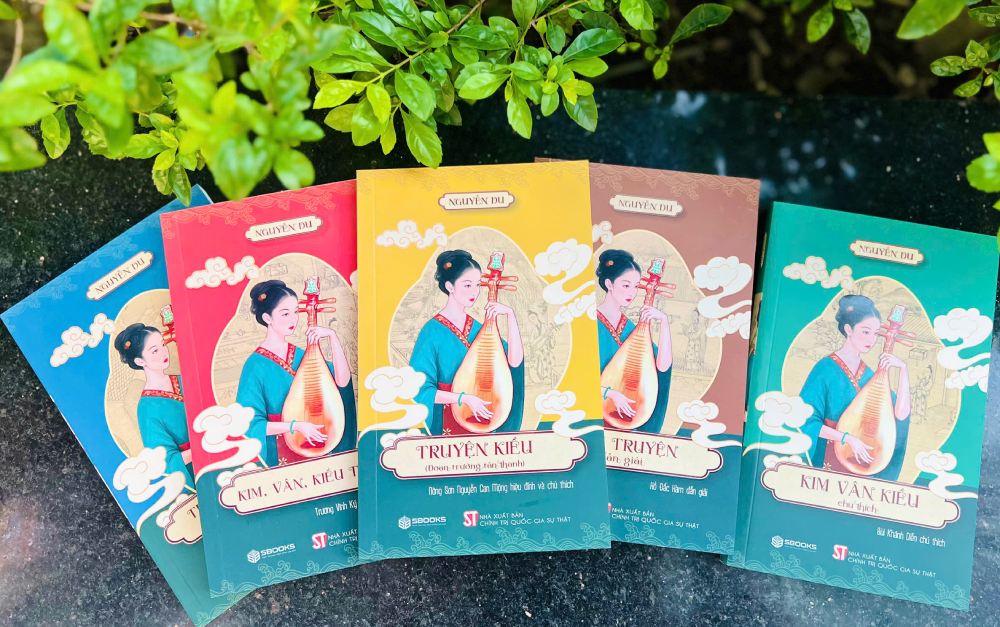
Many Kieu phrases have become familiar with the language, helping Vietnamese people express their thoughts in a profound and witty way. supplyings like Sad people are never happy, Stidy people live in our hearts, You have a smooth beard, beautiful clothes... appear in news comments, love stories or on social networks.
From folk activities to the wide range of Vietnamese culture, Kieu has become an " inseparable fate in the life of the Vietnamese national soul in general and literary life in particular", as stated in the general assessment at the national scientific conference "Nguyen Du - Truyen Kieu through documents and inter- textbooks of art" organized by the Literature Institute in 2020.
The story of Kieu is also considered a "cultural identity" of the Vietnamese people in the international arena. The work has now been translated into about 20 languages with more than 70 translations; many foreign politicians, when speaking to the Vietnamese delegation, also quoted Kieu's poetry to express their love for Vietnamese and national culture.
Entering the 20th and 21st centuries, the vitality of Kieu has been proven stronger as it has become a creative material for many types of art. From Cheo, Cai Luong, drama to cinema, Opera, ballet, puppetry, music... Kieu is always reborn in new forms, bringing the breath of the times but still retaining the humanistic spirit of the original work.
Many notable stage and film works include To Nhu's Song, Nguyen Du with Kieu, Kieu (cinema), play The fate of Kieu, Truyen Kieu ballet, Kim Van Kieu's musical... Each version has a new approach, contributing to enriching Kieu's influence in artistic life.
The artists also gave Kieu special favor. From artists Nguyen Gia Tri, To Ngoc Van, Bui Xuan Phai to contemporary artists such as Nguyen Tuan Son, Kieu has found endless creative inspiration.
Not only that, many writers and poets also continue to write their feelings for Kieu and Nguyen Du. From To Huu, Che Lan Vien, Huy Can to today's young authors, all have found in Kieu a "stream" of poems flowing endlessly.
In modern society, Truyen Kieu is not lost in one thing but on the contrary, becoming a new cultural trend. Young people use Kieu to create photos, comments, and metaphor for hot issues in society.
Nguyen Du's Kieu story is therefore not only a literary heritage but also a vivid cultural flow, accompanying Vietnamese people through all ages. The work crosses the boundaries of space and time to become a spiritual support, a source of pride and a witness to Vietnamese cultural identity. That vitality, to this day, is still as lasting as at first.
The treasure trove of words that enrich Vietnamese
In the rich flow of Vietnamese dictionaries, Truyen Kieu is a special and unforgettable part.
Nguyen Du has concentrated the quintessence of Vietnamese by flexibly applying slang, slang, folk songs, etc. Thanks to that, Vietnamese has become richer, more sophisticated and Vietnamese literature is more widely known.
Phrases such as make-up for the future, make-up for the future, break the burden of the future, line of reason, ceiling, black iron surface... have become so familiar that many people use them every day.
In particular, Truyen Kieu also shaped a style of expression that is rich in music and image of Vietnamese.
Nguyen Du skillfully uses metaphorical and symmetrical methods, cases, stories, and seventh-handed rhythms to create a soft language that is sharp, simple, and full of language.
This not only affects literature but also the way of speaking and expressing of Vietnamese people. The widespread popularity of Truyen Kieu has made "talking through pictures" a language habit of many generations.
The story of Kieu is deeply ingrained in the lives of the Vietnamese people, making the everyday stories associated with Kieu closer and more accessible.
Many modern social issues are suggested through "applicable" Kieu verses such as "A hundred years in a metro line", "Dating of a suspended project", "S born in the digital age" ... showing that the Kieu language still retains its appeal when conveying current messages to today's youth.
And that is what makes Truyen Kieu a rare work that will never " stand still", but always live with the times, live in the hearts of Vietnamese people today and tomorrow.
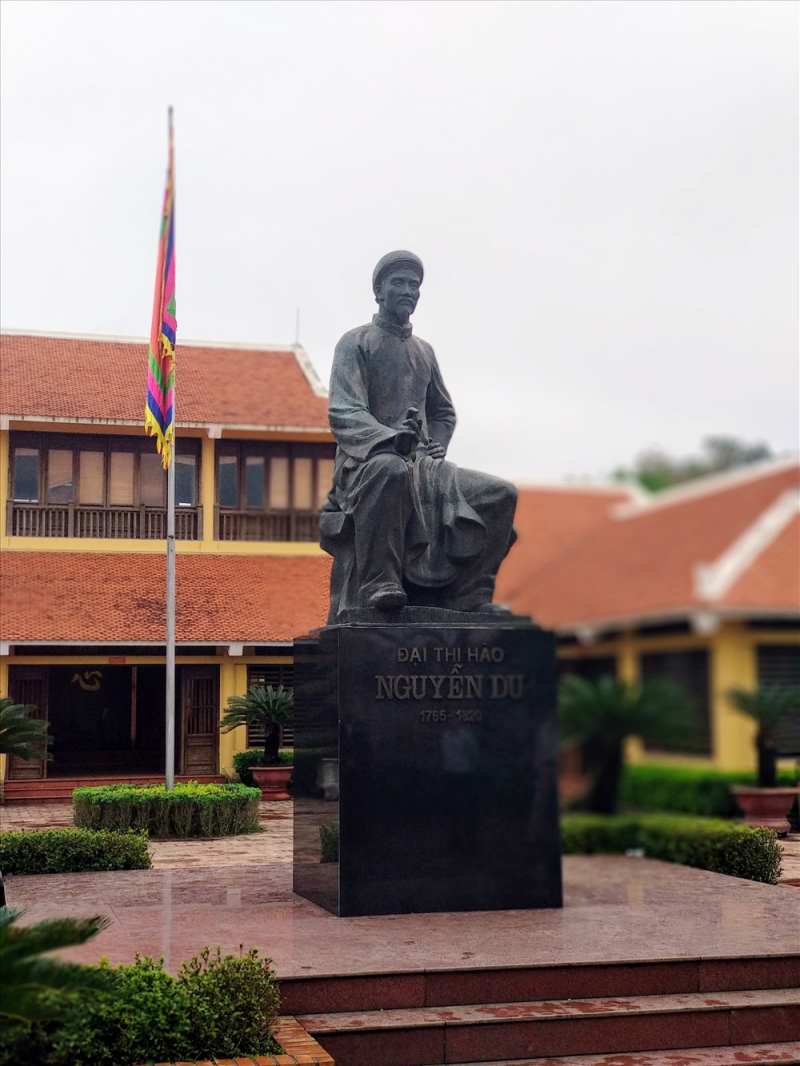
Nguyen Du (1765-1820), given name To Nhu, surnamed Thanh Hien, was born in Thang Long, Ha Tinh hometown, Bac Ninh motherland.
Living in a turbulent feudal society, Nguyen Du was orphaned and had been wandering around for "ten years of dusty winds", thereby accumulating a rich life and deep understanding of folk culture. He served as an official under the Le - Nguyen dynasties, was famous for his integrity and was loved by the people.
Nguyen Du's literary career is rich with Han poems (three collections: Thanh Hien Competition, Nam Trung Duong Nam, Bac Hanh Duong Hanh) and Nom poetry with two masterpieces "Tran Quyet Kieu" and "Van Thuc Tu Sinh". His poems have profound practical value, denounce social injustice, and are imbued with humanism, especially sympathy for the fate of a rich and prosperous woman.
In terms of art, Nguyen Du brought folk poetry and Nom stories to the pinnacle of exemplary standards, novellized the poem with a creative writing style depicting the delicate psychology. His language is rich and pure, contributing significantly to enriching Vietnamese and promoting the development of ethnic literature.
In 2015, on the occasion of his 250th birthday, UNESCO recognized Nguyen Du as a World Cultural Celebrity, a title given to individuals who have made outstanding contributions to human culture.