
Soobin live concert movie: All-Rounder" will be released in theaters from September 10th, using materials from Soobin's three concert nights in Hanoi and Ho Chi Minh City with a total of more than 40,000 spectators.
On the first day, the work at one point topped the box office revenue, selling more than 5,300 tickets in 42 screenings and earning more than 1 billion VND. By the morning of September 11, total revenue approached 4 billion VND.
What is noteworthy is not only the revenue. More than 40,000 spectators paid to watch Soobin live beforehand, but after the stage closed, the content from the concert was staged into a new product and sold tickets again.
From one night of performance to many rounds of revenue
Soobin is not the first Vietnamese artist to exploit this model.
In 2019, Son Tung M-TP conducted Sky Tour in Ho Chi Minh City, Da Nang and Hanoi. Materials from the tour later became "Sky Tour Movie", released in theaters in 2020. After 10 days, the film achieved about 11.6 billion VND in revenue.
But the Sky Tour cycle does not stop at theaters. The film continues to be uploaded to Netflix, released in 190 countries and territories with 10 subtitle versions. The soundtrack album also tops the album charts on iTunes and Apple Music Vietnam.
Thus, with the same initial content asset, Son Tung M-TP can expand from concert tickets to movie tickets, music albums and online platforms.
My Tam also exploited the vitality of the concert in a similar way. Two nights of "Tri Am" in Ho Chi Minh City and Hanoi became the material for the documentary "Time Keeper". The work grossed about 12.3 billion VND after its theatrical release, surpassing the achievement of "Sky Tour Movie".
In "Hello Brother", the scale of exploitation is also expanded. The movie "Hello Brother: The villain creates heroes", using materials from the concert series, ended its box office journey with 15.4 billion VND, once becoming the highest-grossing Vietnamese concert film.
But movie tickets are only a small part of the revenue ecosystem. According to data released in 2026, "Hello Brother 2025" brought in 480 billion VND in revenue, of which 145 billion VND came from concert tickets, 68 billion VND from merchandise and intellectual property rights.
Brother Overcoming Thousands of Obstacles" also shows the ability to prolong the life of a program. After the gameshow is a series of consecutive concerts. Yeah1 leaders once said that the first concert tickets sold out after 90 minutes, while merchandise products continuously ran out of stock and exceeded the initial plan. The effect from the program and concert contributed to bringing Yeah1's revenue in 2024 to nearly VND 1,007 billion.
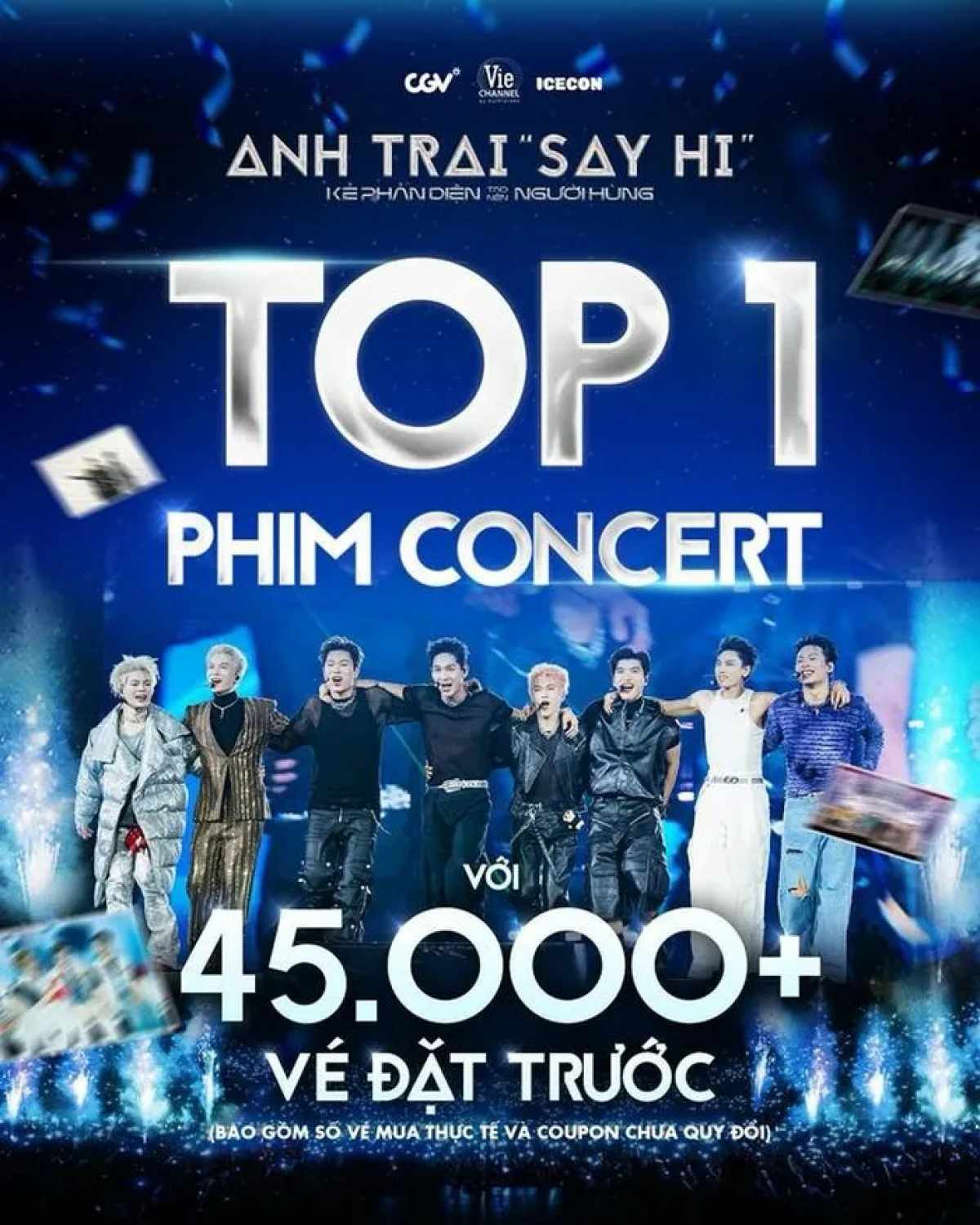
The concert does not end when the stage turns off the lights
Looking at the above cases, the answer to how many times an artist can make money from a concert is no longer limited to one ticket sale.
A concert can generate revenue from direct tickets, sponsorship and advertising, merchandise, live albums, movie concerts, copyrights on online platforms and behind-the-scenes content. If developed into a brand, the concert name itself can also continue to be used for subsequent performances or products.
Of course, revenue does not mean profit. To turn footage concerts into movies, producers still have to spend money on filming, post-production, sound, marketing, distribution and revenue sharing with theaters.
But Soobin, Son Tung M-TP, My Tam or the "Anh Trai" programs show a notable change in the Vietnamese performing arts market that concerts are being seen as a content asset that can be exploited in many rounds, instead of products that only exist for a few hours on stage.
At that time, the producer's question is not only how many tickets can be sold for one night of performance, but how long after the audience leaves, that concert can continue to create value.


