
200-year-old pottery village still has a red furnace
In July 2025, the Ministry of Culture, Sports and Tourism decided to announce the list of national intangible cultural heritage for the traditional craft, My Thien pottery in Binh Son commune, Quang Ngai province. According to this decision, more than 200 years ago, My Thien pottery was famous everywhere, especially in the Central and Central Highlands regions.
My Thien pottery village was formed from the late 18th - early 19th century, when the two families Pham and Nguyen, pottery families from Thanh Hoa, followed the footsteps of immigrants to Quang Ngai. They chose the land along the Tra Bong River, where there is a source of flexible clay and mineral water favorable for building kilns, establishing workshops and passing on the craft. From those humble beginnings, the pottery craft gradually took root, integrated into the lives of local residents, and became an indispensable part of this land.
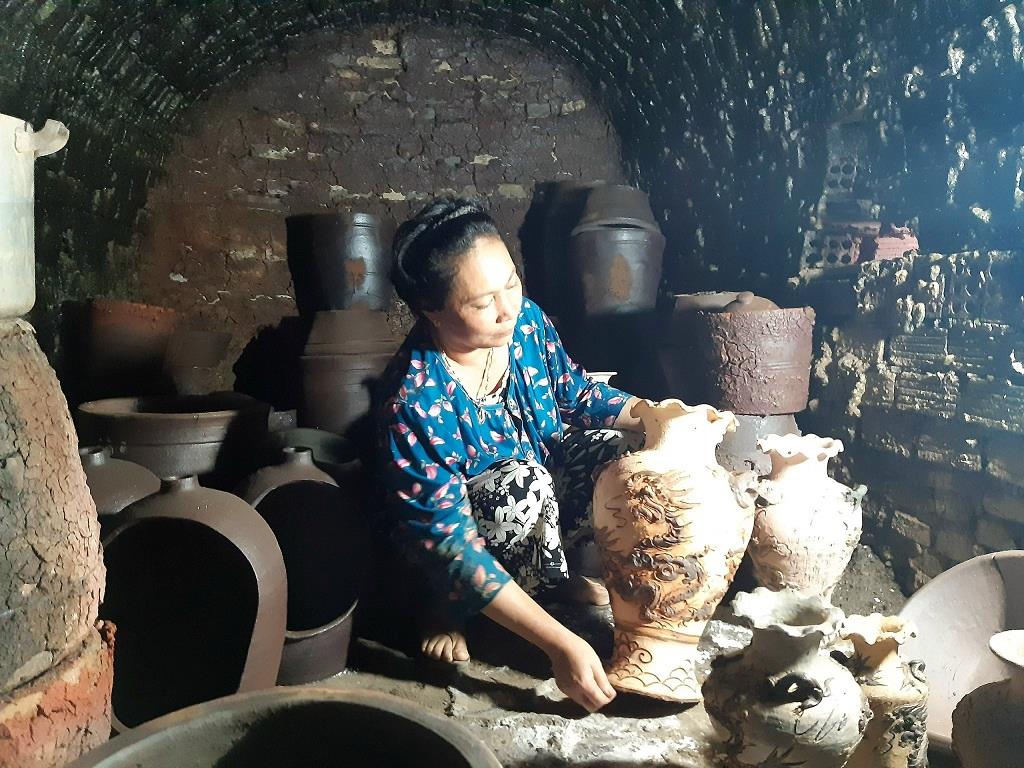
More than 200 years ago, the first kilns were erected on the riverbank, opening the way for a craft village that was once famous throughout the Central region. At one point, My Thien was a large pottery production center with dozens of kilns burning red day and night, supplying products for daily life, storage for residents in the area, and then by boat going back and forth to the Central region, Central Highlands, and even to Laos, Cambodia and Thailand.
Today, when stepping into the village, that memory is only preserved in the stories of the last craftsmen. Artisan couple Dang Van Trinh (64 years old) and Pham Thi Thu Cuc (60 years old) are the only people still sticking with the craft, keeping My Thien's last pottery kiln.
Artisan Trinh has been associated with pottery since childhood. He clearly remembers the first clay piece given to him by his father, along with the simple but serious vocational lessons. Through his father's story, he understood that it was the Pham and Nguyen clans from Thanh Hoa in the past who laid the foundation for the My Thien pottery profession.
The ancestors chose the land along the Tra Bong River because it was convenient for trade. Initially, the villagers mainly engaged in agriculture, but gradually learned the craft and switched to pottery. The Cor people in the mountainous Tra Bong often made rafts of firewood drifting down the river here, both selling firewood and ordering jars to ferment rice wine," Mr. Trinh recounted.
Quintessence of pottery from earth and human hands
The point that makes up the identity of My Thien pottery lies in the purity of the production method. All stages are carried out manually, from the stage of selecting clay to when the finished product is produced. Clay taken along the Tra Bong River is sun-dried, dew-dried, carefully filtered and then kneaded by hand. The craftsman sits at the rotating table, operating with his feet, slowly shaping each product, so that each jar and jar has its own appearance, strong and harmonious.
A typical technique of My Thien pottery is embossed pattern art (emboss). On the surface of the pottery, five-nail dragon motifs in the Ly Dynasty style, symbolizing power and sacredness, are combined with images of bamboo, symbolizing the virtuous spirit, and a mouse associated with the idiom "chuot sa vai", symbolizing fullness and prosperity.
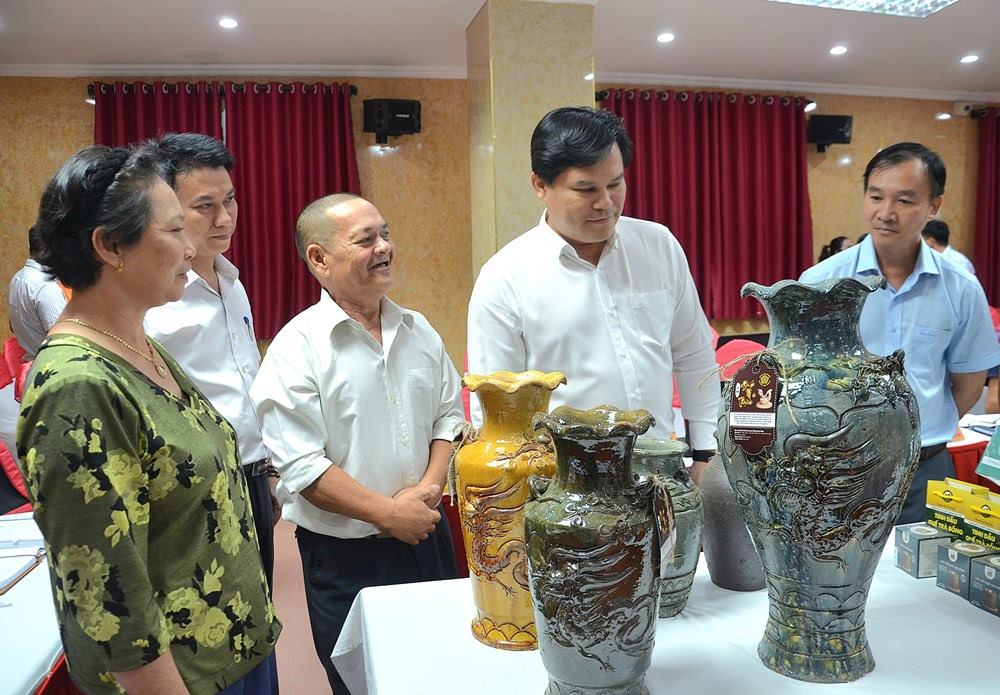
According to artisan Dang Van Trinh, despite many changes, the patterns on My Thien pottery still retain their traditional shape. The pottery firing process also requires sophistication and experience. After shaping and drying, the product is fired for the first time to create a ceramic "bone", then coated with handmade glaze and then further fired for the second time with charcoal. The entire process lasts nearly two days and nights, the craftsman must "know the fire", adjust the temperature and distance between the product and the charcoal to create natural colors such as earth brown, golden brown or characteristic turquoise.
A few decades ago, My Thien used to have more than 40 households making pottery. In the days leading up to Tet, the whole village was filled with red firelights, the sound of people and soil clashing together, harmonizing with the hurried pace of life. But under the pressure of cheap industrial products and market changes, the traditional pottery craft gradually faded, and only one pottery kiln survived to this day.
In June 2025, My Thien pottery, Binh Son commune, was recognized by the Ministry of Culture, Sports and Tourism as a National Intangible Cultural Heritage, belonging to the traditional handicraft group. This recognition not only affirms the historical and cultural values of the craft village but also opens up opportunities for conservation and development in the future.
Currently, in addition to maintaining production, artisan Dang Van Trinh also opens the pottery workshop to welcome visitors, introduce the pottery making process and teach techniques to the younger generation. Those slow but persistent steps are efforts to preserve the craft, preserve the memory of a once famous pottery village.


