
On the morning of April 18, the seminar "What do young people read in the digital age" took place within the framework of the Vietnam Book Day and Reading Culture 2026 program, focusing on reading habits, content selection and the role of books in the context of a rapidly developing digital environment.
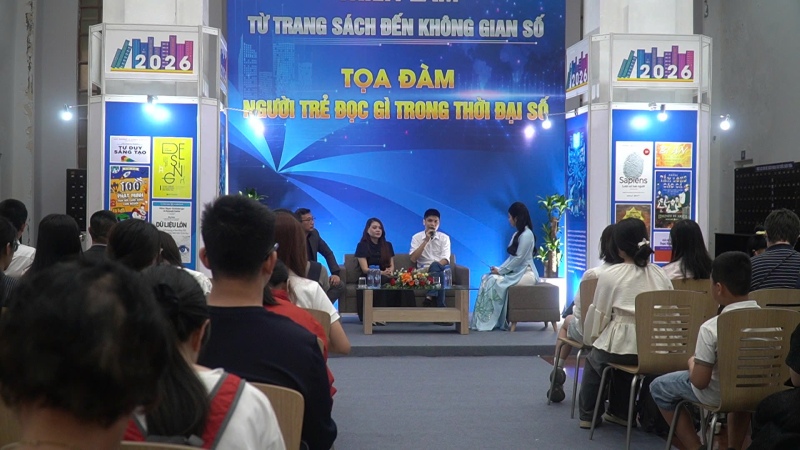
From the perspective of a publisher, young writer Duc Anh - Communications Director of the foreign language book brand Inbook - believes that reading is still of great value.
I myself work in the publishing industry, have been attached to it for many years and have also struggled with the profession many times.
Therefore, I see quite clearly one thing, reading books is necessary, but not the only way.
I have many friends who do not have the habit of reading, they are not regular readers but still have a stable life, even better in some aspects than me.
However, if we don't read it, we will miss many'worlds' that we could have accessed," he said.
According to writer Duc Anh, the core of reading lies in the ability to expand experiences beyond personal limits: "Each person has only one life, living in a certain period of time and space. But through books, we can expand experiences, access many different contexts, from strange geographical areas to slices of life that we ourselves do not have the opportunity to directly experience. That is the value that reading brings.
Writer Duc Anh also said that the current access to books has changed significantly, as the source of books is more diverse, especially foreign language books. The fact that young people actively choose many different book titles shows that the ability to access knowledge has expanded, no longer depending on a few traditional channels.
In addition, the need to develop personal skills is contributing to promoting reading habits. In the context of increasing competition, reading is becoming a method to supplement competence, rather than just a recreational activity or simple knowledge accumulation.
From an academic perspective, Dr. Do Anh Duc (University of Social Sciences and Humanities, Vietnam National University, Hanoi) raises the issue of how to read instead of just focusing on what to read.
He said: "Previously, when we wanted to read books, we almost had only one option: go to the library, sit there all day to read books, read magazines. Even when we went to work, this habit was still maintained, because there are knowledge sources that cannot be found elsewhere.
But now, you have much more favorable conditions, with the diversity of books as well as content approaches”.
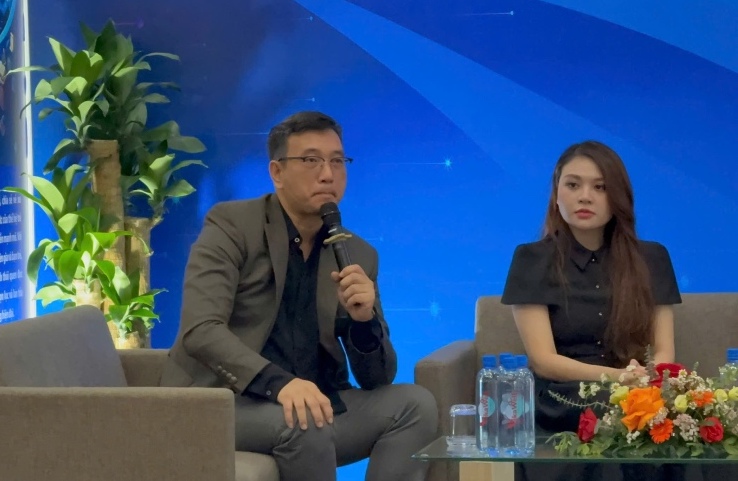
According to Dr. Do Anh Duc, each person needs to clearly define the purpose of reading: "I do not give a specific advice, because each person has a different purpose of reading. But the most important thing is still the question: how should we read to be more appropriate.
Reading can be viewed for two main purposes. First, reading to serve work, study, research, exams... Second, reading to experience. These two purposes need to be separated, although there is still a certain relevance.
This separation helps readers choose appropriate content and approaches, while taking advantage of the cross-benefits between the two purposes of reading books.
I often compare reading books to'nurturing' the mind. If you don't read, the mind will not be'fed', leading to the intellect not being able to develop. But once we have'loaded' knowledge, we also need to'digest', that is, we must have experience, share, interact or recreate content... That is how we turn what we have read into our own value," Dr. Anh Duc said.
Regarding the debate of fast reading or deep reading, Dr. Do Anh Duc said that these two methods need to coexist. In work, fast reading helps process information promptly, while deep reading plays a role in maintaining the depth of thinking.
Dr. Do Anh Duc said: "I do not raise the issue of whether to read quickly or deeply, because in my opinion, these two ways need to go hand in hand. In work, we need to read quickly to process information promptly. But in life, we need to read slower, read deeper to have reflection and inner dialogue.
From the opinions at the seminar, it can be seen that reading in the current context is no longer limited to form or specific content, but depends on the goals and approach of each individual.
In the digital environment, reading habits are shifting in a more flexible direction, while also posing higher requirements for the ability to select, receive and transform knowledge.


