
On July 27, the People's Committee of Ta Rut commune (Quang Tri) organized the ARiêu Piing Festival and received the Decision of the Minister of Culture, Sports and Tourism recognizing the festival of the Ta Oi people (Pa Co) as a national intangible cultural heritage.
The ceremony was attended by local leaders, village elders, artisans and a large number of Ta Oi (Pa Co) people. This is considered an important milestone in the work of preserving and promoting the cultural identity of the Ta Oi (Pa Co) community living in the Dakrong and Huong Hoa areas (former Quang Tri province). The last time the festival was held was in 2015.
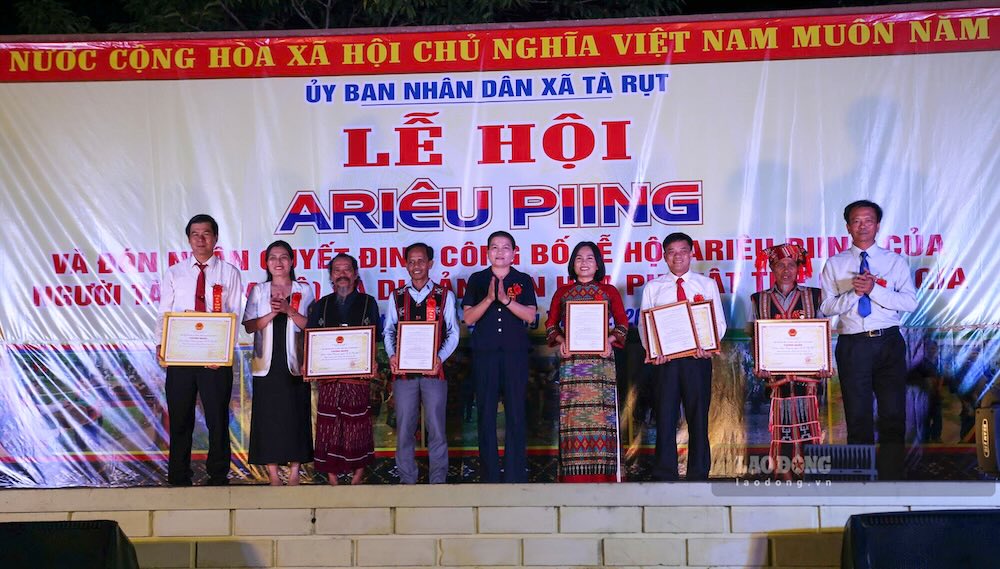
Speaking at the ceremony, Chairman of Ta Rut Commune People's Committee Nguyen Sy Huan said that being recognized as a National Intangible Cultural Heritage is a recognition of the unique cultural values that the Ta Oi (Pa Co) people have preserved through many generations. At the same time, this is also a responsibility for the government and people to continue to preserve, pass on and promote the heritage.
According to researchers, due to living for a long time on the Truong Son range, the Ta Oi (Pa Co) community still preserves many unique traditional cultural features. Among them, ARiêu Piing is considered the largest and most sacred festival, associated with beliefs about life and death and the concept of all things have a soul. The ceremony marks the time to bring the remains of the deceased to the common grave of the lineage, closing the funeral according to traditional customs.
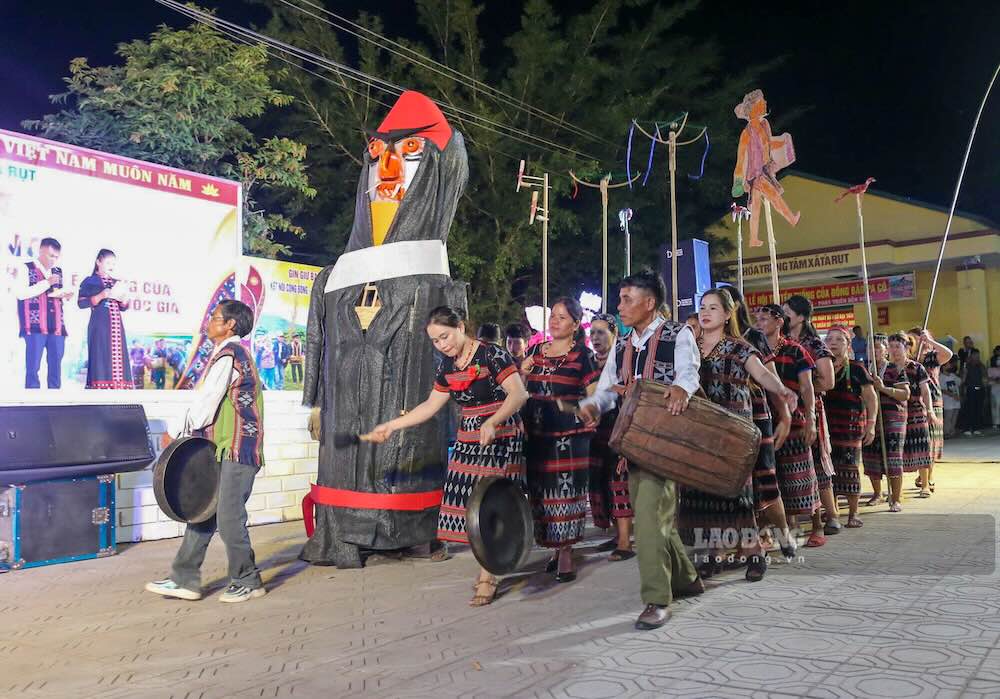
Artisan K'Ray Suc, who has studied Pa Co and Van Kieu culture for many years, said that in Ta Oi language, "Piing" means tomb house, and "Ariêu" is can wine - a type of wine only used in major festivals. Therefore, ARiêu Piing is not only a reburial ceremony but also contains values of faith, filial piety and community spirit.
According to artisan K'Ray Suc, the festival is an opportunity for children and grandchildren to remember their ancestors, pray for peace in the village, and at the same time strengthen the connection between clans, villages and in-laws. Each festival has gongs, drums, traditional rituals and the participation of a large community.
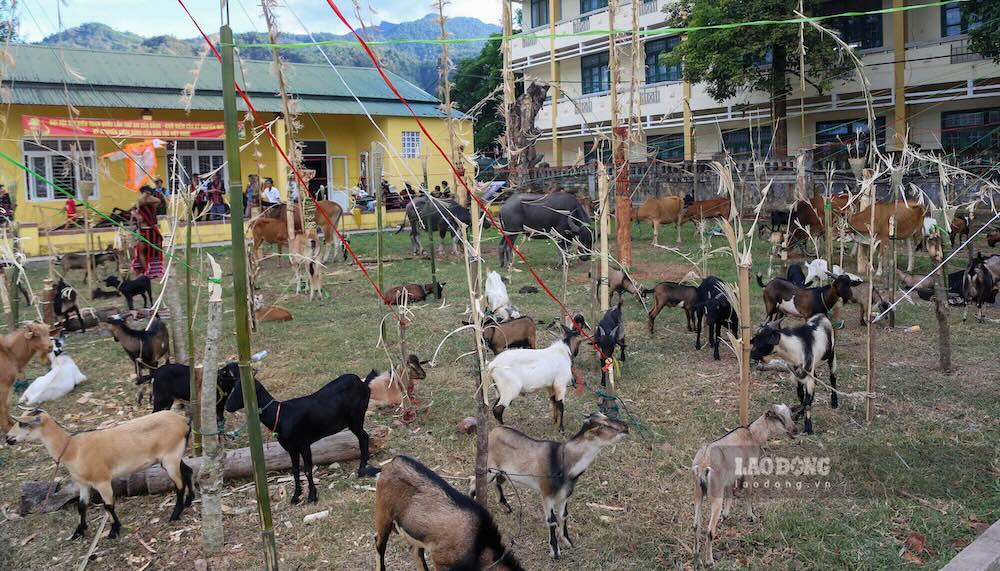
ARiêu Piing is usually held every 10-15 years, lasting from 2-3 days with many rituals such as exhumation, opening cemetery, welcoming guests, am cong ceremony, buffalo stabbing, bringing remains to the new tomb, thanksgiving ceremony and summary ceremony. According to village elder Kôn Kêng (A Đeng lineage), each family prepares offerings depending on conditions, and each village usually contributes from one to two buffaloes to serve the ritual.
ARiêu Piing being listed as a national intangible cultural heritage contributes to preserving the traditional cultural values of the Ta Oi (Pa Co) people, and at the same time creates a foundation for the locality to promote heritage associated with cultural tourism development.


