Operating map of heaven and earth and society
In the capital Hue, calendar is not simply a tool to calculate dates. Under the Nguyen Dynasty, calendar was a cultural and political institution, where astronomical knowledge, agricultural rhythm and poetic spirit converged.
The peak of that spirit was clearly shown in 1844, when King Thieu Tri issued 24 poems praising the weather to be printed directly on the court calendar, opening up a very unique way of "reading time" of the ancients.
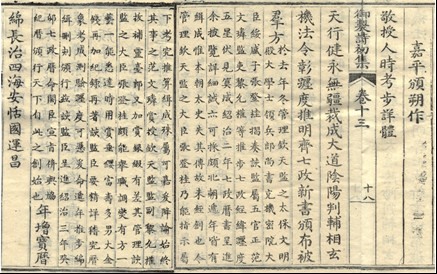
According to Nguyen Dynasty documents, compiling the calendar was the central task of Kham Thien Giam. A calendar from that time not only recorded dates but also covered many layers of information: the movement of the weather during the year, how to divide the four seasons according to 12 months, the difference in climate between the capital and localities, and time milestones related to birthdays and taboos of the ancient emperors.
In addition, the calendar also has a "responsibility page" clearly stating the names and positions of officials involved in compiling. This detail shows that the calendar is not an anonymous product, but the crystallization of a well-organized state knowledge apparatus, responsible to the court and society.
The special feature that makes the 1844 calendar unique is the 24 poems of the Four Absolute Plains of 24 tiết khí composed by King Thieu Tri himself. From lập xuân, vũ thủy, kinh trập to đông chí, đại hàn, each tiết khí is encapsulated in a few short verses, printed in solemn red ink.
Those poems not only have literary value but also reflect the way the ancients observed and interpreted nature. At the beginning of spring, the rotation of the Northern Star, the green color of the Wood element, or the use of the green flag to welcome spring show the close connection between astronomy, the five elements and life. With the cycle of thunder, the sound of thunder is not only a natural phenomenon but also placed in the order of sound law and growth of all things.
Poetry, in this case, is not for leisurely recitation, but a method of conveying knowledge. Calendar readers, whether mandarins or ordinary people, can feel the rhythm of heaven and earth through images, sounds and emotions that poetry brings.
Ban Soc - the opening ceremony for a new year
After the calendar was completed, the court organized Ban Soc ceremony on the first day of the twelfth lunar month. This is the official calendar distribution ceremony, marking the moment when the state "gives time" to society. Initially, the ceremony took place at Thai Hoa Palace, but from 1841, under King Minh Mang, Ban Soc was elevated to a grand ceremony held at Ngo Mon - a symbolic space of royal power.
Calendars are then clearly classified: calendars for royal families such as dragon calendars, phoenix calendars; calendars bestowed on princes and princes; and types of calendars used for central and local officials. From the capital, model calendars are transferred to provinces, where provincial leaders continue to organize printing and distribution to districts and villages.
Thus, Ban Soc is not only a court ritual, but also an important link in the national governance system, ensuring that the whole society enters a unified time rhythm.
Looking back, the attachment of 24 poems to the calendar shows the vision of the Nguyen Dynasty in combining state management with nurturing spiritual life. The calendar is not dry, but soulful; time is not abstract, but close, easy to feel, easy to remember.
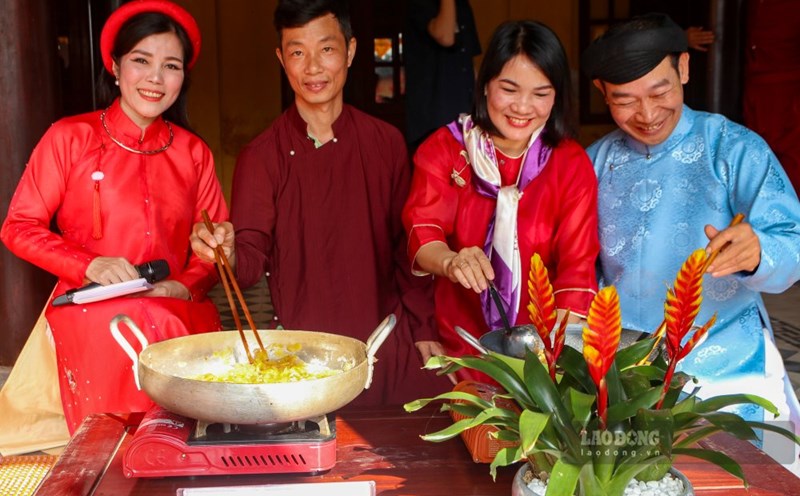
Today, rituals like Ban Soc are recreated annually by the Hue Ancient Citadel Relic Preservation Center in the form of stage performances, not only to restore an ancient custom, but also to suggest how Vietnamese people used to behave with time, with nature and with the community's life cycle.
In the modern context, when electronic calendars and smart clocks dominate life, the story of the Nguyen Dynasty calendar reminds us that: time is not only for measuring, but also for feeling. And there was a period in history when poetry once played a role in leading people through four seasons, 24 periods, with sophistication and rare cultural depth.