
The famous Khe Sanh battlefield in the song "Tieng dan Ta Lu" by musician Huy Thuc with lyrics: "Soldiers of the liberation army, oh, you won the battle in western Khe Sanh/ Ta Con fort that day caught fire, Dong Chi hill is full of American corpses...".
This heroic revolutionary song has made Khe Sanh and Ta Con close to my heart for a long time before I set foot here. Later, when I accessed foreign documentaries about the Vietnam War, I realized that Khe Sanh was one of the biggest nightmares of American soldiers.
However, Khe Sanh - now Khe Sanh commune, Quang Tri province - is truly wonderful with a cool, pleasant climate even though a torrential forest rain rushed down to welcome me as soon as I entered this sacred territory. From early morning, the vast sea of clouds covered Truong Son mountains and forests, waiting for the sunlight to dye red to become a magnificent dawn scene.
In the middle days of April, in Dong Ha ward - the capital of Quang Tri province - or Ai Tu commune, Gio Linh commune are boiling under the heat of over 40 degrees Celsius, but in Khe Sanh, the base temperature is only about 20 - 25 degrees Celsius, creating a very interesting heat transfer feeling even if they are only 70km apart.
The reason is that Khe Sanh is located in a high mountainous area, with an average altitude of about 400 - 600m above sea level. Thanks to this, the climate is mild all year round, including in the summer. Thanks to such natural and climatic conditions, Khe Sanh is covered by primeval forests, mixed forests, with a diverse ecosystem.
National Highway 9 connecting Dong Ha with Khe Sanh runs through impressive red addresses such as: Road 9 Cemetery, 241 Tan Lam Base or unforgettable landmarks such as Cam Lo, Dakrong with the birds of Ketia, Lao Bao with bustling border gates or notorious prisons.
On the way, not only does the climate change, but the landscape also continuously rotates. Some sections are filled with hot winds rising from Highway 9, some sections are as cool as walking in a garden; this place is the scene of a rural river winding through rice fields, that place has seen forests and rocky mountains.
The vegetation system in Khe Sanh is also extremely diverse thanks to its fertile soil, basalt red soil, and temperate climate with high humidity. Therefore, Khe Sanh is vast with pepper and coffee gardens from the tropics, alongside temperate forests such as Phong Huong maple forests.
If it weren't for the war, the image of Khe Sanh in our eyes would be very different, such as a land full of romance and dreams. However, it is also because of the war that Khe Sanh has created its steadfast and indomitable dignity, like a heroic land.
During the anti-American resistance war that ended more than 50 years ago, Khe Sanh was located in the frontline military stronghold along the 17th parallel, where the North and South were divided by the Ben Hai River. Khe Sanh and Highway 9 became barbed wire trenches, with Khe Sanh as the center - to prevent the Southern Liberation Journey.
The enemy built the 241 Tan Lam stronghold, the Vây village stronghold, the Hướng Hóa military sub-region, Khe Sanh base and the Tà Cơn airport defense cluster to serve that purpose. Here, the Khe Sanh battle lasted 170 days, from January to July 1968, with the result of gaining control of Khe Sanh, breaking the plan to build the McNamara Electronic Fence.
The victory in the asymmetrical firepower battle of the Vietnam People's Army made the place name Khe Sanh famous on earth, paving the way for greater victories in the following years and especially the Great Victory of the 1975 Spring Campaign.
Half a century has passed, the country has been completely unified, the mountains and rivers are connected in one strip, the traces of bombs and bullets have been swallowed up by the strong green color of Khe Sanh, but the heroic feats of arms of the battles of 1968 are still present here to remind forever about the value of peace.
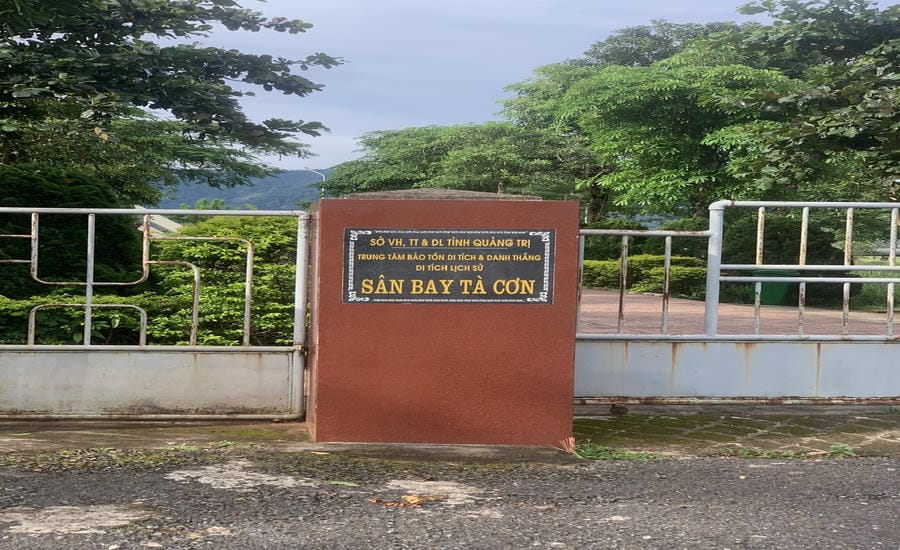
Right on the first day in Khe Sanh, I went to the historical site of Ta Con airport, located about 2km from the center of Khe Sanh. The wreckage of aircraft and aircraft of all kinds left by the enemy in the chaotic flight mixed in the green of the vegetation as a witness to the nightmare of the American soldiers.
This place is also the Khe Sanh Victory Museum with documents, images, and sandstones to help us understand the scale of the Khe Sanh battle as well as the value of this victory. I stepped into the command bunker and trenches, runways, gliding through the wreckage of enemy tanks and chariots with pride filled in every cell.
The strength of the Vietnam People's Army combined with the people regardless of Kinh, Van Kieu, Pa Co ethnic groups smashed a system of powerful, most modern military strongholds in the world, maximally supported by B52 aircraft, creating a second "Dien Bien Phu" battle in Vietnam.
Sunset has dyed yellow all over the Khe Sanh mountains and forests, smoke from incense sticks lit to commemorate the spirits of the martyrs and people who sacrificed here lingering in the twilight of Ta Con.
Suddenly, a flock of chickens excitedly calling each other back to their stalls, leisurely walking under the Chinook (CH-47) transport aircraft. That is probably the most impressive image of peace in me at Khe Sanh on a April day.


