
6 key dyke points
According to the plan to protect key and critical dyke areas at the provincial level in 2026 of Ninh Binh Provincial People's Committee, there are 6 key and critical dyke areas identified in the area.
In which, âu Chanh (K4+360 Truong Yen dike, Tay Hoa Lu ward) is a construction project from 1957, currently there is a phenomenon of mural spoilage towards the stream, cracked and broken side walls and leaks on both sides of the culvert when floods are high.
For Hai Thinh 2 and 3 embankments (K21+712 - K27+060 Hai Hau sea dyke), the area directly facing the sea, the embankment slope is eroded, and landslides occur frequently (in early 2026 alone, 7 landslide and collapse locations were recorded).
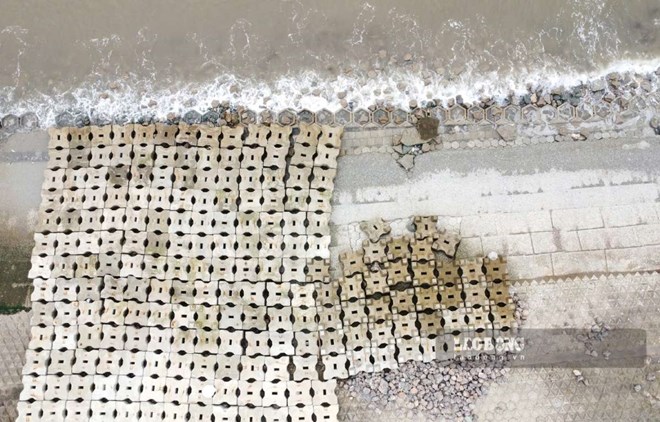
According to reporters of Lao Dong Newspaper, in the landslide area of Hai Thinh 2 and 3 embankments, the incident has been handled by using boulders and concrete components to overcome, avoiding the sinkhole from spreading widely. In addition, the project to reinforce and handle sea dike landslides here has been completed.
One of the key key dike and dyke areas in Ninh Binh province is Lac Thien 1 culvert (K70+198 right Day dike, Quang Thien commune), the culvert body is short, landslides appear in the downstream culvert, posing a potential risk of infiltration threatening dike safety.
Moc Nam culvert (K123+050 right Hong dike, Duy Tan ward), a construction from 1968, has seriously deteriorated.
Tac Giang culvert and boat basin cluster (K129+420-K129+530 right Hong dike): Many incidents of bulldozing and leakage of valve gates have occurred; currently undergoing additional construction, expected to be completed on June 30, 2026.
In addition, in Nghia Son and Hong Phong communes, the Huu Ninh dyke section and the Huu Ninh river mouth dyke section have many sections lacking elevation and width of the dyke surface compared to the design, not ensuring the requirements of disaster prevention and control even though they have built mudslides for urgent treatment.
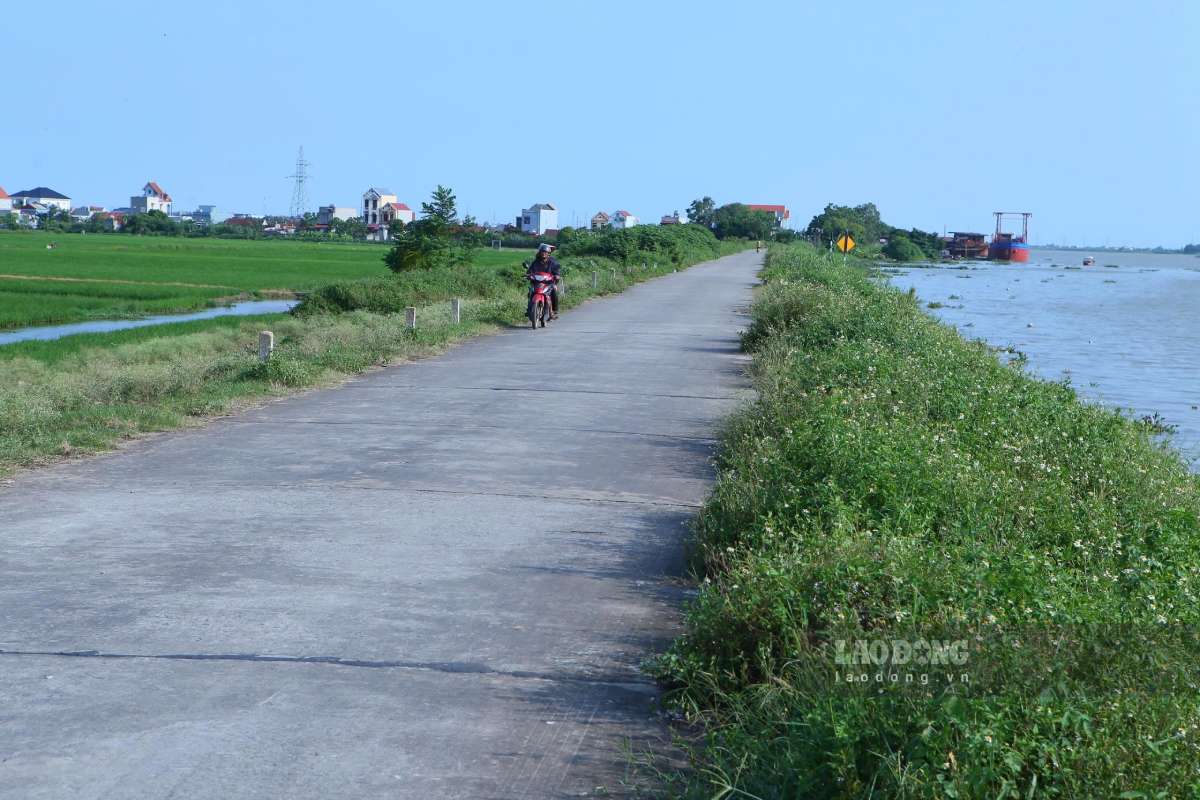
Huu Ninh dyke line in Nghia Son commune plays a direct role in protecting residents in the dyke, more than 1,144ha of two-crop rice, aquaculture area, medicinal mushroom production area... The dyke line is about 9.2 km long, formed in many stages, the embankment is uneven, the cross-section is narrow. Notably, the section from K31+100 to K31+400, the dyke slope on the river side is often affected by the current approaching the bank, causing landslides.
Mr. Nguyen Xuan Liem - Chairman of Nghia Son Commune People's Committee said that the locality regularly inspects key locations on the dyke line, proactively handles sections that do not ensure elevation. In addition, the Commune Civil Defense Command, assigns specific tasks to each member and mobilizes people to participate in supervision, promptly detect abnormal signs, damage and prepare forces, materials and vehicles according to the "4 on-site" motto, ready to respond when situations occur.
Develop specific plans for each key point
From the above reality, Ninh Binh province has developed a plan with specific simulated situations for 6 key dyke points.
Ninh Binh Provincial People's Committee requests that protection work must be carried out according to the motto of prioritizing prevention, strictly complying with dike protection technical procedures.
Mobilize forces: Combine on-site forces (commune-level shock forces, militia and self-defense forces) and reinforced forces (army, police, businesses). The mobilization time for forces to the scene is required from 40 - 60 minutes from the time the order is issued. Proactively prepare stone boxes, tarpaulins, Jumbo sacks... at strategic reserve warehouses such as Ninh Giang warehouse, Yen Khanh warehouse, Binh Minh warehouse and material yards along the dyke line.
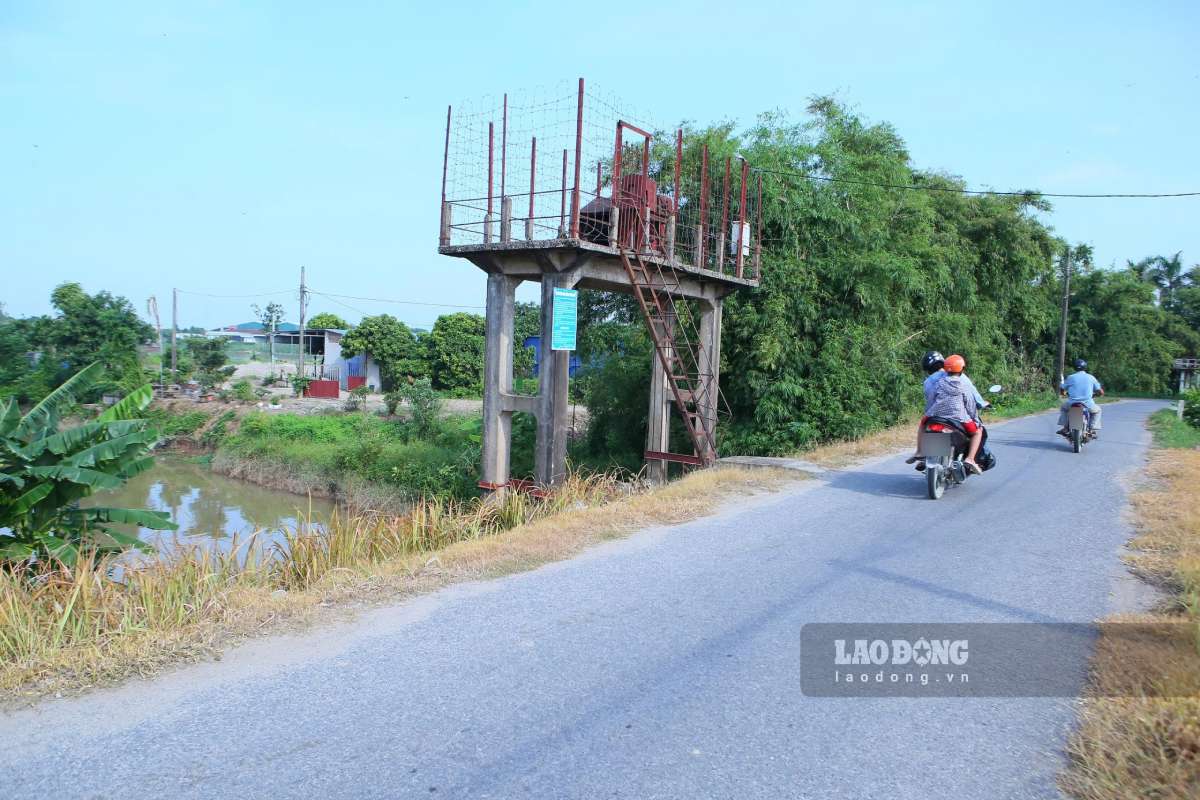
Along with preparing forces, Ninh Binh province also focuses on reviewing the source of reserve materials, especially steel traps and stone boxes at key sea dikes and key culverts, ensuring that they can be mobilized in a timely manner when incidents occur. Localities are required to inspect the entire dike and irrigation system; proactively mobilize resources to repair and overcome damaged and degraded works, not allowing small defects to accumulate into major risks during the rainy and flood season.


