
Consumers are more cautious
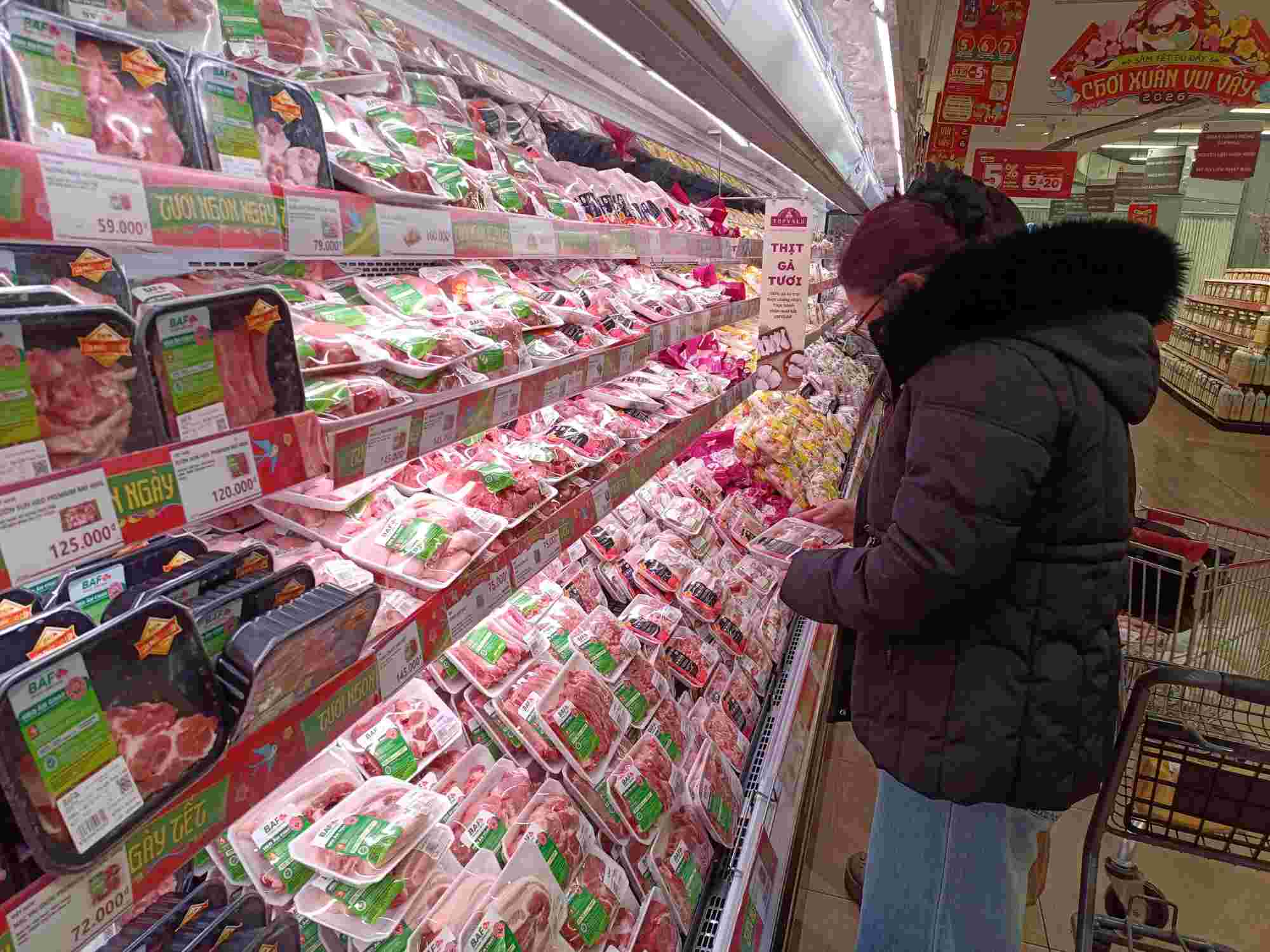
After information about the case of 800 tons of fresh noodles containing chemicals being discovered and the noise related to Ha Long canned food, the food market at traditional markets and retail channels in Ho Chi Minh City recorded many changes. At some markets, consumers are more cautious when choosing to buy fresh noodles and vermicelli; many small traders said that purchasing power has decreased slightly and customers tend to prioritize products with clear packaging and labels.
In the group of canned goods, purchasing power at some stalls and supermarkets also recorded a decrease compared to before. Not only canned products processed from pork, but also items with ingredients from fish, beef, chicken... are also cautious by consumers.
In Hai Phong, many small traders said that the consumption of traditional Cot Den pate has decreased significantly because people misunderstood it as a "Hai Phong Cot Den pate" product of Ha Long Canned Food. Kim Loan, owner of Cot Den pate facility, affirmed that traditional Cot Den pate is fresh pate, the main ingredients are meat, fat, and pork liver, all taken from the slaughterhouse, with sufficient licenses, food safety and hygiene quarantine. Each piece of liver, meat, and fat is carefully selected based on long-term traditional craft experience, ensuring freshness, deliciousness, and hygiene.
Strengthen review to protect "clean" brands
The Department of Culture, Sports and Tourism of Hai Phong city recently issued an official dispatch to protect the Hai Phong Cot Den pate brand. The Department of Culture, Sports and Tourism affirmed that, in fact, these two products are completely unrelated to each other. Unlike the canned pate product line of Ha Long Canned Food Joint Stock Company (industrially produced, in small tin cans, with long shelf life and widely distributed throughout supermarkets nationwide), traditional Cot Den pate is fresh pate, usually with a short shelf life, and needs to be refrigerated to retain its original flavor. This specialty gift is processed from business households in the Cot Den market area, Chua Hang street, Le Chan ward, mainly sold in the Cot Den market area and neighboring streets, and is chosen by people and tourists every time they come to Hai Phong.
Mr. Nguyen Minh Hung - Deputy Head of Trade Management Department (Ho Chi Minh City Department of Industry and Trade) - said that the Department is strengthening the supervision of processed food groups, including canned food, in order to promptly detect and handle violations if any. To restore and maintain market confidence, Mr. Hung believes that businesses need to be transparent about the entire production chain, from input materials, processing processes to product information disclosure.
From this reality, representatives of the Department of Industry and Trade emphasized that establishing a mechanism for early and transparent information sharing between manufacturers, distribution systems and management agencies is a mandatory requirement. This is also the reason why the "Responsibility Green Choice" program is being implemented and gradually expanded, not only applying to fresh food groups but also towards processed and packaged foods.
According to Mr. Nguyen Quang Huy - Deputy Head of the Ho Chi Minh City Market Management Sub-Department, food is one of the key commodity groups that is strengthened for inspection during the peak period at the end of the year, especially before, during and after the Lunar New Year. The inspection activity is widely deployed, from traditional markets, supermarkets, commercial centers, convenience stores to warehouses and online sales channels. The inspection content focuses on the origin of goods, storage conditions, labels, legal documents and product quality circulating on the market.
In addition to inspecting and handling violations, the Ho Chi Minh City Market Management Sub-Department also promotes propaganda and guidance for food business organizations and individuals to strictly comply with legal regulations; at the same time, it recommends consumers to prioritize choosing products with clear origins, intact packaging, and full labels. When detecting signs of suspected violations, people need to reflect and report so that functional forces can promptly verify and handle them.
Peak food safety inspection
Along with speaking out to protect the traditional brand of Hai Phong cuisine, immediately after the incident at Ha Long Canned Food, the inter-sectoral Steering Committee for Food Safety of Hai Phong city requested to strengthen control of meat and meat products during the 2026 Lunar New Year.
The Steering Committee requests the Departments of Agriculture and Environment, Industry and Trade, and Health to proactively establish inter-sectoral inspection teams, focusing on inspecting centralized slaughterhouses, small-scale slaughterhouses, establishments producing, processing, and trading meat and meat products. The inspection content focuses on early detection of food safety risks, especially the risk of food products infected with African Avian Flu virus (ASFV). Communes, wards, and special zones establish inspection teams with the same content. During the inspection process, when detecting establishments violating food safety regulations, inspection teams must handle them promptly, strictly and thoroughly in accordance with the law, in order to prevent food poisoning and ensure health safety for people during the 2026 Lunar New Year.
From now until March 20, the inter-sectoral Steering Committee for Food Safety of Ho Chi Minh City will also deploy a peak period to ensure food safety throughout the area, serving people to celebrate the Binh Ngo Lunar New Year and participate in the 2026 Spring festivals.
According to Ms. Pham Khanh Phong Lan - Director of the Ho Chi Minh City Department of Food Safety, the peak period aims to ensure food safety throughout the chain from production, processing, business to use. At the same time, strengthen control and promptly prevent the situation of producing and trading fake and poor quality food; ensure food circulation in the market is safe; prevent and minimize the risk of food poisoning during Tet and the festival season.
The inspection work is deployed in a focused and key direction, focusing on items that are consumed a lot during Tet and festivals such as meat and meat products, beer and alcohol, alcoholic beverages, soft drinks, cakes, jams, candies, vegetables and fruits, food additives and food service business establishments.
At the same time, functional forces focus on controlling production and import outlets, wholesale markets, commercial centers, supermarkets, traditional markets, slaughterhouses, and food transportation facilities. At the same time, tighten the fight against smuggling, trade fraud, counterfeit goods, goods that do not ensure quality, are expired or of unclear origin.
Violations and violation handling results of organizations and individuals producing and trading food are made public to promptly warn producers, businesses and consumers.
Strengthening food quality management
According to Dr. Dao Ha Trung - Chairman of the Ho Chi Minh City High-Tech Association, food safety management is the responsibility of management agencies and supply chains, because consumers do not have enough expertise, professional skills and means to self-control the quality or safety level of products. To make people more secure when choosing products, there should be clear identification signs, in parallel with the implementation of practical solutions to prevent recurrence of violations.
Mr. Trung said that the unit is currently approaching quality management. When products fully meet the announced quality standards, safety is guaranteed, and at the same time, fairness is ensured, commensurate with the value that consumers pay.


