
Millions of cubic meters of mud have no place to dump
According to the Ho Chi Minh City Urban Infrastructure Construction Investment Project Management Board (abbreviated as Ho Chi Minh City Urban Infrastructure Board), in the period 2026 - 2030, the unit is assigned to be the investor of 55 urban embellishment projects.
The total volume of soil and mud generated from soil excavation, construction and dredging is estimated at about 17.2 million m3, including 8.8 million m3 of excavated soil and 8.4 million m3 of dredged mud.
In which, many key projects are facing difficulties because the location of the mud and soil receiving yard has not been determined.
Typically, the project to build infrastructure and improve the environment of the Tham Luong - Ben Cat - Nuoc Len canal. The project started on February 23, 2023, and so far the accepted output has reached about 69.52%.
The embankment item and the connection culvert and discharge gate system reached about 98%; traffic roads and infrastructure reached about 60%. The entire route has been opened to traffic for about 45 km, of which 22 km have been asphalted, 23 km have completed the foundation and are preparing for asphalt paving.
However, the overall progress of 10 bidding packages is still slow compared to the plan. One of the biggest bottlenecks is that there is no landfill approved by competent authorities.
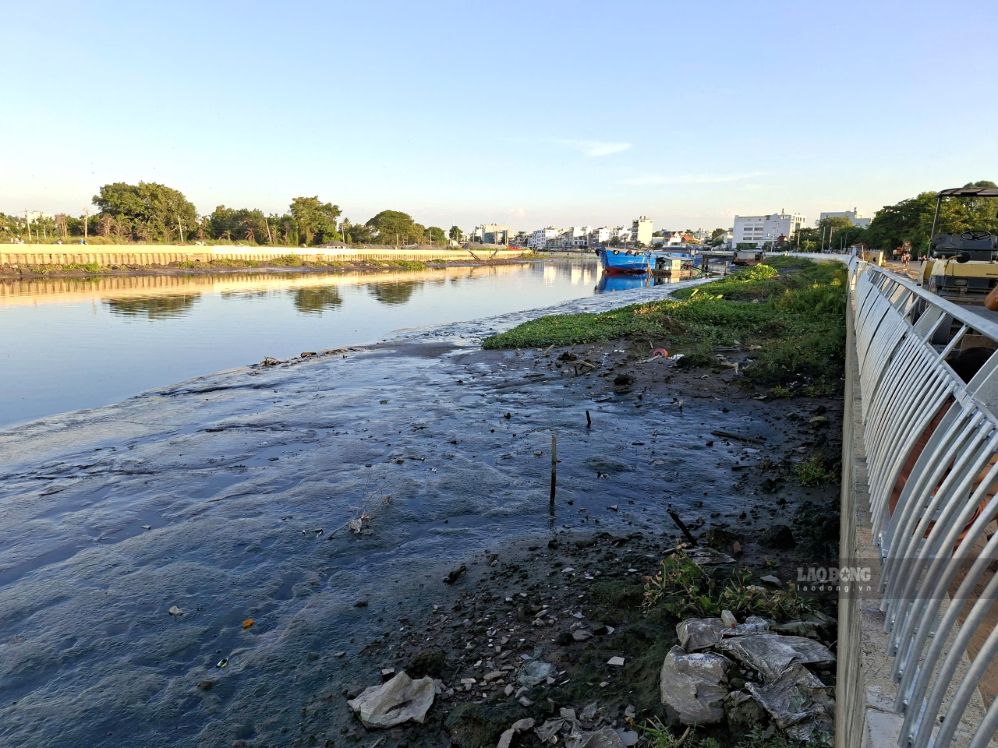
This project needs to dredge more than 3.2 million m3 of soil from the canal bed, along with about 0.6 million m3 of excavated soil in the canal bank area and under the traffic road.
The lack of receiving places prevents contractors from speeding up dredging, and at the same time affects the excavation of the roadbed. Mud and soil dug out have no place to be treated, causing construction items to be deployed sparingly.
In addition to Tham Luong - Ben Cat - Nuoc Len canal, the Xom Cui canal drainage shaft dredging project generates about 350,000 m3 of mud; the North bank of Doi canal about 260,000 m3 of mud and excavated soil; Xuyen Tam canal about 643,189 m3 of mud and excavated soil.
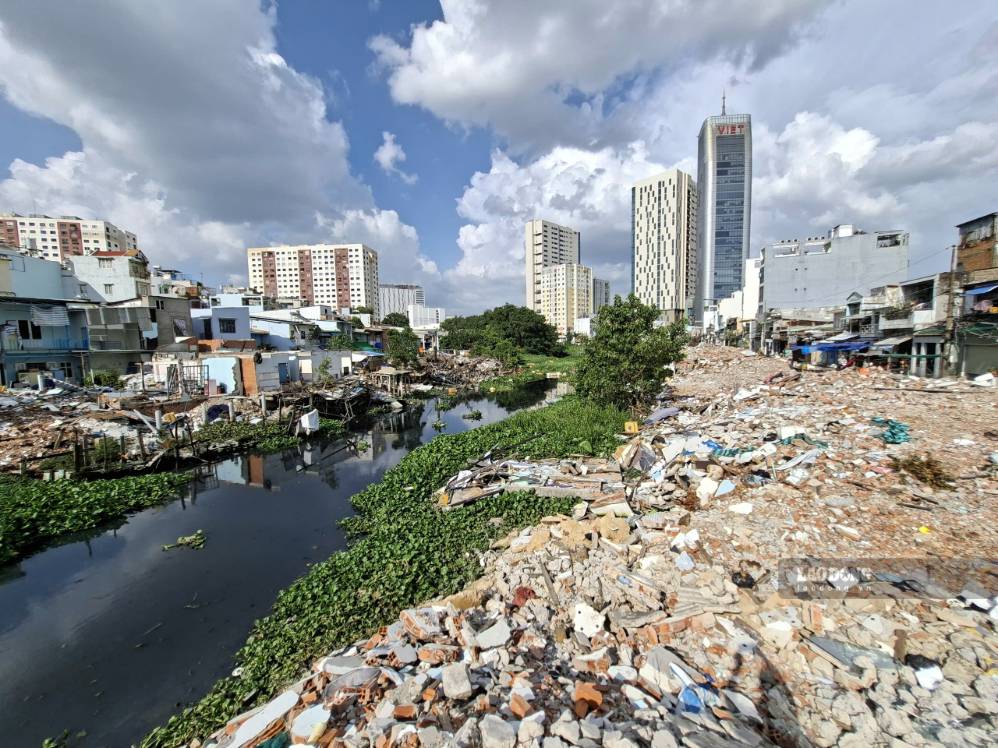
Faced with the shortage of landfills, the Urban Infrastructure Board proposed that Ho Chi Minh City consider a plan to recover minerals from the dredged mud of the Tham Luong - Ben Cat canal, separated into separate items for auction to select implementing units.
According to the Board, this plan can both reduce dredging, transportation, and treatment costs for the project, and create additional revenue for the budget from auction activities.
However, this is only a short-term solution. In the long term, Ho Chi Minh City needs an active sludge treatment system, instead of relying on private units and external receiving yards.
The Urban Infrastructure Board said that Ho Chi Minh City currently does not have a sludge treatment plant invested by the State to proactively receive sludge generated from canal dredging and infrastructure construction projects. Most sludge is treated in the form of services, leading to large transportation and treatment costs.
For the Tham Luong - Ben Cat - Nuoc Len canal project alone, the cost of dredging, dumping waste and treating waste and sludge is estimated at nearly 300 billion VND.
Planning to turn mud into resources
To solve the long-term problem, the Urban Infrastructure Board has proposed to the city to invest in a sludge treatment center for wastewater treatment plants in Thu Duc area and surrounding areas.
Mr. Van Phu Thai - Deputy Director of the Urban Infrastructure Department, said that the goal is to treat mud right at the source, recycle it into clean soil products, prioritize serving planting trees, developing urban green space and other suitable purposes.
Phase 1, the center plans to treat about 95 tons of mud/day; the next phase may be increased to about 170 tons/day.
The main source of mud comes from wastewater treatment plants within the project area, initially focusing on the Nhieu Loc - Thi Nghe Wastewater Treatment Plant.
This plant has a designed capacity of 480,000 m3/day, expected to be test-operated from the end of 2027 and reach its designed capacity in 2030. The amount of sludge after treatment is expected to be about 93.7 tons/day by 2030.
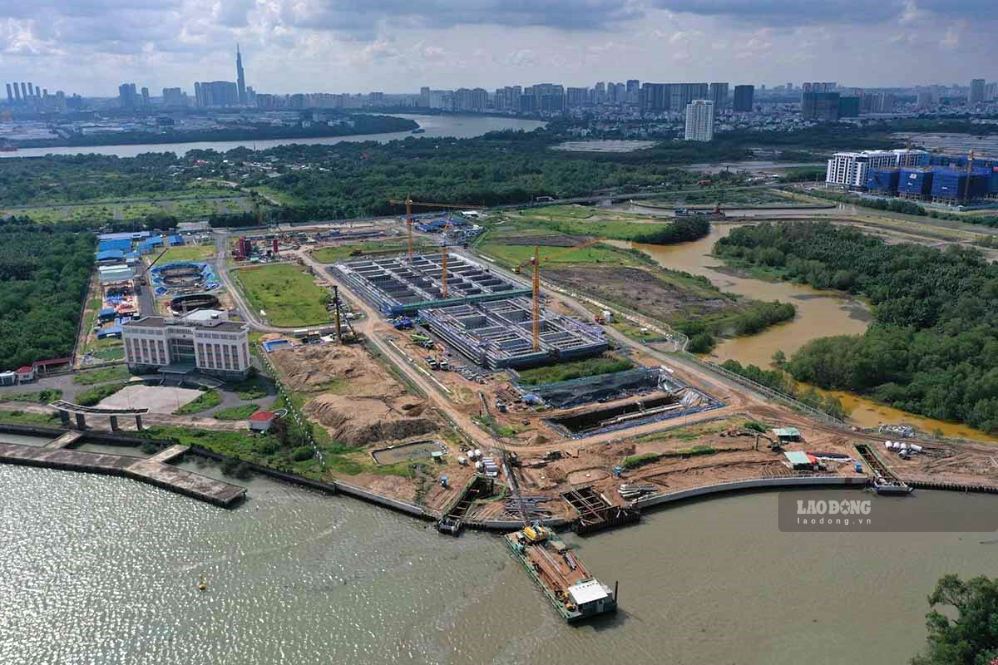
The center is expected to be located within the premises of the Nhieu Loc - Thi Nghe Wastewater Treatment Plant in Cat Lai ward, using about 5.8 hectares of land that has been cleared. Phase 1 requires about 4.1 hectares.
The total investment for phase 1 is expected to be 330 billion VND, implemented with the Ho Chi Minh City budget. The 2026 - 2030 period focuses on completing procedures, preparing and appraising the project; the 2031 - 2034 period is expected to construct and put the project into use.
According to preliminary calculations, treating mud on the spot can help the budget save about 174 million VND/day on transportation and mud treatment costs from Nhieu Loc - Thi Nghe Factory to Da Phuoc.
After completion, the Center is expected to be operated by a professional unit selected through bidding. The contract will strictly stipulate requirements on technology, safety, maintenance, odor control, wastewater, emissions and product quality.


