
A series of flood control lake projects in the western area of the Capital are being accelerated with the goal of completing important items before the 2026 rainy and storm season.
In mid-June, the construction atmosphere at the Phu Do, Me Tri, and Yen Nghia regulating lake construction sites was urgent. Hundreds of engineers and workers along with many equipment and machinery were mobilized to work continuously to ensure the progress of key flood control projects of the city.
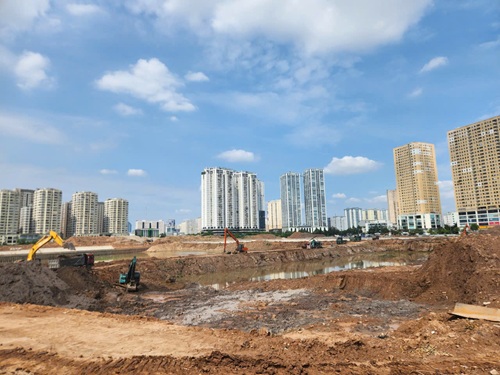
According to records, many projects have now reached about 90% of the construction volume. In which, the Phu Do regulating lake project (Tu Liem ward) with an area of nearly 37ha, total investment of more than 1,166 billion VND is gradually forming with a large water surface.
This is one of the projects implemented under the emergency mechanism, expected to contribute to handling the flooding situation in many areas that frequently experience flooding such as Tran Binh, Nguyen Hoang, Le Duc Tho and the area around My Dinh Stadium.
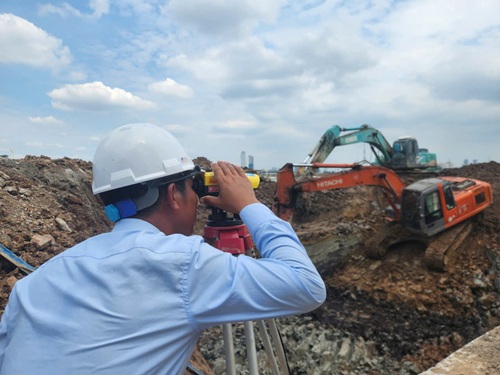
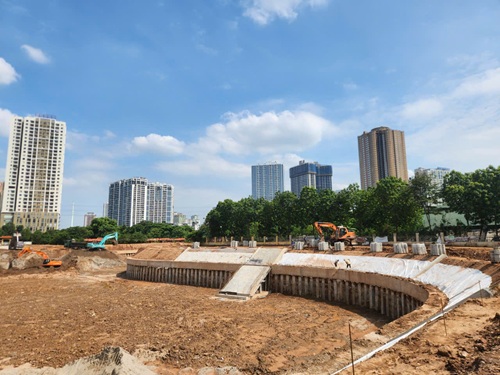
Mr. Tran Van Sy - technical officer of Dong Do Company (Ministry of National Defense) - said that the unit is focusing on constructing about 700m of lake embankment, digging and reclaiming the lakebed and completing auxiliary items such as pumping stations and water pipes.
If weather conditions are favorable, the helmet girder part will be completed by the end of June and the lakebed will be basically dredged. The remaining items are expected to be completed in July 2026," Mr. Sy said.
Along with the construction of the regulating lake, related technical infrastructure items are also being deployed synchronously. Representatives of Tu Liem Power Company said that the unit has completed the installation of a transformer station serving people's livelihoods and is preparing to deploy a power supply system for the project's pumping station.
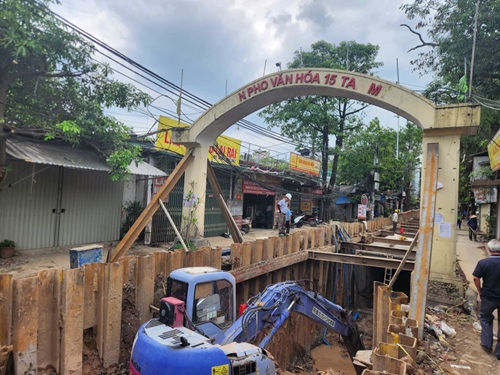
At the underground sewer line on Tan My street, construction units are also focusing manpower and equipment to complete the project in June, contributing to improving drainage capacity for the My Dinh area.
According to the Hanoi Technical and Agricultural Infrastructure Construction Investment Project Management Board, the application of special mechanisms has significantly shortened the implementation time of urgent projects.
Mr. Tran Van Tien - Deputy Director of the Project Management Board - said that after nearly 4 months since receiving the site, 7 urgent projects invested by the unit have completed an average of about 90% of the construction volume, with a total realized value of more than 4,000 billion VND.
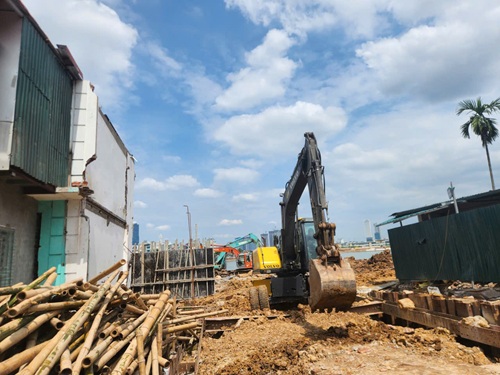
Previously, an infrastructure project could take 2-3 years to complete. With the current mechanism, many projects have begun to be effective after only a few months of construction," Mr. Tien said.
At Me Tri regulating lake (Dong Bong 2), after more than 3 months of continuous construction, the excavation and embankment of the lake area of about 12ha has been basically completed. Contractors are currently focusing on completing the dyke system, clamping prestressed concrete piles and remaining technical items.
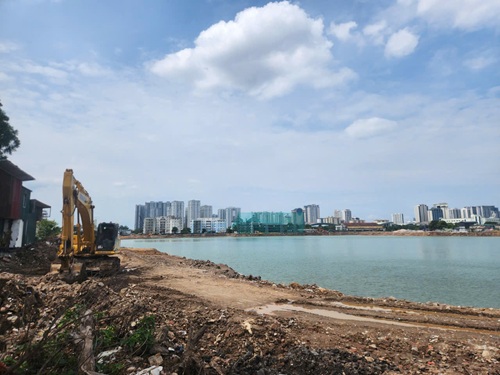
Meanwhile, the Yen Nghia 1 and Yen Nghia 2 regulating lake clusters with a total investment of more than 1,100 billion VND are also being accelerated in construction. When completed and operated synchronously, these projects will contribute to improving drainage capacity for the Nhue River basin, and at the same time add green space to the western area of the Capital.
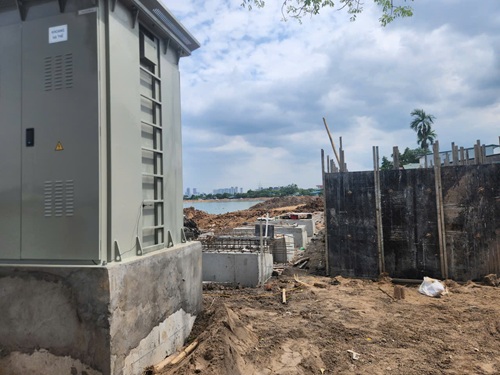
Reality shows that some projects have initially been effective even though they have not been completely completed. During the heavy rain in May, Phu Do regulating lake supported water regulation, reducing pressure on the drainage system and Dong Bong 1 pumping station.
In addition to regulating lakes, Hanoi is also simultaneously implementing many other drainage infrastructure projects such as renovating the Thuy Phuong canal, replenishing water for the To Lich River and building a system of culverts along Thang Long Avenue. These projects are expected to be completed in the second and third quarters of this year.
Accelerating the progress of flood control projects is expected to improve the ability to respond to heavy rains, reducing flooding in the inner city area. At the same time, the projects also contribute to improving the landscape, living environment and towards the goal of sustainable urban development of the Capital.


