
On June 4, in an exchange with reporters, a representative of the Cao Bang Provincial Sub-Department of Crop Production said that the agricultural sector of Cao Bang province has effectively controlled the bamboo grasshopper outbreaks that arose in May.
However, some forest areas and dangerous terrain still pose a risk of re-emergence of pests.
According to a report by the Department of Agriculture and Environment of Cao Bang province, in May 2026, bamboo grasshoppers continued to occur and cause damage in some localities in the province.
The total infected area recorded is more than 113ha, mainly concentrated in mangrove forests, weeds and a part of corn area.
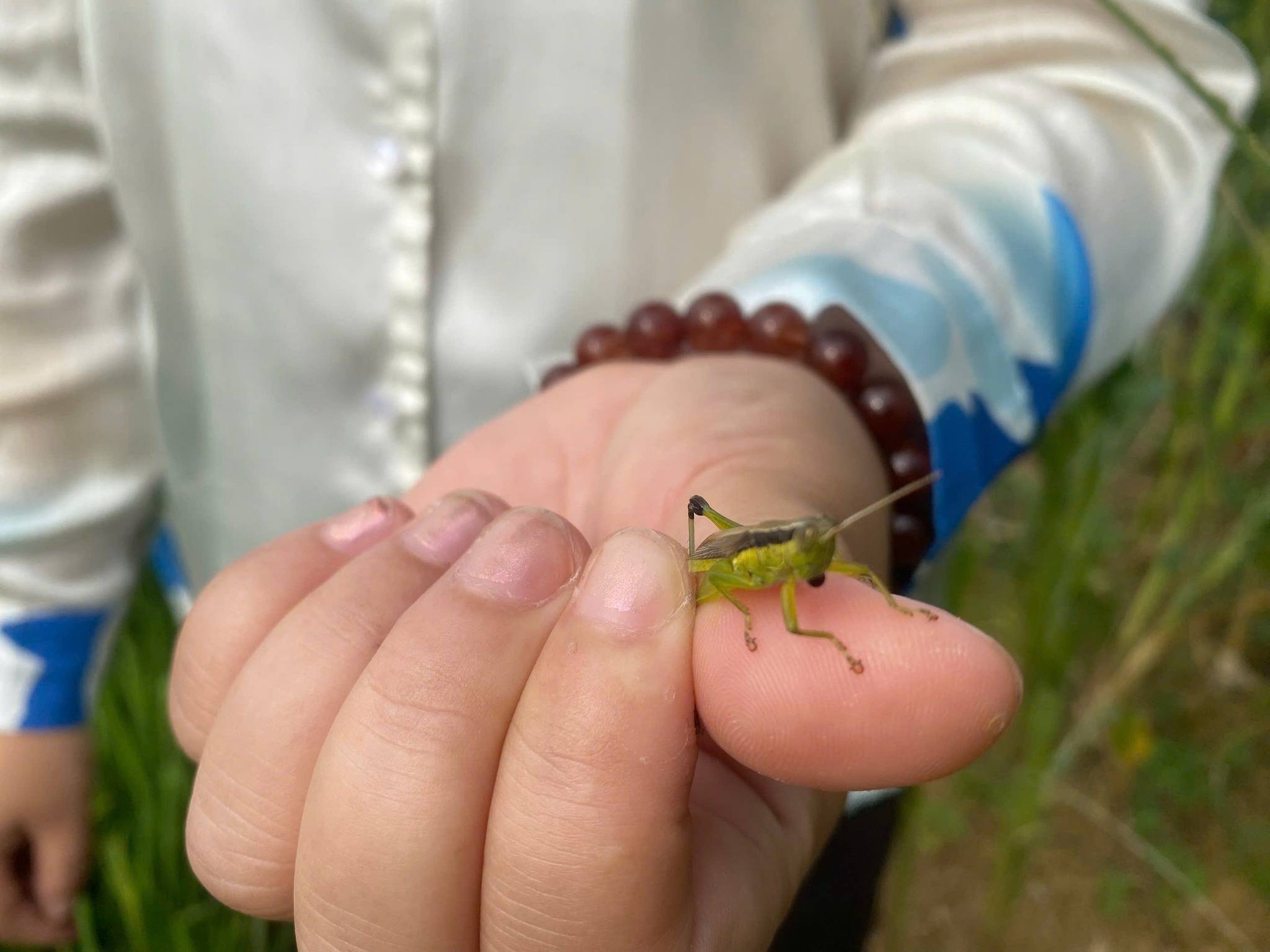
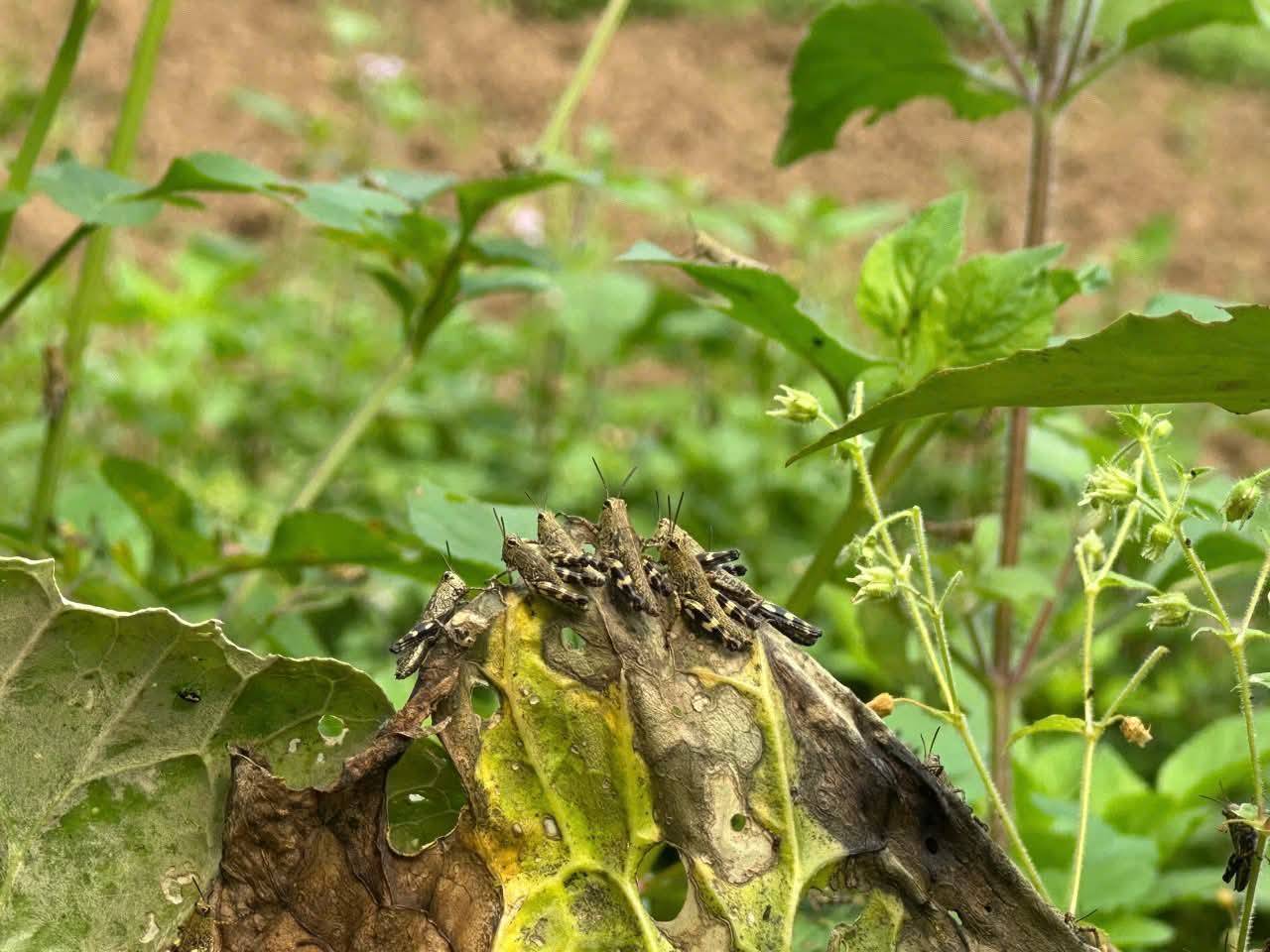
By the end of May, the number of communes still recording grasshoppers causing harm decreased from 4 to 3 communes. The density of grasshoppers also decreased significantly compared to the beginning of the month.
On corn plants, the common density is from 2-6 heads/m2; on weeds from 20-50 heads/m2; on mangrove forests from 30-40 heads/m2, some locations are locally higher.
Real-world records in Hoa An commune show that grasshoppers still appear and cause damage to agricultural crops.
In hamlet 2 Be Trieu, adult green grasshoppers have damaged about 500m2 of corn and rice area in hamlet 3 Be Trieu cultivated by people in hamlet 2.
According to specialized agencies, the average locust density on corn plants is from 5-8 locusts/m2, in high places from 10-15 locusts/m2. On rice plants, the common density is from 6-8 locusts/m2, in high places from 10-12 locusts/m2.
Grasshoppers eat corn leaves completely and damage part of the rice leaf area, affecting the growth process of crops. In particular, this species has the ability to move quickly, and the level of damage is large if not handled in time.
Ms. Chu Phuong Thanh - Vice Chairwoman of Hoa An Commune People's Committee said that right from the beginning of the year, the commune issued a plan to prevent pests and diseases on crops, strengthen propaganda and direct specialized units to regularly inspect fields and monitor locust developments for timely handling.
When grasshoppers appeared and caused damage to some crop areas, the commune directed zoning, spraying and mobilizing people to implement synchronous epidemic prevention measures.
People are instructed to catch grasshoppers manually, clean fields, and use pesticides according to the '4 right' principle".
According to Ms. Thanh, thanks to proactive early detection and timely handling, the epidemic has now been basically controlled, without causing significant economic damage to people.
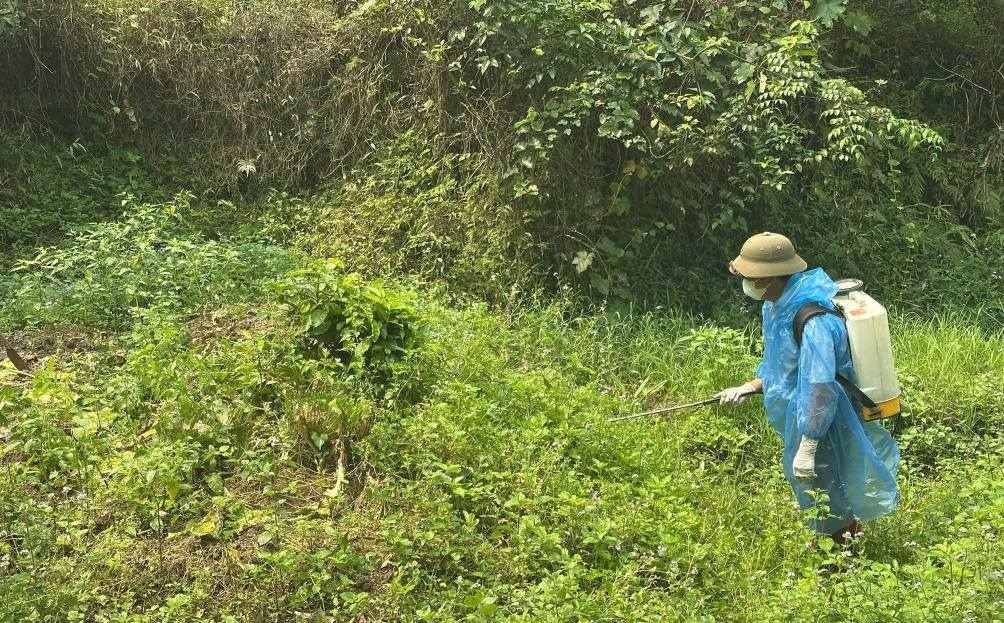
Across the province, the agricultural sector has strengthened field inspections, technical guidance and supported localities to organize spraying. Two smoke sprayers have been deployed to serve treatment in forest areas with complex terrain.
Localities also mobilize local forces, using manual sprayers and battery sprayers to treat contaminated areas on crops and natural vegetation.
The results of post-treatment inspection showed that the rate of locust deaths reached over 90%. The total area sprayed reached nearly 99ha. Outbreaks on agricultural crops were basically controlled, preventing widespread spread.
However, by the end of May, there were still about 14.5ha that had not been sprayed, mainly the area of Vầu forest located in deep mountain crevices, hilly terrain, and dense trees, making it difficult to access and organize treatment.
According to recommendations from specialized sectors, for areas of rice and corn preparing for harvest, people should use nets to catch grasshoppers in the early morning or cool afternoon to reduce population density for subsequent generations.
Spraying medicine needs to be done according to proper techniques, ensuring safety for users and the environment.
At the same time, it is necessary to clear weeds along the rice field banks to limit the residence of grasshoppers.


