
To prevent saltwater intrusion from the river mouth into deep fields every dry season, the irrigation culvert system in the Long Phu - Tran De area (Can Tho City) is operated according to strict procedures, almost "watching the hour" according to each water level.
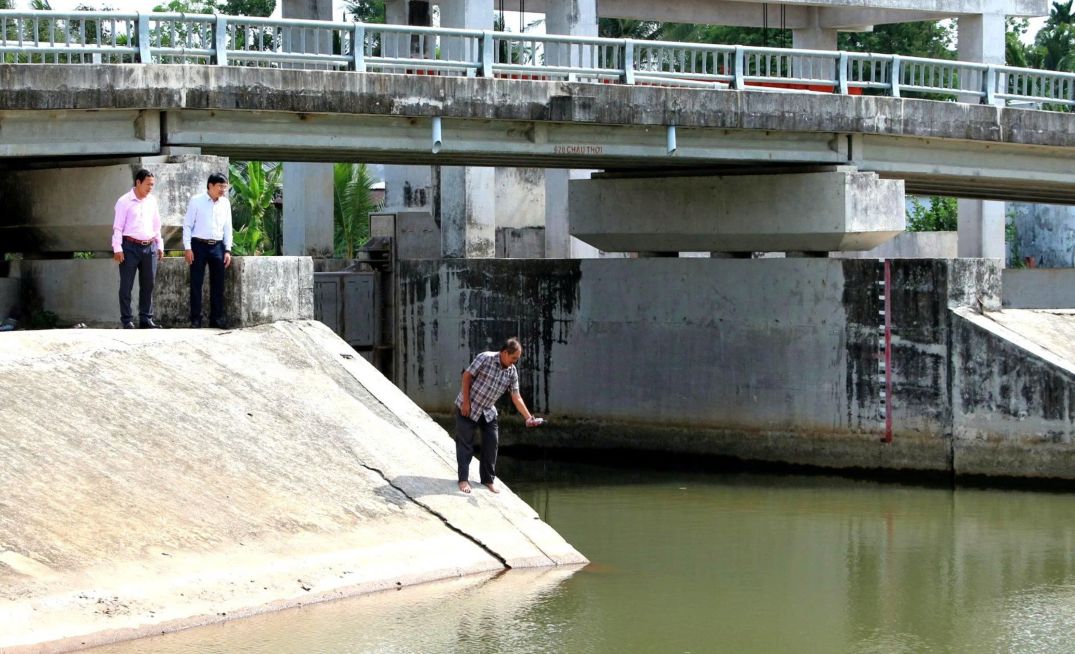
Recorded at Cai Oanh culvert (Tan Thanh commune), operation takes place flexibly according to tidal developments and salinity outside the river. The culvert is designed with two gate systems, both serving waterway traffic and controlling water sources. With hydraulic gates, the frequency of opening culverts is adjusted according to the travel needs of boats, averaging 2-3 days/time.
In the dry season, the opening and closing of the culvert is calculated very carefully. The culvert is only opened when the salinity of the river is at a permissible level to take fresh water for production, and at the same time choose a suitable time for boats on both sides to circulate smoothly, then close it again. Each operation lasts about 1 hour.
We must keep an eye on the right time when the water is standing, if it's late, we won't be able to handle it in time," an operations officer said.
Cai Oanh culvert is also a "gateway" to retain fresh water for agricultural production in Tan Thanh, Tai Van, Lieu Tu and Tran De communes. Water intake is strictly controlled, only carried out when the salinity is below 1‰.
Currently, the operation of the culvert is undertaken by a group of 5-7 people, strengthened during the saltwater season to be on duty 24/24, both regulating water and guiding boats to pass safely.
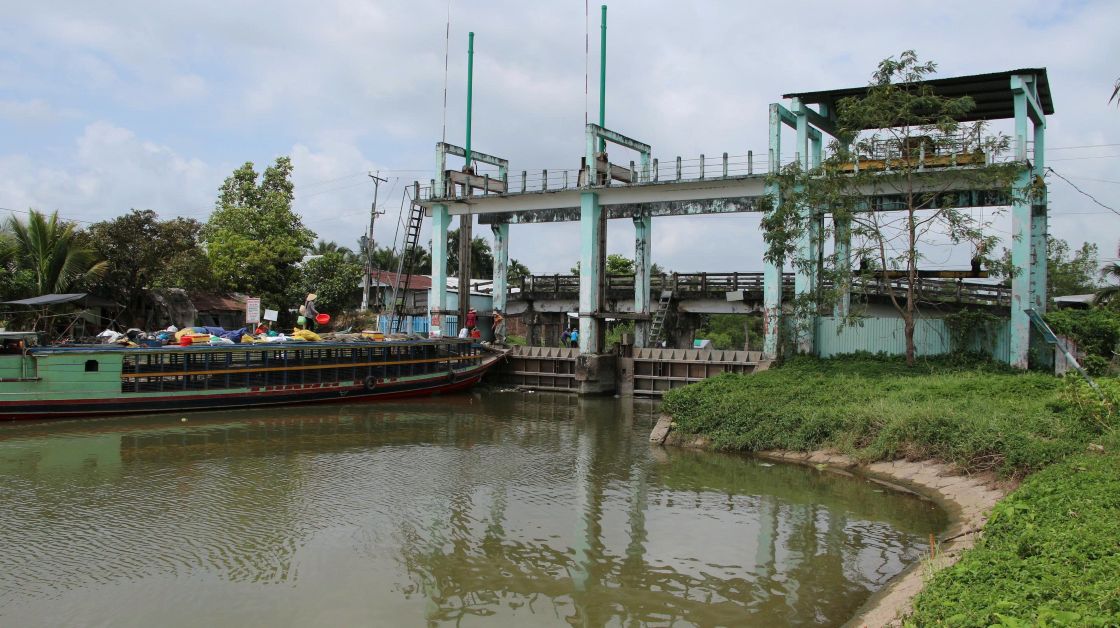
According to Mr. Lach Pha Rich - Deputy Head of Irrigation Management Station Area 3 (Soc Trang Irrigation Joint Stock Company), the entire Long Phu area (former Soc Trang) has 30 culverts, including 14 large culverts and 16 small culverts. These works play an important role in regulating water, preventing saltwater intrusion, serving production and people's lives.
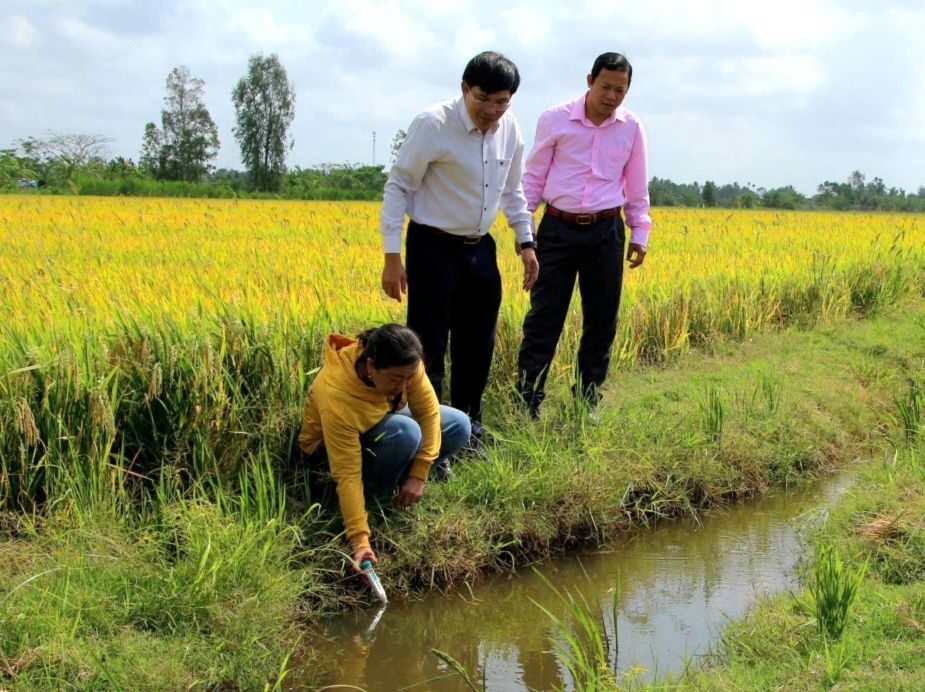
According to Mr. Rich, in the dry season, salinity monitoring is carried out continuously day and night. Measure 6 times a day, divided equally between day and night. Data is collected at key points, then updated to information groups to promptly notify local authorities and people.
Based on the measurement results, the operation of the culvert is adjusted flexibly. When the salinity exceeds the threshold of 1‰, the culvert will close; if the water taken in has a salinity of 1.3–1.4‰, it will be discharged out. In case of 1.1–1.2‰, in conditions of water shortage, it is possible to consider keeping it for production.
Mr. Rich said that the management force includes about 30 people, each culvert is in charge of one person. Throughout the saltwater season, from December to the end of June of the following year, this team has to be on duty continuously day and night.
The saltwater season is very hard, brothers almost stay up all night to monitor and handle it in time. The irrigation sector also takes advantage of times when the salinity drops below the threshold of 1‰ to get fresh water into the fields," Mr. Rich said.
According to the Department of Agriculture and Environment of Can Tho City, after the merger, the city's irrigation system has 12,800 km of canals, 72 km of coastline, nearly 668 km of dykes, 889 culverts and 292 electric pumping stations. This network not only serves agricultural production but also contributes to controlling flooding, drought, salinity and supporting waterway traffic.
The agricultural sector is implementing many synchronous solutions such as strengthening salinity monitoring, regularly updating water sources and guiding farmers to adjust production schedules accordingly. At the same time, it is recommended that people monitor salinity, check water sources before irrigation, reinforce dykes, apply water-saving irrigation, use salt-tolerant crop varieties and limit planting in areas at high risk of water shortage or saltwater intrusion.
According to the Southern Institute of Water Resources Science, the forecast for water sources to the Mekong Delta in the dry season 2025-2026 belongs to the group of years above average water, saltwater intrusion at an average or below average for many years. The forecast for the deepest saltwater intrusion in the high tide period 18-22. March 2026 with a salinity limit of 4g/l in the range of about 41-55km, in the following months the salinity may decrease slightly. Unusual water accumulation may cause saltwater intrusion to be deeper than forecast. Localities need to proactively build solutions to respond to drought and salinity prevention suitable to the conditions of the region.


