
Proactive water resources
Cu Lao Dung (Can Tho City) is a commune located at the end of the Hau River, bordering the East Sea, so it is often affected early by saltwater intrusion. Faced with this reality, many farmers have proactively changed farming methods to adapt.
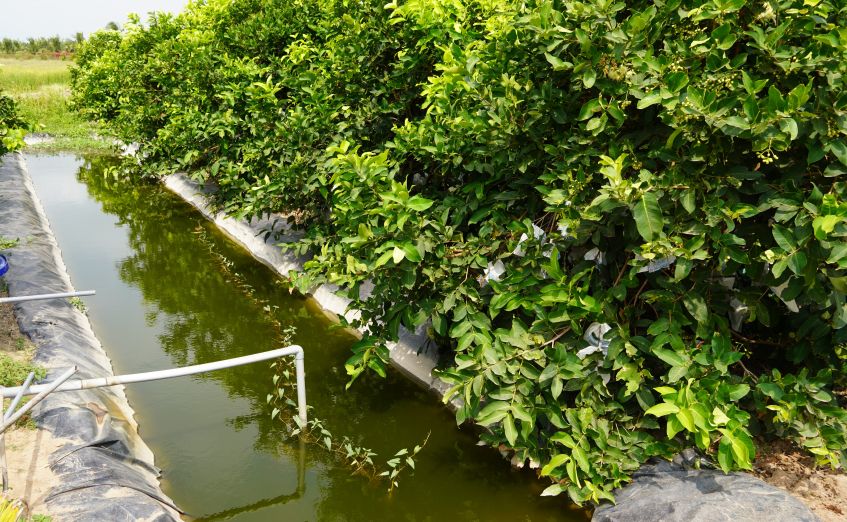
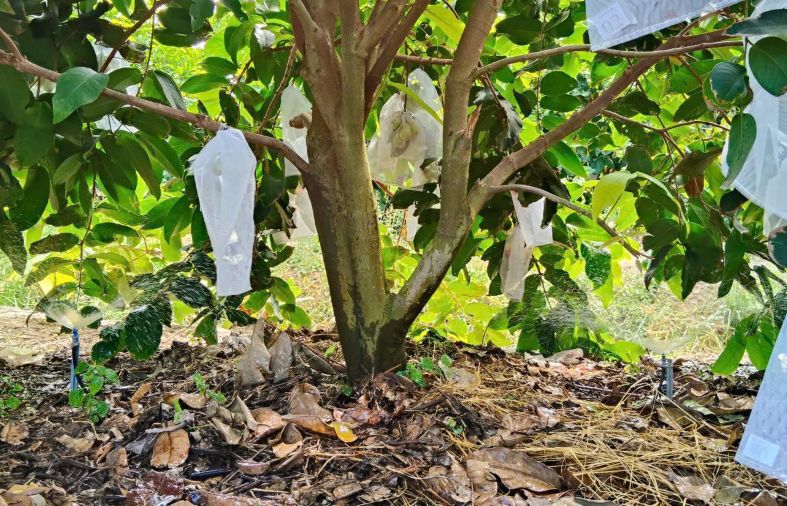
Mr. Tran Van Phuc - a farmer in Cu Lao Dung commune has invested in a freshwater storage pond system and developed Son Tien pink plum variety bred by himself suitable for the soil and climate conditions of the coastal area.
This plum tree is quite salt-tolerant. If the salt water rises to about 10‰ and then recedes quickly, the tree will still be less affected. In soil conditions with a salinity of about 2–3‰, the tree will still develop normally," Mr. Phuc shared.
To be proactive in water sources in the dry season, he dug 4 water storage ponds with a total area of about 4 hectares. The water source is stored from rivers and rainwater in the 9th-10th lunar months, then used for about 50 hectares of plums through a water-saving irrigation system, helping the garden maintain stable growth in drought and salinity conditions.
Mr. Nguyen Van Dac - Vice Chairman of Cu Lao Dung Commune People's Committee (Can Tho City) - said that the 2026 dry season in the area lasts from December to about May of the following year. Right from the beginning of the dry season, the locality has proactively propagated and guided people to implement response solutions suitable for each production area. In which, focus on replicating models adapting to drought and salinity such as building freshwater storage ponds, applying water-saving irrigation systems for fruit trees.
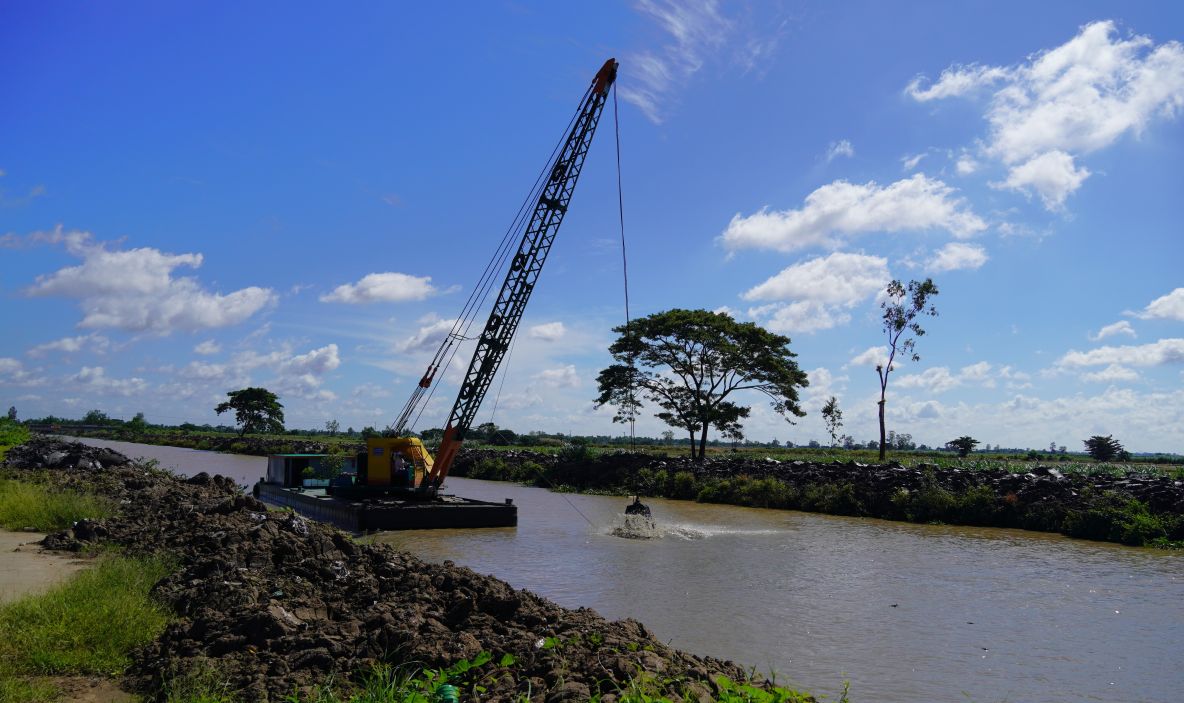
In addition, the commune mobilized people to dredge canals and ditches, reinforce embankments, proactively store water for production; and at the same time proposed that the city support dredging some canal routes to facilitate water intake and transportation of goods.
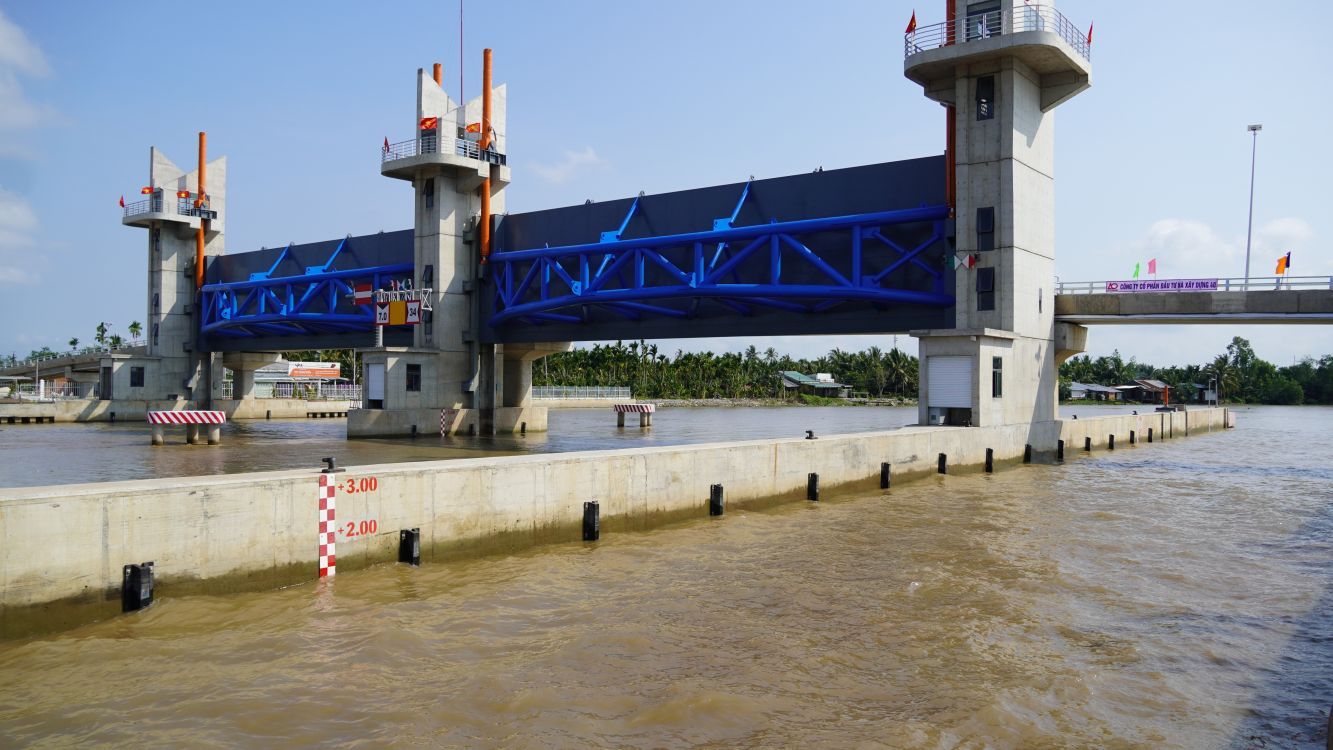
Along with solutions at the grassroots level, Rach Mop fishing port culvert - a large irrigation project in the South bank of the Hau River - is promoting efficiency in controlling salinity, keeping fresh water for more than 19,220 hectares of agricultural land and supplying water for over 36,000 hectares of production land in the Soc Trang and Hau Giang areas before.
According to the operating unit, when the salinity outside the Hau River reaches 0.5 g/l, the culvert will be closed to prevent salinity. The system is on duty 24/24 hours to promptly regulate water sources.
Proactive response
According to the Department of Agriculture and Environment of Can Tho City, after the merger, the city's irrigation system is large-scale with more than 12,800 km of canals, 72 km of coastline, nearly 668 km of dykes, 889 culverts and 292 electric pumping stations. This network of works not only serves agricultural production but also contributes to controlling flooding, drought, salinity and supporting waterway traffic.
Through review, about 12,266 hectares of rice in 7 communes and wards of Can Tho are at risk of being affected by drought and saltwater intrusion; about 8,000 hectares of fruit trees in localities such as Vinh Vien, Xa Phien, Luong Tam, Long Phu, Ke Sach, An Thanh, Cu Lao Dung may be affected.
Leaders of the Department of Agriculture and Environment of Can Tho City said that the sector is implementing many synchronous solutions such as strengthening salinity monitoring, regularly updating water source information and guiding farmers to adjust production schedules appropriately.
The agricultural sector recommends that farmers regularly monitor salinity, check water sources before irrigation, strengthen dykes, apply water-saving irrigation and use salt-tolerant crop varieties; and at the same time limit planting in areas at high risk of water shortage or saltwater intrusion.
According to forecasts from Can Tho Hydrometeorological Station, in the dry season of 2026, saltwater intrusion on rivers affected by East Sea tides such as Hau River, My Thanh River and Quan Lo - Phung Hiep canal is likely to be close to or higher than the multi-year average, expected to appear at the end of March. On the Hau River, the salinity boundary of 4‰ may intrude deeply about 45–55 km (through An Lac Tay), while the boundary of 2‰ intrudes deeply 62–65 km (Vam Cai Con), posing a risk of affecting agricultural production in communes such as Tran De, Lich Hoi Thuong, Tai Van, Lieu Tu, Long Phu, Dai Ngai, Tan Thanh, Truong Khanh, Nhon My, An Thanh and Cu Lao Dung. On the Quan Lo - Phung Hiep canal, the forecast salinity level is about 1.5–2.5‰, which may intrude into the Mang Ca canal area and Phung Hiep hydrological station.


