
On December 4, speaking with a reporter from Lao Dong Newspaper, Mr. Vo Minh Son - Director of the Management Board of Pu Huong Nature Reserve (Nghe An) said that up to now, the entire reserve has more than 180 active camera traps, of which 60 more traps have been installed in the core sub-regions to increase monitoring of rare animals.
According to Mr. Son, the camera trap system is deployed deep in the special-use forest, at locations where traces of the activities of large animals or endangered birds and animals are recorded. The device will automatically record when detecting movement, helping to collect data on the distribution, behavior and population changes of hard-to-reach species using the usual survey method.
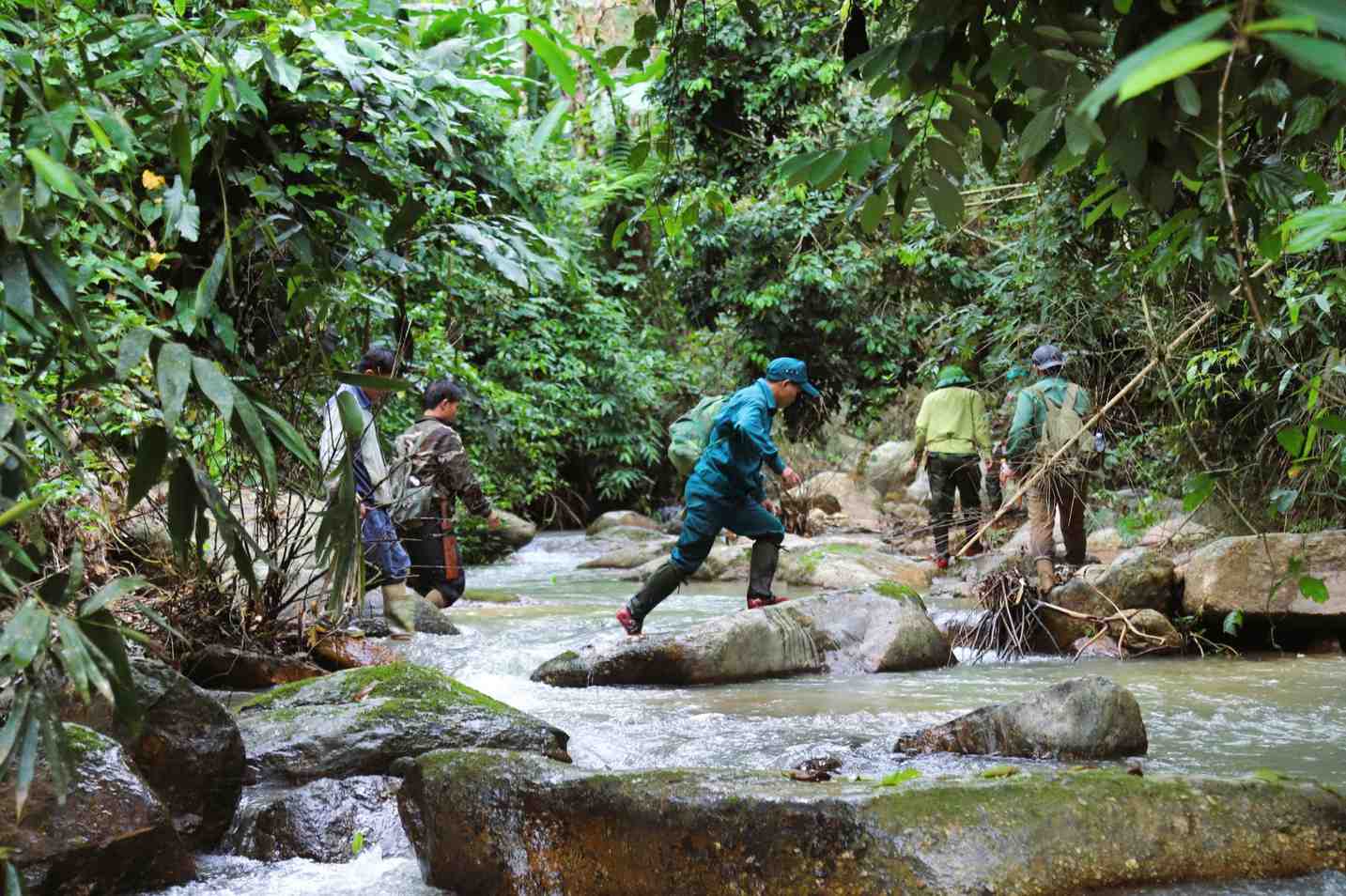
Mr. Nguyen Tong Phi - Head of Binh Chuan Forest Management and Protection Station (Pu Huong Nature Reserve) said that the station was assigned to install 10 traps at the highest and farthest points. In just the first 3 days, we have completed 5 traps, located nearly 1,000m above sea level, said Mr. Phi.
The camera traps are fixed on ancient tree trunks, near cliffs or areas with traces of wild boars, and caves of large animals. "The camera trap does not use lures, so it must minimize the impact on natural habitats" - Mr. Nguyen Tho Son, a forest ranger shared.
Pu Huong Nature Reserve is nearly 46,500 hectares wide, one of the three core areas of the Nghe An Western Biosphere Reserve, recording nearly 570 animal species and more than 1,800 plant species, many of which are in the Red Book of Vietnam and IUCN.
According to Director Vo Minh Son, data from the camera trap system is an important basis for assessing animal population fluctuations and proposing more effective biodiversity protection solutions in hard-to-reach deep forests.


