
After 5 years of suspension, the tidal flood solution project taking into account climate change factors (phase 1) has been restarted in recent months. Currently, the project has reached more than 90% of the total volume.
However, investors still cannot access credit capital to implement the remaining items because many procedures related to payment have not been completed.
According to the State Audit's conclusion in the audit report issued in April 2026, the value of the completed volume accepted of the project reached more than 7,953 billion VND, equivalent to 83.15% of the total investment of nearly 10,000 billion VND.
However, to date, the Ho Chi Minh City People's Committee has not yet made payments to investors in cash or land funds under BT (build - transfer) contracts.
The slow payment has caused the loan balance of the project to be transferred to group 2. More than 5 years ago, the Bank for Investment and Development of Vietnam (BIDV) temporarily stopped disbursing capital, causing the project to be temporarily suspended from the end of 2020.
In July 2025, the Government issued Resolution 212 to remove obstacles for the project. According to this resolution, Ho Chi Minh City is allowed to adjust the feasibility study report and pay investors with land funds. In case the value of the land fund is lower than the value of the BT project after review, the difference will be paid with the city's public investment capital.
The Government requires that the handling of existing problems must be carried out promptly, in accordance with regulations, ensuring efficiency, avoiding waste and loss of resources. However, up to now, the progress of implementing the resolution is still slow.
The most urgent requirement currently is for the Ho Chi Minh City People's Committee to soon sign an appendix to the BT contract to update the adjusted total investment and determine the land areas used to pay for the project. This is the basis for BIDV to calculate revenue sources and propose a plan to continue disbursing the remaining capital.
While waiting for procedures to be resolved, the project still has to bear a very large loan interest rate. Currently, BIDV is applying a penalty interest rate of 5.5%/year for the project's loan. The total incurred loan interest costs to date have reached about 2,500 billion VND.
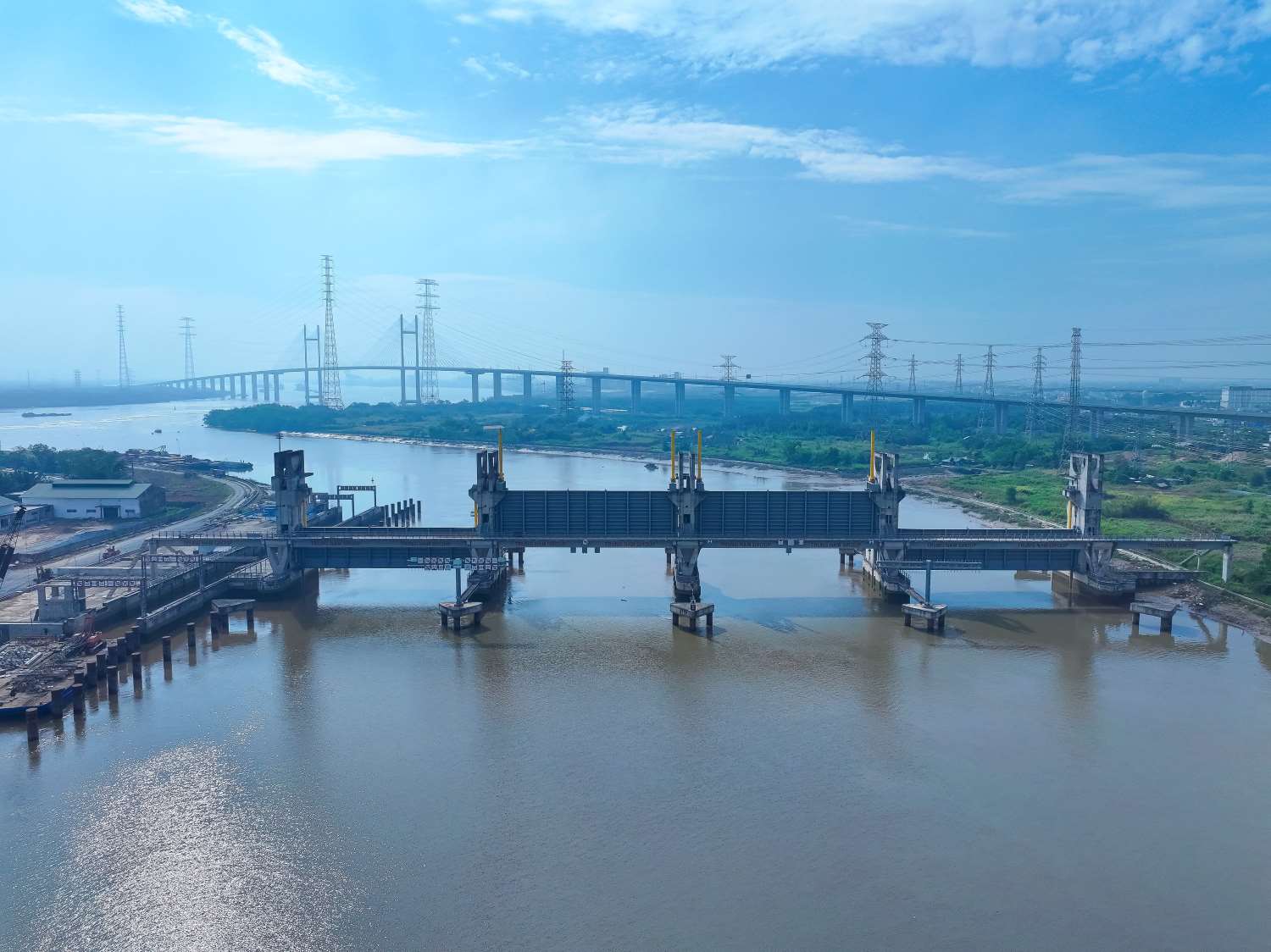
The State Audit's recent conclusion also pointed out many shortcomings in the allocation of land funds for project payment. According to the BT contract signed in 2016, the Ho Chi Minh City People's Committee has identified 3 land areas for payment and plans to add 4 other land areas. However, after nearly 10 years, Ho Chi Minh City has not officially determined the land fund, land fund value as well as implemented payments to investors.
For example, 2 land plots at 299 Dao Tri (Phu Thuan ward) and a 4.2 ha land plot in Phuoc Long ward were included in the payment plan but did not meet legal conditions,...
Recently, Trung Nam Construction Investment Joint Stock Company (Trungnam Group) - the project investor - sent a document to Ho Chi Minh City leaders warning that if the current problems are not resolved soon, the project will hardly be completed on schedule in 2026. The completion progress of the project will have to be postponed corresponding to the delay in resolving dossiers.
If the project has to stop construction once again, the restart process may take another 4-6 months, leading to continued increased loan interest costs, reducing investment efficiency and slowing the effectiveness of flood control.
To remove difficulties, Trungnam Group proposed that the Ho Chi Minh City People's Committee approve the replacement of two payment land plots at 299 Dao Tri and a 4.2 ha land plot in Phuoc Long ward with two other land plots at 257 Tran Hung Dao (Cau Ong Lanh ward) and 79B Ly Thuong Kiet (Tan Hoa ward), ensuring the principle of equal price according to the State Audit's proposal.
The business also proposed that Ho Chi Minh City soon sign a BT contract appendix in June to complete legal documents with BIDV, creating conditions to access capital sources to serve the completion of the project.


