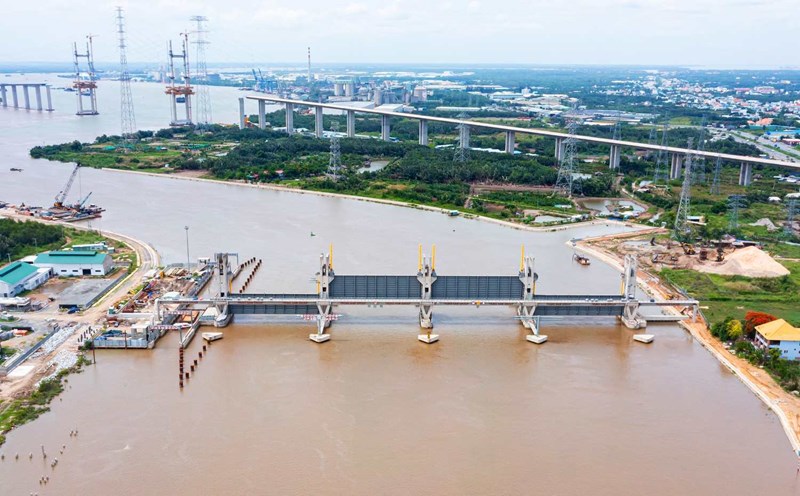
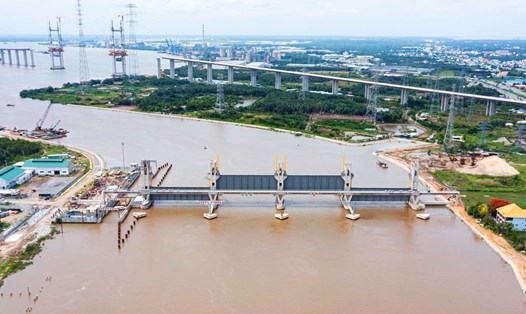
Near the end of 2025, the project "Solving flooding caused by tides in the Ho Chi Minh City area taking into account climate change factors (phase 1)" with a total investment of nearly 10,000 billion VND has not been able to be restarted, although the project has been 94% complete.
Started in 2016 under the BT (build - transfer) form, the project had to be temporarily suspended from November 2020 due to legal problems, especially procedures for paying land funds to investors.
Although the Government has issued two resolutions (Resolution 40/NQ-CP and Resolution 212/NQ-CP) to resolve the issue, the project continues to "stand firm".
Adding a payment land fund is a prerequisite for the project to resume construction. According to Resolution 212/NQ-CP, Ho Chi Minh City is paid to investors with land funds.
In case the value of the land fund is lower than the value of the BT project (after reviewing and excluding unreasonable costs), the difference will be paid with public investment capital of Ho Chi Minh City.
The project working group has proposed 5 land areas to include in the BT contract appendix, including: 257 Tran Hung Dao (2,374 m2, provisional value of more than VND 597 billion); 420 No Trang Long (66,800 m2, about VND 5,385 billion); Lot C8A - Area A, New Urban Area of South Ho Chi Minh City (5,500 m2, more than VND 1,113 billion); 232 Do Xuan Hop (14,000 m2, more than VND 930 billion); 762 Binh Quoi (3,100 m2, about VND 72.3 billion).
The total value of the 5 plots of land is more than VND 8,099 billion, equivalent to 81.1% of the value of the BT contract. However, the payment of land funds has not yet been finalized, making it impossible to sign a contract appendix for the investor to re-construct.
On December 11, the National Assembly passed a Resolution amending and supplementing Resolution 98 on piloting a number of specific mechanisms and policies for the development of Ho Chi Minh City, creating a clear legal basis for handling BT contracts signed before the PPP Law took effect but have not been paid.
According to the resolution, investors are paid by land fund or public assets according to the Law on Management and Use of Public Assets; land fund recovered or managed by the State under the Land Law; or combining these land funds. If the land fund is partly managed by a State agency, the Ho Chi Minh City People's Committee will reclaim the entire land to allocate or lease, without auction and without bidding to select investors.
The Ho Chi Minh City People's Committee decides on land used for payment, negotiation and signing of BT contract appendices with investors and project enterprises.
If the BT contract has not been allocated or leased, the Ho Chi Minh City People's Committee will allocate or lease the land based on the value of the accepted and audited volume. Land prices for calculating land use fees or land rents are determined according to the law on land and the law on investment under the PPP method.
Dr. Tran Quang Thang - Director of the Ho Chi Minh City Institute of Economics and Management - assessed the National Assembly's permission to pay land funds for BT projects as a "legal turning point" to remove the biggest bottleneck of the nearly 10,000 billion VND flood prevention project.
The Resolution to adjust and supplement Resolution 98 creates a clear and transparent legal corridor, removing concerns that have existed for many years. Accordingly, the Ho Chi Minh City People's Committee has the right to sign a contract appendix and add a payment land fund without having to go through an auction" - Mr. Thang said.
Mr. Tran Quang Thang said that the project's completion of 94% but stagnation for the past 5 years is a "very great waste", every day of delay increases interest rates and puts pressure on both the city and investors.
Although the mechanism has been approved, according to Mr. Thang, Ho Chi Minh City must immediately shift from "waiting" to "acting", determining the land fund for payment, land valuation, completing the contract appendix and clearly defining responsibilities between departments and branches. "If there is no drastic action, the project can still be delayed even though the mechanism has been opened".
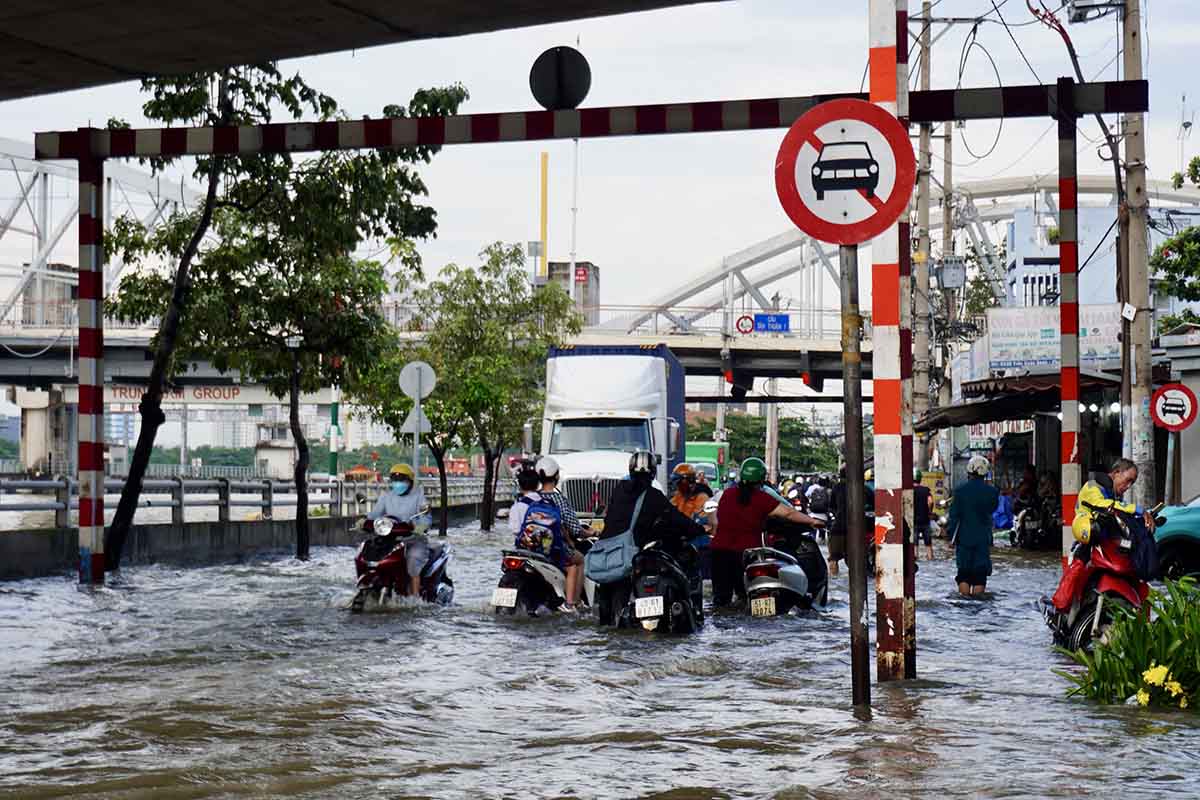
Mr. Thang also warned that the delay will directly affect Ho Chi Minh City's ability to prevent flooding and adapt to climate change.